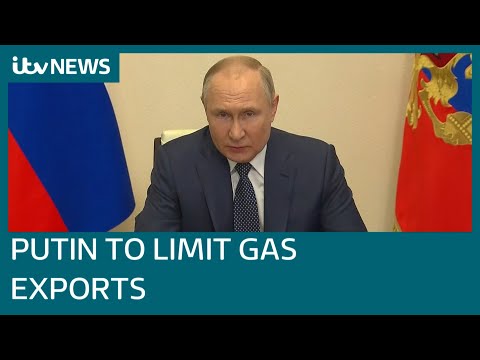
Shell Plc will phase out all purchases of Russian oil and gas, with an immediate halt to crude deals on the short-term market, making a dramatic U-turn in response to international opprobrium over its dealings with the country. “We are acutely aware that our decision last week to purchase a cargo of Russian crude oil” was wrong, the company said in a statement on Tuesday. “Our actions to date have been guided by continuous discussions with governments about the need to disentangle society from Russian energy flows.” Shell said it will do this as fast as possible, but it could take weeks to wean itself off Russian crude and result in lower output of fuels at some of its refineries. That comes as diesel markets are already in crisis mode as traders tried to make sense of the magnitude of supply shortfalls due to the Russia crisis. Ending the company’s use of refined oil and natural gas supplies from the country “will take much longer” because it represents such a “complex challenge,” according to the statement. The invasion of Ukraine prompted a huge range of companies to withdraw from their operations in Russia, including energy giants BP Plc and Exxon Mobil Corp. Attention has now shifted to the country’s energy exports, a crucial source of revenue for President Vladimir Putin’s government. On Friday, Shell bought a cargo of Russian crude, immediately drawing heavy criticism. Ukraine’s Minister for Foreign Affairs Dmytro Kuleba took to Twitter to ask the company whether the oil smelled like “Ukrainian blood for you?” In the U.S., key lawmakers announced the outline of bipartisan legislation to bar imports of Russian oil into the U.S. Europe, which is more dependent on the country’s crude, have so far shied away from a ban, but pressure is growing on companies that continue to receive the country’s energy exports. TotalEnergies SE Chief Executive Officer Patrick Pouyanne said on Monday that his company’s trading arm had already stopped buying Russian oil, but one its refineries in Germany would continue to receive crude from the country because there was no alternative supply. Engie SE CEO Catherine MacGregor said in a Bloomberg TV interview on Tuesday her company continues to buy Russian gas because its customers depend on those supplies. Shell will also shut its service stations, aviation fuels and lubricants operations in Russia. Even without direct Western sanctions on Russian energy exports, the risk that buyers will voluntarily shun the country’s supplies have triggered unprecedented surges in crude and natural gas prices. The International Energy Agency, which already announced the release of 60 million barrels of oil from emergency stockpiles, is prepared to recommend that its members release more if necessary, Executive Director Fatih Birol said in an interview on Bloomberg. NN: What game are they playing… They walked into the energy trap Putin set. Now that oil and gasoline is hitting record highs they pretend they can get out of the trap. Its like El Chappo in supermax prison telling everyone he is vacationing on a Caribbean island. Their is no replacement for Russia oil In the immediate future… The politicians shit caned alternative supplies. They are indeed Putin’s bitch. To pretend their are alternatives is a fantasy. It will take years for Europe to replace Russian oil….. The only good thing is sky high prices will suck in supplies and create demand destruction…. I believe that the west will cave in to Putin and the energy crises will reverse itself
Hong Kong reports over 43,000 new COVID cases after new reporting system launched
HONG KONG (Reuters) – Hong Kong reported more than 43,000 new coronavirus infections on Tuesday, a day after the launch of an online self reporting platform which lets residents register their own rapid antigen tests results. NN: Do not be so sure this plague is over….. or that it will be like the flue……. None of this has been confirmed yet
As vaccine demand falls, states are left with huge stockpile
https://youtu.be/eSIpGreQdOM
As demand for COVID-19 vaccines collapses in many areas of the U.S., states are scrambling to use stockpiles of doses before they expire and have to be added to the millions that have already gone to waste. From some of the least vaccinated states, like Indiana and North Dakota, to some of the most vaccinated states, like New Jersey and Vermont, public health departments are shuffling doses around in the hopes of finding providers that can use them. State health departments told The Associated Press they have tracked millions of doses that went to waste, including ones that expired, were in a multi-dose vial that couldn’t be used completely or had to be tossed for some other reason like temperature issues or broken vials. Nearly 1.5 million doses in Michigan, 1.45 million in North Carolina, 1 million in Illinois and almost 725,000 doses in Washington couldn’t be used. The percentage of wasted doses in California is only about 1.8%, but in a state that has received 84 million doses and administered more than 71 million of them, that equates to roughly 1.4 million doses. Providers there are asked to keep doses until they expire, then properly dispose of them, the California Department of Public Health said. The national rate of wasted doses is about 9.5% of the more than 687 million doses that have been delivered as of late February, the Centers for Disease Control and Prevention said Thursday. That equates to about 65 million doses. The problem is not unique to the U.S. More than a million doses of the Russian Sputnik vaccine expired this week in Guatemala, because nobody wanted to take the shot. Vaccination program managers say that tossing out doses is inevitable in any inoculation campaign because of the difficulty in aligning supply and demand for a product with a limited shelf life. But the coronavirus pandemic has killed nearly 6 million people and shattered economies across the globe, and every dose that goes to waste feels like a missed opportunity considering how successful the vaccines are in preventing death and serious disease. It also comes only about a year after people desperate to get the vaccine attempted to jump in line to get ahead of those deemed higher priority. Hospital board members, their trustees and donors around the U.S. got early access or offers for vaccinations, raising complaints about favoritism and inequity at a time when the developing world had virtually no doses. And many poorer nations still have low vaccine rates, including 13 countries in Africa with less than 5% of their population fully vaccinated. T hey are plagued by unpredictable deliveries, weak health care systems, vaccine hesitancy and some supply issues, although health officials say inventory is markedly stronger than earlier in the pandemic. In fact, supplies are so strong that the CDC now advises doctors that it’s OK to discard doses if it means opening up the standard multi-dose vials to vaccinate a single person and the rest has to be tossed. “Pivoting to what’s happening now, you have much more production and distribution to low-income countries,” said Dr. Joseph Bresee, who directs the COVID-19 Vaccine Implementation Program at the Task Force for Global Health in Decatur, Georgia. “The issue of some stockpiles in the U.S., Germany and Japan, that are not redistributed to sub-Saharan Africa, it’s less of an acute problem now because vaccine production and distribution is in high-gear right now serving those low-income countries.” The Department of Health and Human Services also said that redistributing states’ excess doses to other nations is not feasible because of the difficulty in transporting the shots, which must remain cold, in addition to not being cost effective because of the relatively small number concentrated at sites. Of the more than 687 million doses sent to states, 550 million to 600 million have been administered, HHS said Monday. The vaccines authorized in the U.S., made by Pfizer, Moderna and Johnson & Johnson, can last for up to about six months from the time of manufacture. A senior HHS official familiar with vaccine distribution plans took issue with the word “wastage,” saying it implies mismanagement when states are effectively overseeing their inventories. The CDC, however, uses the term “wastage” on its website and asks states to report their numbers. The CDC said Thursday that the federal government, jurisdictions and vaccine providers have a strong partnership to get as many people vaccinated as possible while reducing vaccine wastage, and that the likelihood of leaving unused doses in a vial may increase as demand slows, even when providers continue to follow best practices to use every dose possible. The fading demand comes as the pandemic itself wanes in the U.S. On Thursday, the CDC said about 90% of the U.S. population lives in counties where the risk of coronavirus is posing a low or medium threat — meaning residents don’t need to wear masks in most indoor settings. That was up from 70% last week. The average number of Americans getting their first shot is down to about 70,000 a day, the lowest point since the U.S. vaccination campaign began in December 2020. About 76% of the U.S. population has received at least one shot and roughly 65% of all Americans are fully vaccinated. With demand so low, states will undoubtedly be confronted with more waste in the months ahead, although they will benefit from any booster expansions. Idaho, for example, has 230,000 doses on hand but is only averaging fewer than 2,000 doses administered a week. Oregon’s vaccination rate is slightly higher than the national average, but the health authority there said last week that they have “significant excess vaccine on hand” because of the recent drop in demand. The state is trying to use up as many of the 716,000 doses in its inventory as possible. Rhode Island has the highest percentage of residents who are fully vaccinated in the nation, at slightly more than 80%, but the health department reported having 137,000 doses on hand last week. Health officials say they need them for a big push to increase the vaccination rate for booster doses. Health officials in some states have developed “matchmaker” programs to connect vaccine providers with excess doses with providers seeking doses. Many said they’re attempting to redistribute doses with expiration dates that are quickly approaching. New Jersey has a task force that has transferred more than 600,000 doses around the state since June. West Virginia has offered to transfer Pfizer adult doses to nearby states.
Immunization managers have been asking for single-dose vials, especially for pediatricians, but it may not work for manufacturers to package it that way yet, said Claire Hannan, executive director at the Association of Immunization Managers. She said wasting vaccine “just can’t be an issue.”
“We tell this to providers, but the most important thing is getting people vaccinated. And that’s hard when the demand goes down. You don’t have constant flow,” she said. “But that’s just a necessary evil I guess.”
HHS said states are ordering prudently, paralleling the drop in demand. The minimum order for Pfizer used to be nearly 1,200 doses but now it’s 100, and Moderna reduced the number of doses per vial, the agency said. “Given what we’ve seen in terms of the number of people still unvaccinated, I do think finding any way to get the shot in arms, even at the expense of potential wastage, is still important,” said Katie Greene, an assistant research director at the Duke-Margolis Center for Health Policy. NN: I am so tired of IDIOTS who are antivaccers. I am fine with them killing themselves… But it really pisses me off when they kill the people around them… And when they finally do get sick robbing resources. I am throwing away vaccines at the clinic constantly… And not a week goes by that a antivaccer has to be transported to the hospital… With them begging the whole way for a vaccine……And half of them come back in a box. the rest are permeately disabled…. The plague is not over… If you had a vaccine or infected your immunity lasts 4 months. I want to be on record here… this party will be over in August. And when the fall comes the 5th wave will be upon us
Alberta oil can be a solution to U.S. energy supply crunch – minister
Hon. Sonya Savage, Minister of Energy, Government of Alberta, speaks at the expansion of the Canadian government-owned Trans Mountain oil pipeline advanced to a new construction stage, in Acheson, Alberta, Canada December 3, 2019. REUTERS/Candace Elliott/Files
HOUSTON, March 6 (Reuters) – Alberta, Canada’s main oil-producing region, can help alleviate the global oil supply crunch caused by energy disruptions, Alberta energy minister, Sonya Savage, said on Sunday. Alberta has some spare pipeline and rail capacity and can move more oil to the United States, Savage said in Houston ahead of the CERAWeek energy conference by S&P Global. Oil prices in Monday trading in Asia have soared to $128 per barrel, up from about $83 per barrel in January. “We are the solution, not Venezuela and others,” Savage told Reuters, an apparent reference to U.S. sending a delegation to Caracas last week to discuss an easing of U.S. oil sanctions. She also said it was “unconscionable” for any nation to be buying Russian crude oil or refined products in light of its invasion of Ukraine. Oil buyers have been shunning oil cargoes from Russia, one of the world’s largest petroleum exporters. Russia exports 4-5 million barrels per day (bpd) of oil and 2-3 million bpd of refined products. Savage said the United States should ban imports of Russian crude oil and refined products. Canada last week banned Russian crude oil imports and agreed to supply anti-tank weapons to Ukraine to counter the Russian invasion. Russia calls its actions in Ukraine a “special operation”. NN: This Alberta oil is the very oil that Biden and his merry bunch of liberal lefties banned on their first days in office. They went so far to ban existing pipelines from importing Alberta oil and they stopped permits for a new pipeline bringing this oil to US refineries. An despite the bullshit they have NOT reversed these very stupid decisions…..
Oil spikes to 2008 highs as U.S., Europe mull Russian oil import ban
Key points:
- U.S., European allies discuss banning imports of Russian oil
- Iranian nuclear talks clouded by Russian demands
- Brent, WTI jump to record highs set in 2008
- U.S. gasoline, heating oil surpass 2008 all-time highs
Oil prices soared more than 6%, touching their highest since 2008 on Monday after the United States and European allies mull a Russian oil import ban while delays in the potential return of Iranian crude to global markets fuelled tight supply fears. Brent crude futures (BRN1!) rose $8.46, or 7.2%, to $126.57 a barrel by 0128 GMT, while U.S. West Texas Intermediate (WTI) crude (CL1!) rose $7.65, or 6.6%, to $123.33. In the first few minutes of trade on Monday, both benchmarks spiked more than $10 a barrel to their highest since July 2008 with Brent at $139.13 and WTI at $130.50. Monday’s intraday highs are near record levels seen for both contracts in July 2008 when Brent hit $147.50 a barrel and WTI touched $147.27. “A boycott would put enormous pressure on oil and gas supply that has already felt the impact of increasing demand,” CMC Markets analysts said. “Prices are likely to rise in the short term, with a move toward $150 a barrel not out of the question.” “Such a move will put further pressure on global economies, pushing inflation higher, leaving central banks debating how quickly rate hikes should be implemented.” Global oil prices have spiked 65% since the start of 2022, along with other commodities, raising concerns about world economic growth and stagflation. China, world’s No. 2 economy, is already targeting a slower growth of 5.5% this year. Fuel prices have surpassed 2008 records with U.S. gasoline (RBc1) hitting $3.890 per gallon and heating oil (HOc1) futures at $4.2373 per gallon. Analysts at Bank of America said if most of Russia’s oil exports are cut off, there could be a 5 million barrel or larger shortfall, and that means oil prices could double from $100 to $200 a barrel, while JP Morgan analysts said this week oil could soar to $185 per barrel this year. Russia is the world’s top exporter of crude and oil products combined, with exports at around 7 million bpd, or 7% of global supply. Some volumes of Kazakhstan’s oil exports from Russian ports have also faced complications. Despite the oil price surge, U.S. energy firms cut the number of operating oil rigs last week, underscoring supply concerns. In Libya, the closure of the El Feel and Sharara oilfields resulted in the loss of 330,000 barrels per day (bpd), the National Oil Corporation (NOC) said on Sunday, more than 25% of its output in 2021. In response to Russia’s demands, U.S. Secretary of State Antony Blinken said on Sunday that the sanctions imposed on Russia over its Ukraine invasion have nothing to do with a potential nuclear deal with Iran. “Iran was the only real bearish factor hanging over the market but if now the Iranian deal gets delayed, we could get to tank bottoms a lot quicker especially if Russian barrels remain off the market for long,” said Amrita Sen, co-founder of Energy Aspects, a think tank. Eurasia Group said fresh Russian demands could disrupt nuclear talks although it still kept the odds of a deal at 70%. “Russia may intend to use Iran as a route to bypass Western sanctions. A written guarantee allowing Russia to do so is probably well beyond the realm of what Washington can offer in the midst of a full-scale war in Ukraine,” said Eurasia’s Henry Rome. Iran will take several months to restore oil flows even if it reaches a nuclear deal, analysts said. Separately, U.S. and Venezuelan officials discussed the possibility of easing oil sanctions on Venezuela but made scant progress toward a deal in their first high-level bilateral talks in years, five sources familiar with the matter said, as Washington seeks to separate Russia from one of its key allies. NN: WOW i thought you were suppose to have a brain to become a leader… The FUCKS spent years destroying oil sources from the free world. US and Europe. And drove the business to dictators and war lords. Now that they fucked up royally. One of the monsters they enriched is using his new found power. So their solution is to go to other criminals and monsters like Iran and Venezuelan and beg them for oil….DID it ever down on them to remove the grennnieewinniee restriction they put on US, UK and European oil and exploit those resources. The “pollution” is the same. In fact it is less because European and US oil companies are far more ecological in their practices then Russia….
Oil surges 10% in Asia, euro skids as bonds rally
Gas pipeline in eastern Ukraine damaged by Russian fighting, local governor says
Blinken says Ukraine sanctions on Russia not linked with Iran nuclear talks
US Secretary of State Antony Blinken on Sunday dismissed as “irrelevant” Russian demands for guarantees that new sanctions linked to Ukraine will not affect Moscow’s rights under a reworked Iran nuclear deal. With the parties to the Iran agreement, which the US abandoned in 2018, now seemingly close to a new accord, Blinken rejected fresh demands voiced Saturday by Russian Foreign Minister Sergei Lavrov. The sanctions on Russia over its invasion of Ukraine “have nothing to do with the Iran nuclear deal,” Blinken said on CBS talk show “Face the Nation.” They “just are not in any way linked together, so I think that’s irrelevant,” he said, speaking from Moldova, a small country on Ukraine’s southwest border. Blinken added it was not only in America’s interest but Russia’s as well that Iran not be able “to have a nuclear weapon or the capacity to produce a weapon on very, very short order.” The latest Russian reservations, coming amid the intense crisis over Ukraine, threaten hopes that an Iran agreement could be wrapped up quickly. Iran and the United Nations nuclear watchdog had announced tentative agreement early Saturday on an approach for resolving issues crucial to reviving the country’s 2015 nuclear accord with world powers. Rafael Grossi, chief of the International Atomic Energy Agency (IAEA), said in Vienna that while the UN agency and Iran had yet to settle “a number of important matters,” they had now “decided to try a practical, pragmatic approach” to overcome them. However, Grossi said there was “no artificial deadline.” Both US and British officials said late in the week that negotiators in the Vienna talks were close to a possible deal, while cautioning that some issues remained to be settled. But Lavrov said Saturday that Moscow, itself slapped with severe sanctions over its invasion of Ukraine, needed guarantees from Washington before backing the nuclear deal. He said Russia wanted written guarantees that Ukraine-related sanctions “will not in any way harm our rights to free, fully fledged trade and economic and investment cooperation, military-technical cooperation with Iran.” Russia is party to the Vienna talks along with Britain, China, France and Germany. The United States is participating indirectly. Moscow is expected to play a role in implementing any fresh deal with Iran, for example by receiving shipments of enriched uranium from Iran. The 2015 nuclear deal has been hanging by a thread since then US president Donald Trump pulled out in 2018 and reimposed sweeping sanctions, including on Iranian petroleum exports. The landmark accord was aimed at guaranteeing Tehran could not develop a nuclear weapon — something it has always denied wanting to do. Iran said this week that it was ready to quickly raise its crude exports to pre-sanctions levels once a deal is signed. Iranian international relations analyst Fayaz Zahed said the government needed to be very careful about Moscow’s possibly shifting interests. “Now that Russia is under sanctions, it is perhaps no longer interested in resolving the Iran nuclear issue, a position that could be very damaging,” he said. The coming days are seen as pivotal because of the rate at which Iran is making nuclear advances. Its stockpile of enriched uranium has now reached more than 15 times the limit set out in the 2015 accord, the IAEA said this week. NN: If the US wants to have effective sanctions against Russia it has to cut off their oil revenue. If a serious embargo was to occur the US has to suck it up and lift sanctions against Iran and Venezuela. Its not so far fetched. They are about to let Iran become a member of the nuclear missile club…….
Russia Threatens Departing Companies With Prosecution
Foreign companies, including energy firms, which are ditching Russia will be considered pushing their Russian subsidiaries to “deliberate bankruptcy,” which under Russian law includes criminal prosecution for top managers, Upstream reported on Friday, quoting Russian Deputy Prime Minister Andrey Belousov. Under Russian law, deliberate bankruptcy resulting in damages of over 1.5 million Russian rubles ($13,300 as of March 4) carries a criminal liability. The companies leaving Russia will get fast-track bankruptcy protection, or they transfer their stakes to local managers until they return to Russia, according to a Reuters summary of Belousov’s latest comments. Many international companies, including oil majors, have announced they would end their involvement in Russian projects and Russian companies in recent days over the Russian invasion of Ukraine. BP was the first to announce it would divest from Russia. In just a few days, many other Western oil majors followed suit. BP said on Sunday that it would divest its 20-percent stake in Russian giant Rosneft. BP chief executive Bernard Looney resigned from the board of Rosneft with immediate effect. The other Rosneft director nominated by BP, former BP CEO Bob Dudley, also resigned from the board. A day after BP, Shell also said it would exit its equity partnerships with Gazprom entities, including the Nord Stream 2 gas pipeline project, its 27.5 percent stake in the Sakhalin-II LNG facility, its 50 percent stake in the Salym Petroleum Development, and the Gydan energy venture. Norway’s Equinor also decided to stop new investments into Russia and begin the process of exiting its Russian joint ventures. ExxonMobil discontinues operations at Sakhalin-1 and will make no new investments in Russia, the U.S. supermajor said this week, deploring “Russia’s military action.” Glencore is reviewing all business activities in Russia, including stakes in En+ and Rosneft, and said it has no operational footprint in Russia, while its trading exposure is not material for Glencore. Trafigura immediately froze investments in Russia and is reviewing the options in respect of its passive shareholding in Vostok Oil in which it has no operational or managerial input. NN: These sanctions could get ugly… especially if their is a major embargo on Russian gas and oil… Not likely
niclosamide in preventing the spread and the severity of COVID-19
https://youtu.be/Cjuu5Xw5AcE
A clinical research team at Tufts Medical Center and Tufts University today published the results of the first randomized placebo-controlled clinical trial of the effectiveness of niclosamide, an oral medication long-used worldwide for treatment of tapeworms, in COVID-19 patients. The study, sponsored by Tufts Clinical and Translational Science Institute (CTSI) and funded by the National Institutes of Health (NIH), found that niclosamide did not show a statistically significant reduction in the percentage of adult outpatients with mild to moderate COVID-19 still testing positive at day three, but provided signals of benefit that warrant further study in larger trials. As reported today in JAMA Network Open, Principal Investigator Harry Selker, MD, MSPH, Dean of Tufts CTSI and Executive Director of the Institute for Clinical Research and Health Policy Studies at Tufts Medical Center, and colleagues, evaluated viral shedding of the virus that causes COVID-19, SARS-CoV-2. The study was conducted using an entirely remote clinical trial platform developed specifically for the study, to avoid requiring patients to have to visit the hospital and to support maintenance of participants’ self-quarantining. Approved by the US FDA for treatment of tapeworm infection in 1982, and used worldwide for 50 years in millions of adults, pregnant women, and children as young as two years old, niclosamide is included in the World Health Organization (WHO) list of essential medicines, as it is very safe, and it is affordable and widely available. The researchers hypothesized that its antiviral characteristics seen in basic research experiments might prevent the COVID-19 SARS-CoV-2 virus from entering and replicating in human cells. Niclosamide has demonstrated antiviral efficacy across multiple variants of SARS-CoV-2 in laboratory studies, suggesting that it may be effective against COVID-19, including all variants of the virus. The pre-selected time-point for testing niclosamide’s impact on oropharyngeal (respiratory) clearance of SARS-CoV-2 was at day three after treatment. At that point, a larger proportion of patients who took niclosamide were clear of the virus (66.7%) than those who received placebo (55.9%). However, with only 73 patients enrolled in the study, the difference was not statistically significant. “With its long-standing excellent safety profile, worldwide availability, and promising antiviral activity, we are delighted to have been able to do the first study of niclosamide for treating COVID-19,” said Dr. Selker. “The patients who seemed to show the greatest benefit in terms of reducing contagious period and duration of symptoms were those with higher viral loads and likely more moderate disease. However, larger studies will be needed to further explore and confirm some of these promising signals, and potentially show niclosamide as a therapeutic option for preventing COVID-19-exposed individuals from even developing the disease.” The study found that 45% of enrolled participants who shed SARS-CoV-2 via both oral and intestinal routes (i.e., present in stool) had higher viral loads than those with SARS-CoV-2 only detectable in oral swabs. Among those patients with higher overall viral load (and potentially moderate as opposed to mild disease), the average time to respiratory clearance of SARS-CoV-2 in the placebo group was 5.3 days, compared to 3.2 days in patients receiving niclosamide. However, in those patients with lower viral loads, the average time to clear SARS-CoV-2 from respiratory samples was faster, 2.9 days, regardless of treatment group. Beyond the elimination of the virus from respiratory samples, the study looked at how long COVID-19 symptoms lasted. Across all patients, the average time to resolution of all symptoms was 14.6 days in the placebo group, compared to 12.0 days in the niclosamide group. This difference was greater in those patients with higher viral loads of SARS-CoV-2, with an average time to symptom resolution of 15.4 days in the placebo group, versus 10.5 days in the niclosamide group.
With obesity as a known risk factor for severe COVID-19, the average time to symptom resolution in participants with body mass indices (BMIs) of 25 or greater in the placebo arm was 16.5 days, compared to 11.6 days in the niclosamide group. These results indicate that niclosamide may reduce duration of COVID-related symptoms across higher-risk populations.
Niclosamide has been used worldwide for 50 years in millions of adults, pregnant women, and children as young as two years old. If it is proven to be effective for COVID-19, it will already be accepted as safe, and is already widely available. Also, it should not be affected by mutations in the SARS-CoV-2 virus. The researchers plan additional, larger studies to determine the effectiveness of niclosamide in reducing the duration of COVID-19 contagiousness and symptoms in children and adolescents and pregnant women, and in preventing the disease in those who are exposed to COVID-19. “Given the promising results of this pilot study, we plan to conduct larger follow-up studies to further evaluate niclosamide in these defined populations,” said Dr. Selker. “If confirmed in future trials, niclosamide could be a very effective widely available and inexpensive tool in preventing the spread and the severity of COVID-19.”
More information: Dana M. Cairns et al, Efficacy of Niclosamide vs Placebo in SARS-CoV-2 Respiratory Viral Clearance, Viral Shedding, and Duration of Symptoms Among Patients With Mild to Moderate COVID-19, JAMA Network Open (2022). DOI: 10.1001/jamanetworkopen.2021.44942
Provided by Tufts Clinical and Translational Science Institute
Citation: Results of first clinical trial of niclosamide antiviral in patients with COVID-19 show further research needed (2022, February 9) retrieved 6 March 2022 from https://medicalxpress.com/news/2022-02-results-clinical-trial-niclosamide-antiviral.html
This document is subject to copyright. Apart from any fair dealing for the purpose of private study or research, no part may be reproduced without the written permission. The content is provided for information purposes only.