https://youtu.be/YNSbW7-dtcs
Oil Set for Best Week Since June With Saudis Defending Recovery
Saudi Energy Minister Prince Abdulaziz bin Salman opened the meeting with a forceful condemnation of members that try and get away with pumping too much crude.
(Bloomberg) — Oil is poised for its biggest weekly advance since early June with Saudi Arabia ratcheting up the pressure on OPEC+ members to adhere to the group’s production cuts amid signs demand is faltering. Futures in New York are up almost 11% this week, despite bearish calls on the outlook from industry heavyweights such as BP Plc and Trafigura Group to the International Energy Administration. Saudi Arabia showed its determination to protect the recovery at an OPEC+ committee meeting on Thursday, lambasting members that have cheated on production quotas.Oil has clawed its way back to $41 a barrel this week, buoyed by a weaker dollar and a surprise decline in U.S. crude inventories. The market is still contending with an uneven recovery in consumption, with OPEC+ seeing a risk to demand from a second wave of the outbreak, urging members to be proactive and ready to take further action.
“Saudi Arabia’s stern warning added to investor confidence after the unexpected decline in American inventories led to a price rally this week,” Will Sungchil Yun, a senior commodities analyst at VI Investment Corp, said by phone from Seoul. “But this may be temporary since we need a strong and consistent signal that a real demand recovery is actually happening.”
Saudi Energy Minister Prince Abdulaziz bin Salman opened the meeting with a forceful condemnation of members that try and get away with pumping too much crude. This week, the IEA said the United Arab Emirates almost entirely disregarded its commitment to quotas last month, while tanker tracking data shows Iraq is exporting more crude so far in September than it shipped in August, a sign it’s falling behind in its compliance efforts. The kingdom also warned short sellers not to challenge its resolve and dropped clear hints that there could be a change of direction in production policy before the group’s next ministerial meeting in December. Nick Note: As you know i am one of those fucking short seller’s and all i can say is FUCK YOU! I will soon be gunning for you again.
Oil edges up following OPEC+ meeting
https://youtu.be/PW8_s4VaPf4
JMMC recommends extension of output-cut compensation mechanism to the end of the year
Oil futures finished higher on Thursday as the Organization of the Petroleum Exporting Countries and its allies stressed the importance of full compliance with output cuts during their monthly meeting.
“Feeling OPEC+ has their back, market participants hiked oil prices, with boosted confidence that if things do not get better, OPEC+ might step in to the rescue,” said Bjornar Tonhaugen, head of oil markets at Rystad Energy, in emailed commentary.
The oil producers, collectively known as OPEC+, held a joint committee meeting via videoconference Thursday to discuss their existing program of output cuts. The group had previously pared record production cuts of 9.7 million barrels per day to 7.7 million barrels per day starting in August, but also said that countries that failed to previously meet their quota limits would be compensating for their overproduction. In a statement, the Joint Ministerial Monitoring Committee said it will recommend that the OPEC Conference approve an extension of the compensation mechanism, which was set to end in September, until the end of December. The committee also pegged overall conformity among participating OPEC+ countries in the output cut agreement at 102% in August, including Mexico, citing secondary sources. Saudi Arabia’s Minister of Energy Prince Abdulaziz bin Salman, who is also chair of the JMMC, stressed the need for all countries to full confirm to their production adjustments, in his opening statement. He also said that not fully conforming and then compensating at a later date should not become the norm. Once again, OPEC+ has met “against a worrying backdrop of soft global oil prices and an uncertain demand outlook,” said Cailin Birch, global economist at The Economist Intelligence Unit. The International Energy Agency this week reported that OPEC+ reached an overall compliance rate of 97% with the higher August supply targets versus 89% on the lower supply targets in July. “This implies that Saudi Arabia’s effort to crack down on countries that had previously been exceeding their production targets, including Iraq and Nigeria, has worked,” Birch told MarketWatch. “Both countries cut their output more deeply in August to compensate for earlier excesses.” With the committee observing an uneven global economic recovery, Prince Abdulaziz emphasized that participating countries are prepared to take necessary measures as needed and will be “proactive” and preemptive” in their actions on oil. The JMMC will hold its next monthly meeting on Oct. 19. The next scheduled meetings of the OPEC Conference and OPEC+ will be held on Nov. 30 and Dec. 1. On Thursday, West Texas Intermediate crude for October delivery CL.1, 0.51% CLV20, 0.51% climbed by 81 cents, or 2%, to settle at $40.97 a barrel on the New York Mercantile Exchange. November Brent crude BRN00, 0.53% added $1.08, or 2.6%, to end at $43.30 a barrel on ICE Futures Europe. Oil’s relative resilience contrasted with broad weakness in global equities Thursday. U.S. benchmark stock indexes moved lower on Wall Street. Investors were also monitoring developments in the Gulf of Mexico in the aftermath of Hurricane Sally, which made landfall on the Alabama coast Wednesday as a Category 2 storm. The Interior Department’s Bureau of Safety and Environmental Enforcement on Thursday showed that more oil production was offline compared to a day earlier. It estimated 30.69% of current oil production in the Gulf of Mexico had been shut-in, compared with 27.48% on Wednesday. It also said 24.73% of natural-gas production was shut in, down from 29.7% Wednesday. “Several factors will continue to put downward pressure on prices in the near-term,” said Birch. “For one, U.S. crude oil production will inch up in September, after having fallen in August as severe storms forced shut-ins.” “On the demand side, the global coronavirus caseload remains high, which will maintain the need for social distancing measures in the winter months,” she said. “As a result, we expect the recovery in oil consumption to plateau in the fourth quarter of 2020, in line with our forecast for the global economy.” Nick Note: Now you know why we took nice profits out of oil before the latest OPEC love fest. Let them have their little ditty and soon enough we will short the shit out of oil….. again
France reports highest number of new COVID-19 cases in a day
PARIS (Reuters) – France registered a record 10,593 new confirmed coronavirus in the past 24 hours, health ministry data showed on Thursday, the country’s highest single-day count since the pandemic began. The rise followed a government decision to make COVID-19 tests free, leading to a surge in testing and an increase in infection rates. The previous high in 24 hours in France was 10,561 new cases, recorded on Sept. 12. The seven-day moving average of new cases – which smoothes out irregularities – rose to a high of nearly 8,800. The ministry reported that the cumulative number of cases had risen to 415,481, and the death toll had risen by 50 to 31,095, the second-highest number of new deaths in a day in two months. The government’s decision to make COVID-19 testing free has resulted in long queues at testing centres in cities and testing has increased six-fold since the peak of the first coronavirus wave. About 1.2 million tests were carried out last week, the health minister said. Data show 5.4% of tests were positive. Doctors say many tests are pointless as some people who have no symptoms, or have had no contact with people with confirmed cases, take multiple tests. “To get tested three times a week is totally delirious. Anyone can show up and say they have symptoms,” Jean-Jacques Zambrowski, a doctor and health policy lecturer at Paris Descartes university, said on BFM TV. French television showed scenes of chaos at testing centres in big cities, with people waiting hours and jostling in queues. Hundreds of workers at laboratories went on strike on Thursday over poor working conditions as the testing system buckles under the demand. The number of people being treated in hospital for COVID-19 rose by 25 to 5,844, the 19th consecutive daily increase after a low of 4,530 at the end of August, down from a mid-April high of over 32,000. Nick Note: what this poorly done article forgets to point out the positivity rate above 1% is a crises requiring isolation of large numbers of the population. They also forget to mention the ER and Covid units are starting to fill up in many regions of France. Look at the calendar. its a little over 2 weeks from the August vacation fest. And now the infected people after 2 week incubation are starting to show symptoms and in two week the emergency rooms will overflow and 2 weeks afterwords the death rate will soar. Remember the formular 2x 2x by 2x = 16 times increase in the death rate.
Airlines Make Final Plea for Aid to Avoid Job Losses
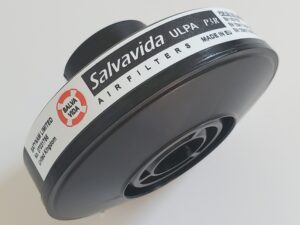
Top executives at major airlines including American Airlines Group Inc., Southwest Airlines Co. and United Airlines Holdings Inc. met Thursday with White House chief of staff Mark Meadows as the companies and their employees make a final push for more job-saving government aid. Airlines agreed not to furlough or lay off employees through the end of September in exchange for $25 billion as part of a broad pandemic relief package last spring. They hoped the funds would see them through the worst of the crisis, but six months later, travel demand is still hovering at around 30% of last year’s levels and airlines expect recovery to be rocky and slow. The restrictions of the first round of aid expire at the end of the month. Unless they receive another infusion of cash, airlines have said they would furlough tens of thousands of workers starting Oct. 1. President Trump and lawmakers in both parties have said they support providing another $25 billion in aid to airlines so they can keep paying all their workers through next March. But Congress has been unable to come to terms on a broader relief package that could include the airline funds, and time is running out. “We remain hopeful for an outcome that spares thousands of our colleagues and their families from what we regard as an avoidable fate,” American Chief Executive Doug Parker and the leaders of the airline’s unions wrote Wednesday in a joint letter to the White House, the Treasury, and Congressional leaders. American has said that some 19,000 of its employees will lose their jobs through furloughs and layoffs Oct. 1 without additional aid. Airline executives and industry lobbyists have grown more pessimistic as Democrats and Republicans in Congress have remained at an impasse over basic questions like the overall size of the next relief package. Mr. Meadows has said previously that the administration was looking into executive orders that could assist the industry, but details have been murky.More recently, there have been signs of movement. Mr. Trump, who has largely remained on the sidelines during the latest discussions, said in a tweet Wednesday that Republicans should seek a more expensive aid package — something that could bring the two sides closer to an agreement. Airlines and labor unions are continuing to plan for the possibility that no further aid is coming. Southwest Airlines has said enough employees agreed to depart on their own that it won’t need to furlough any this year. Delta Air Lines Inc. said this week that it had been able to save enough through voluntary departures, reductions in workers’ hours and other measures that it won’t cut any flight attendants, mechanics, or other front-line workers, with the exception of pilots. Currently the airline is planning to furlough over 1,900 pilots, though the company and the union are still discussing measures that could mitigate that figure. United Airlines pilots are voting on whether to accept reductions in their work schedules, which translates into lower pay, in exchange for a guarantee that all their jobs would be safe until at least June. Union leaders endorsed the proposal Wednesday and members will vote at the end of this month, just days before the first swath of furloughs is due to go into effect. “Hundreds of thousands of airline workers need the CARES Act extension, but with pilot furloughs just weeks away, we can’t wait,” Capt. Todd Insler, chairman of United’s pilots union, said in a statement. Nick Note: Let me educate you on the bullshit. What they forget to tell you is MOST of the 24 billion in aid will not go to employees. But to cover airplane leases and loan payments. This is an example where we are killing the capitalist system. We have 3000 zombie financial institutions several of them trillion dollar enterprises. Now we are creating zombie airlines. Let the dead broke airlines go broke and stay broke. Let the capital system decide the winners and losers Having your PR firm running infomercials showing workers scrubbing airline cabins and claiming that a H10 (coffee paper) HEPA H10 system (which is noting new they installed them 30 years ago) with a MERVE RATING OF 13 that is only FILTERING OUT 89% OF SMALL PARTICLES will not cut it. As a foot note my latest creation a UPLA U15 cartridge filter has a MERV rating of 20 filtering out 0.9995% of particles down to 1um. Until they completely revamp airline cabins and put people in hazmat suits with hoods and separate air supplies flying will continue to be the hart of the pandemic. Don’t laugh people wear space suits. Why not do it on airlines?
| . | |||||
Bank of England eyes sub-zero rates in face of virus, Brexit
LONDON — The Bank of England indicated Thursday that it could cut interest rates below zero for the first time in its 326-year history as it tries to shore up a U.K. economic recovery that is facing the dual headwinds of the coronavirus and Brexit. After unanimously deciding to maintain the bank’s main interest rate at the record low of 0.1%, the nine-member rate-setting Monetary Policy Committee said it had discussed its “policy toolkit, and the effectiveness of negative policy rates in particular.” In minutes accompanying the decision, the rate-setters said a recent wave of virus infections has “the potential to weigh further on economic activity, albeit probably on a lesser scale than seen earlier in the year.” Though the committee noted that recent economic data have been a “little stronger than expected” at its last meeting in early August, it said it is unclear what that says about the future “given the risks.” One clear concern relates to whether Britain, like others in Europe, will reimpose broad restrictions on businesses and public life after the recent flare-up in virus infections across the region. Already social gatherings are being restricted and certain areas of the U.K. are seeing localized lockdowns. The British economy suffered one of the deepest recessions in the world this year when many sectors were effectively mothballed to help contain the pandemic. Though it recouped some ground in the summer as lockdown restrictions were eased, the economy was still around 12% smaller at the end of July than it was in February, when the pandemic started in Europe. The other major risk facing the U.K. economy relates to the post-Brexit trade discussions between the U.K. and the EU following a worsening in relations. If the talks collapse, tariffs and other impediments to trade will be imposed by both sides at the start of 2021, a development that would hurt the U.K. more. The U.K. left the EU on Jan. 31, but is in a transition period that effectively sees it benefit from the bloc’s tariff-free trade until the end of the year while the future relationship is negotiated. With the outlook so murky, the bank was not expected to provide more stimulus on Thursday. Since the pandemic started, it has cut its main rate to a record low and boosted its bond-buying program to oil the financial market’s wheels and keep borrowing affordable. The policymaking panel said Thursday it could take further action on borrowing costs after revealing it had been briefed on how to effectively implement negative interest rates, which would seek to encourage banks to lend rather than hoard their cash. The central bank will further discussions the potential use of negative rates during the fourth quarter. Though that doesn’t necessarily mean a rate cut is likely this fall, it’s a clear signal that the bank could enact further stimulus measures. “While the Bank is clearly exploring the possibility of using negative rates as a potential tool, we doubt it will go down that path anytime soon — at any rate, not in November,” said Kallum Pickering, senior economist at Berenberg Bank. Still, financial markets interpreted the announcement as increasing the likelihood of negative rates next year, potentially in the event of the U.K. and the EU failing to agree on a trade deal. The pound fell 0.7% to $1.2884. Most economists think the bank will boost its bond-buying stimulus program in November. By then, unemployment across the U.K. is expected to be rising sharply as a government salary support program will have come to an end. The Job Retention Scheme, under which the government pays the bulk of the salaries of workers that firms keep on rather than fire, has kept a lid on unemployment. However, it ends on Oct. 31, a change that most economists think will more or less double the U.K.’s unemployment to around 8% from 4.1% at present. Nick Note: We both know the central banks of the G7 will have no choice but go to double digit interest rates. It is a forgone conclusion. As you know we have been predicting this event for years now. The coronavirus guarantees this as far as i am concerned. I predict people will be shocked when the vaccine increases the death rate. Talk about a false sense of security.I am deeply saddened. Economies will be devastated.
___
France reports 10,593 new COVID-19 cases
PARIS (Reuters) – France registered a record 10,593 new confirmed coronavirus in the past 24 hours, health ministry data showed on Thursday, the country’s highest single-day count since the pandemic began. The rise followed a government decision to make COVID-19 tests free, leading to a surge in testing and an increase in infection rates.The previous high in 24 hours in France was 10,561 new cases, recorded on Sept. 12. The seven-day moving average of new cases – which smoothes out irregularities – rose to a high of nearly 8,800. The ministry reported that the cumulative number of cases had risen to 415,481, and the death toll had risen by 50 to 31,095, the second-highest number of new deaths in a day in two months. The government’s decision to make COVID-19 testing free has resulted in long queues at testing centres in cities and testing has increased six-fold since the peak of the first coronavirus wave. About 1.2 million tests were carried out last week, the health minister said. Data show 5.4% of tests were positive. Doctors say many tests are pointless as some people who have no symptoms, or have had no contact with people with confirmed cases, take multiple tests. “To get tested three times a week is totally delirious. Anyone can show up and say they have symptoms,” Jean-Jacques Zambrowski, a doctor and health policy lecturer at Paris Descartes university, said on BFM TV. French television showed scenes of chaos at testing centres in big cities, with people waiting hours and jostling in queues. Hundreds of workers at laboratories went on strike on Thursday over poor working conditions as the testing system buckles under the demand.The number of people being treated in hospital for COVID-19 rose by 25 to 5,844, the 19th consecutive daily increase after a low of 4,530 at the end of August, down from a mid-April high of over 32,000.
Hydroxychloroquine, evidence of efficacy
It’s the dose: I want to be clear here. I believe it works… the Belgium study had 8,000 people. The studies that failed used massive doses. Where it works the dose recommended is 200 to 400mg a day… Where it failed the dose was over 1000mg a day… Crazy shit. Talk to your health professional. My health care professional recommend the dosages as in the video. We have to break out the Plaquenil 4 times. And each time the shit went away. This is far from a clinical study… Why would there be one for a medicine that has been used for over 50 years. Never has a death associated with it and costs pennies a pill to make. As a foot note in Africa where they use this medicine for Malaria the infection rates are similar and the hospitalizations are minuscule and death due to the Coronavirus rare…