Bet you he is sorry now. Trump just lost the election. No matter how far the cover up goed the whole world has changed again. It is my bet most of the White House staff has been infected. My hunch is Trump is sicker then they are letting on. Lets suppose they spin it as a nothing burger. The virus is not listening. The whispers i am hearing are telling me that they particular strain of the coronavirus that is infecting the white house is particularity infectious and the symptoms become sever quickly. Trumps ability to govern is in serious contention. I believe Trump just lost the election. Put a fork in his ass he is DONE! My direct experience is when the put the incubator tube down their throat they all wish they had isolated and wore a mask
Trump tests positive for coronavirus
The president tested positive for COVID-19 while working on plans to reopen the country despite the risks of cases soaring again.
President Donald Trump and first lady Melania Trump have tested positive for the coronavirus just days after one of his closest advisers who also had COVID-19 traveled with him aboard Air Force One.
Trump announced the diagnosis in a tweet:
In a statement dated Oct. 1, 2020, White House press secretary Kayleigh McEnany confirmed the diagnosis.
“The President and First Lady are both well at this time, and they plan to remain at home within the White House during their convalescence,” McEnany stated. She also claimed Trump would continue to “carry out his duties without disruption while recovering.” Trump, who is 74 and is considered obese, according to an assessment in June by the White House physician, faces an increased risk of severe illness from the coronavirus. The Centers for Disease Control and Prevention have long warned that older adults and those with a body mass index of 30 or above are at increased risk of hospitalization and possibly the need for intensive care should they become infected. Hope Hicks, a counselor and senior adviser to the president, tested positive for COVID-19 after traveling with Trump on Tuesday for his first presidential debate with Democratic rival Joe Biden. People close to Hicks told Bloomberg News that she was experiencing symptoms of the virus. She was photographed not wearing a mask as she arrived at the airport in Cleveland for the debate. Trump’s infection also comes after many of his family members attended the debate in Ohio without wearing masks, even after a Cleveland Clinic doctor asked barefaced members of the audience to put them on.
At the debate, Trump also mocked Biden’s wearing of masks at campaign events while falsely claiming there had been “no negative effect” from any of his large campaign rallies in recent weeks. (After a June 20 rally in Oklahoma, health officials cited it as the “likely” source of a surge in local cases.)
“He could be speaking 200 feet away and he shows up with the biggest mask I’ve ever seen,” Trump said of Biden’s use of face coverings and his decision not to hold large in-person campaign events. The president’s infection comes amid his ongoing efforts to declare that the nation has largely moved past the worst threats of the pandemic and could reopen large swaths of the economy, a positive election season message that health experts have warned could not be further from reality. More than 207,000 people in the U.S. have now died of the coronavirus, and more than 7.3 million have been infected. Cases remain high or are rising in more than a dozen states even after an economically devastating shutdown period in nearly every corner of the country. Nick Note: This is a big shit! Maybe now people will start to take this serious……. Trump should be hospitalized at once
House passes updated $2.2T COVID relief bill
House Democrats on Thursday approved a massive, $2.2 trillion package of coronavirus relief, lending political cover to party centrists in tough races while putting fresh pressure on Senate Republicans to move another round of emergency aid before the coming elections. The vote arrived only after last-ditch negotiations between Speaker Nancy Pelosi (D-Calif.) and Treasury Secretary Steven Mnuchin on Thursday failed to yield a bipartisan agreement — and it sent a signal that the prospects for such a deal before Nov. 3 have dimmed considerably. The bill was approved by a tally of 214 to 207, but to secure passage, Pelosi and her leadership team had to stave off a late revolt from a surprisingly large number of centrists who were furious that Pelosi had staged a vote on a bill with no chance of becoming law. “This move toward compromise has demonstrably renewed momentum for a deal, and we are closer than we have been in months, but the only thing that will deliver the help my constituents need is a bill that will actually become law,” said Rep. Cindy Axne (D-Iowa), a first-term lawmaker who opposed the measure. Every Republican voted no, saying the spending levels were too high and the funding targeted certain programs unrelated to the coronavirus crisis.
The legislation has no chance of becoming law for the time being.
Republicans in the Senate and White House both oppose the measure and are backing a proposal that is $600 billion less than the Democratic legislation. Senate Majority Leader Mitch McConnell (R-Ky.) is dedicating the entirety of next week — the Senate’s last in Washington before the elections — to seating federal judges as the upper chamber gears up for a battle over President Trump‘s Supreme Court nominee. “I’d like to see another rescue package. We’ve been trying for months to get there. I wish them well,” McConnell said of the Pelosi-Mnuchin talks. Yet Democratic supporters cheered the bill’s passage, using it to argue that Democrats are focused on getting relief to people. “My constituents and small business owners will be so relieved to know that help that they need is one step closer to being here,” first-term Rep. Kim Schrier (D-Wash.), a pediatrician who flipped a GOP-held seat in 2018, said on the floor before the vote. The package features almost all of the initiatives included in the Democrats’ $3.4 trillion HEROES Act, which passed the House in May, but on shorter time frames, which brought the overall cost down by more than a third. It features almost $500 billion for state and local governments; a renewal of $600 weekly payments for unemployment benefits; another round of $1,200 checks for individuals; $75 billion for coronavirus testing; and billions of dollars more for schools, the Postal Service, food stamps, rental assistance and election security. It also contains emergency bailout funds for two industries hit hardest by the pandemic: airlines and restaurants. “These are not radical ideas,” said Rep. David Cicilline (R.I.), head of the Democrats’ messaging arm. “This is a basic responsibility to keep the American people healthy and safe.” Republicans have argued the measure is too costly, and panned it, in the words of Rep. Virginia Foxx (R-N.C.), as a “$2.2 trillion socialist wish-list.” The breakdown in negotiations on a bipartisan deal came as United Airlines and American Airlines on Thursday began furloughing 32,000 workers, while Alaska Airlines said it would furlough 532 people. That followed an announcement by Disney that it would lay off 28,000 employees mostly from its two theme parks. Insurance company Allstate said it would lay off about 3,800 people, while publisher Houghton Mifflin Harcourt said it was cutting 22 percent of its workforce, or about 525 positions. Goldman Sachs said it was cutting 400 jobs. On top of that, the film and movie theater industries sent a letter to lawmakers this week begging the two parties to come together to reach a deal. The wave of new layoffs are part of what drove Pelosi and Mnuchin back to the negotiating table. After a weeks-long impasse, the pair met in the Speaker’s office for 90 minutes on Wednesday, giving lawmakers and market watchers a glimmer of hope that a deal could get done. But a second in-person meeting never materialized Thursday; instead the negotiators spoke by phone at least twice, taking steps toward a deal but falling short of finalizing one. Pelosi said the sides exchanged proposals, but no deal would be sealed before Friday. House Minority Leader Kevin McCarthy (R-Calif.) characterized the package as “the Pelosi pipedream 2.0.” And White House spokeswoman Kayleigh McEnany said it was time for Pelosi and the Democrats to bring their number down after Republicans put real money on the table. Nick Note: This is a neat trick. The democrats pass a badly needed happy check deal the masses want. Full well knowing the Republicans in the senate will vote it down. That way the Democrats can say look the Republicans do not want to help you!
Trump in ‘quarantine process’ after top aide gets COVID-19
WASHINGTON (AP) — President Donald Trump said Thursday that he and first lady Melania Trump are beginning a “quarantine process” as they await coronavirus test results after a top aide he spent substantial time with this week tested positive for COVID-19. Trump’s comments came after he confirmed that Hope Hicks, one his closest aides, had tested positive for the virus Thursday. Hicks began feeling mild symptoms during the plane ride home from a rally in Minnesota Wednesday evening, according to an administration official, who spoke on condition of anonymity to disclose private information. She was quarantined away from others on the plane and her diagnosis was confirmed Thursday, the person said. Trump tweeted late Thursday: “The First Lady and I are waiting for our test results. In the meantime, we will begin our quarantine process.” Earlier, during a call-in interview with Fox News Channel’s Sean Hannity, Trump said: “Whether we quarantine or whether we have it, I don’t know. I just went for a test and we’ll see what happens.” It can take days for an infection to be detectable by a test, and it was unclear what Trump’s quarantine entailed. Minutes before his tweet, the White House distributed a schedule for Friday that showed he planned to go forward with a fundraiser at his Washington, D.C., hotel and a political rally in Sanford, Florida. Hicks, who serves as counselor to Trump, also traveled with Trump to the first presidential debate in Cleveland on Tuesday. She is the closest White House official to Trump to test positive for the virus so far. The positive test is yet another reminder that the coronavirus continues to spread, even as Trump has tried desperately to suggest it no longer poses a danger. Since it emerged earlier this year, Trump, the White House and his campaign have played down the threat and refused to abide by basic public health guidelines — including those issued by his own administration — such as wearing masks in public and practicing social distancing. Instead, Trump has continued to hold campaign rallies that draw thousands of supporters. The virus has killed more than 200,000 Americans and infected more than 7 million nationwide. The White House had not responded earlier to multiple questions about the last time Trump was tested and whether he and other staffers who spent time with Hicks in recent days will be asked to quarantine. Trump traveled to New Jersey Thursday for a fundraiser despite concerns about Hicks’ health. Trump is 74 years old, putting him at higher risk of serious complications from the virus. He said he expected to have the results back either Thursday night or Friday morning. In a statement, White House spokesman Judd Deere said the president “takes the health and safety of himself and everyone who works in support of him and the American people very seriously.” “White House Operations collaborates with the Physician to the President and the White House Military Office to ensure all plans and procedures incorporate current CDC guidance and best practices for limiting COVID-19 exposure to the greatest extent possible both on complex and when the President is traveling,” Deere said. Hicks traveled with the president multiple times this week, including aboard Marine One, the presidential helicopter, and on Air Force One to a rally in Minnesota Wednesday, and aboard Air Force One to Tuesday night’s first presidential debate in Cleveland. Hicks is one of the president’s most trusted and longest-serving aides, having worked as spokesperson for his 2016 campaign. She originally served as White House as communications director, and re-joined the administration this year as an adviser ahead of the election. Her positive test was first reported by Bloomberg News on Thursday evening. She did not respond to a request for comment. Multiple White House staffers have tested positive for the virus, including Katie Miller, Vice President Mike Pence’s press secretary, national security adviser Robert O’Brien, and one of the president’s personal valets. Kimberly Guilfoyle, who is dating Trump’s oldest son, Donald Trump Jr., tested positive in South Dakota before an Independence Day fireworks show at Mount Rushmore. Still, Trump has consistently played down concerns about being personally vulnerable to contracting COVID-19. “I felt no vulnerability whatsoever,” he told reporters back in May. After earlier positive cases close to the president, the White House instituted a daily testing regimen for the president’s senior aides. Anyone who will be in close proximity to the president or vice president is also tested every day, including reporters. While the Centers for Disease Control and Prevention recommends that people who have been in close contact with someone with COVID-19 quarantine for 14 days, White House staffers are considered essential workers. CDC’s guidelines for exposed essential workers allows them to return to work if they take precautions, including taking their temperature before going into work, wearing a mask at all times and practicing social distancing. Typically, according to the CDC, a person develops symptoms five days after being infected, but symptoms can appear as early as two days after infection or as late as 14 days after infection, and the time range can vary. Nick Note: Let me show you how quantum analysis works. Hope Hicks has tested positive. The difference is she also was symptomatic AND she is VERY ill. Which means she has one of the more debilitating of the 6 mutations of the coronavirus circulating. Now add to the fact on 3 other infection incidents did not result in White House staff or the president put in isolation. Now remember when Trump in the middle of the night was taken to the hospital after suffering a mild stroke. At that time the WHITE HOUSE CLAIMED HE WENT TO THE HOSPITAL IN THE MIDDLE OF THE NIGHT TO START HIS YEARLY TESTS. This time they claim he is in isolation waiting for his test results which will be back in a few days . RELAY!! I guarantee you they have the finest fastest test known to man. MY CONCLUSION: Trump has the corona virus and has tested positive. And in the 4 weeks left to the election he will have to be in isolation for 2 weeks. And the Pres is morbid obese and over 70 years old. That puts him in the highest risk category. They better put him on my favorite pill. SO i guess he and sleepy Joe are both going to be in the basement. Trump was quoted as saying i am not wearing a fucking mask. I think i will send him one of my resperators and my NEW P3 cartage filter with state of the art UPLA U15 filter medium
A dispiriting first faceoff – and an insult to America
No one alive has ever seen a presidential debate like Tuesday night’s unseemly shout fest between President Donald Trump and former vice president Joe Biden – 90 minutes of invective, interruptions and personal insults. It was an insult to the public as well, and a sad example of the state of American democracy five weeks before the election. On the margins, the debate probably did more to help Biden than the president, at a moment when Trump needed to change the shape and trajectory of the campaign. But that’s not what people will remember. Even partisans locked into their choices were probably dispirited at what they were witnessing. One can only imagine what the next two debates between the two men will look like. The tone of the debate was established by Trump in the opening minutes, and it never changed to the end of the evening. The president constantly ignored moderator Chris Wallace’s repeated pleas to maintain order as he took every opportunity and more to verbally hector Biden, throw his rival off balance and take up as much space as possible. This was the Trump who lives on Twitter, not someone who occupies the highest office in the land. Biden, advised to maintain his cool, constantly looked peevish at Trump’s behavior, responding at times with well-prepared rejoinders but also with dismissive verbal broadsides. Exasperated at one point, he shot back at the president, “Will you shut up, man?” Biden cleared the low bar of expectations that the Trump campaign had inexplicably set for him but hardly delivered a shining performance. The dreary debate fittingly ended as it began, in a moment that foreshadowed a tumultuous and divisive end to the election, as Trump pressed his argument, without evidence, that mail ballots are rife with fraud and the election therefore will be invalid.
Trump declined to say that he would ask his supporters to stay calm until a final count had been validated and instead chillingly indicated that he plans to rile up his backers to challenge and contest the counting everywhere possible. He said he would accept the outcome only if he believed the election had been fair.
Biden said he would accept the outcome and predicted that Trump would too, once the votes were counted, no matter the winner. Perhaps. The reality TV star president knows one speed on a debate stage: to attack, to bully his opponent and to ignore the rules. For Wallace, a tough and skilled interviewer, the debate was a nightmare. “Mr. President! Mr. President,” he exclaimed at one point as Trump refused to stay silent when Biden was answering a question. “Gentlemen!” he said at another moment as the two sparred loudly about Trump’s attack on Biden’s son Hunter. Rare were the moments when the two nominees actually discussed their differences calmly and clearly in a debate that ranged across several topics, including the coronavirus pandemic, the Supreme Court, the economy, racial justice and violence in American cities. More often than not, rather than engaging in exchanges that even bordered on civil, Trump and Biden talked over and past each other. Judging the debate by traditional standards gives the evening more credit than it deserves. For most people, this was unwatchable, a grab-the-remote, change-the-channel moment in a forum that in past election years has served the country well. What two more debates like this will accomplish is hard to imagine, other than to heighten tensions in a country already on edge. Nick Note: What a TRAVESTY! GOD have mercy on America and miraculously intervene. Barring a miracle the nation will be fictionalized and break down into debilitating partisan bickering. The debate was little more then a shouting match a mock fight on the school yard playground. I shutter to think what the future holds in light of the grave challenges America faces. The US will fair badly with either one of these guys in power.
Biden came ready to make his points and at times was far more focused in doing so than was the president. In an opening question about the Supreme Court vacancy created by the death of Justice Ruth Bader Ginsburg, he touched on the Affordable Care Act, abortion, public health and the 200,000 deaths from covid-19. He repeatedly branded Trump a liar who didn’t know what he was talking about. Trump played a different game, one of attack and belittle. He hit Biden hard, particularly on law and order in the one moment when he seemed to have a prepared and consistent line of criticism and that his supporters were probably applauding. He tried repeatedly to hang the socialist label around his rival, and Biden, perhaps to the dismay of some on the left, ran away from any suggestion that he is captive to the liberal wing of the party. At times, each declined to answer direct questions about his positions and policy proposals. Biden wouldn’t say whether he would support expanding the Supreme Court if he won the election and Democrats captured the Senate. Trump wouldn’t answer a direct question about whether, as the New York Times reported, he paid just $750 in federal income taxes for 2016 and 2017. Trump needed this debate more than did Biden, given the current shape of the race. Four years ago, he came to the first debate with the polls narrowing and in a year when there was more movement and seeming volatility in his contest with Hillary Clinton. This year there has been only modest movement in the polls, with Biden steadily leading by an average of nine points before the two national conventions, according to a Washington Post average of polls, and now leading by eight points. Potentially more troubling for Trump has been his inability to break across a barrier that would move his support into the high 40s. He has been stuck in poll averages somewhere around 43% or 44% since the late spring, while Biden has been around 50% or above since the beginning of last summer. Trump’s challenge Tuesday was to change the race from a referendum on his presidency into a clear choice between him and Biden. That is the goal of any incumbent president but especially for this president, who has used his office to make himself front and center in every way he can but in ways that now are hurting him politically. Instead he chose otherwise, and it could cost him. Biden may have missed opportunities, but his only real goal was to do nothing to change the race. On that minimal goal, he succeeded. But that’s not what will be remembered about Tuesday night. Instead it will be the degree to which democracy itself has suffered and could suffer more as the election plays out to its conclusion. This has been called the most important election in generations; some say in the life of the country. But that’s not what people who tuned in saw. Partisans will call winners and losers as they see them, and those judgments will be predictable. But collectively, this was not a night when the country could claim victory. Instead, it was quite the opposite.
WH offers Democrats $1.5 trillion stimulus bill
Fox News has reported that the House Democrats have offered a $2.2T bill but the White House is floating a package worth just $1.5-1.6 trillion. The new package, which is being referred to as the updated HEROES Act, proposes to restore popular assistance programs such as the $600 weekly federal unemployment benefits boost and another round of stimulus payments. However, it’s uncertain whether the Senate would consider taking up the revised bill if it clears the House this week. Stocks have been on the bid at the start of the week, but are fading into the forthcoming first of three rounds in the US election debate that gets underway on Tuesday night at 9 ET. Stocks do not like uncertainty and there is plenty of it around. The S&P 500 is down some 0.22% at the time of writing in the final hour of the session on Wall Street. Nick Note: I took profits today as it became apartment one of the key legs got sawed off our stool. I do note believe their will be a new stimulus bill until after the elections,,,
Parrots removed from UK wildlife park after they started swearing at customers

A group of parrots at a zoo had to be put back into isolation when they all started swearing at customers after coming out of quarantine. The five African grey parrots were adopted by Lincolnshire Wildlife Park on August 15 and put into a room together. But it appears they used their time in isolation teaching each other foul language, which left park staff in hysterics – but swift action had to be taken when they started using obscenities with guests. Steve Nichols, CEO at the Friskney park, said the birds were put into a ‘time out’, but admitted over the last 25 years he’s taken in many parrots “that have sometimes had a bit of blue language”. He told LincolnshireLive: “Every now and then you’ll get one that swears and it’s always funny. We always find it very comical when they do swear at you.” However, with nothing better to do in isolation and because by chance the latest crop were all adopted at the same time, they quarantined together leaving a room “full of swearing birds”. “The more they swear the more you usually laugh which then triggers them to swear again,” continued Mr Nichols. Donald Trump challenged Joe Biden to a drug test and his campaign’s response is quite something The park chief said they learnt to swear and laugh at each other swearing, leading to something akin to “an old working men’s club scenario”. Within 20 minutes of them being on display to the public there were reports of the parrots swearing at a customer, and things quickly escalated. “We found it highly amusing and the customers were fine – they were no problem at all. “But we worried because we had a weekend coming up and children coming,” explained Mr Nichols. While the swearing birds helped to put a smile on everyone’s faces despite the worries of Covid-19, they were placed in an off-shore enclosure in the hopes they would be influenced by other parrots to behave more appropriately. Mr Nichols said African grey parrots are particularly adept at “learning vocalisations from all sorts of noises”. The plan now is to release the five birds into separate areas so they can’t encourage each other. However, everyone has appreciated the humour the mischievous parrots have afforded at the park because the pandemic has meant the charity will likely have lost up to £400,000 this year. “It has been a real rough year, but we are the eternal optimists and we have no option. We have to keep moving forward,” said Mr Nichols. He added that everything is geared towards next Easter and they hope things will be in “some kind of normality by then”. The park has also made headlines around the world after a video of Chico, a parrot at the park, singing Beyonce ’s ‘If I were a boy’ went viral. Mr Nichols said people have come to see Chico and then heard about the fouled-mouthed parrots, meaning both have been good for business. “It is quite an unusual place where you are walking around and people are swearing at aviaries trying to get a parrot to swear back at them.” He joked the site has become an “adult theme park”. Nick Note: Phoenix came home about 5 years ago and ended up in my office. The kids told me these birds would learn hundreds of words. So as a joke i decided to teach her to say FUCK YOU. She (i know she is a girl because she loves me and we had her DNA tested) learned the two words in a matter of days. DAD could you not teach her to say Hello. I said well you got 199 words to go so teach her what you want. Its been 4 years and she has never learned another word. We all tried its FUCK YOU or nothing!
Pelosi unveils reduced $2.2T coronavirus aid bill
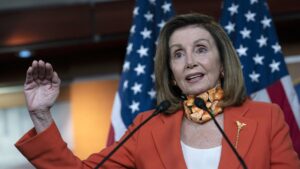
WASHINGTON — (AP) — House Democrats unveiled a scaled-back $2.2 trillion aid measure Monday in an attempt to boost long-stalled talks on COVID-19 relief, though there was no sign of progress in continuing negotiations between House Speaker Nancy Pelosi and Treasury Secretary Steven Mnuchin. The latest Democratic measure would revive a $600-per-week pandemic jobless benefit and send a second round of $1,200 direct payments to most individuals. It would scale back an aid package to state and local governments to a still-huge $436 billion, send a whopping $225 billion to colleges and universities, and deliver another round of subsidies to businesses under the Paycheck Protection Program. The proposal represents a cutback from a $3.4 billion bill that passed the House in May, but remains well above what Senate Republicans are willing to accept. Republicans have endorsed staying in the $650 billion to $1 trillion range. Pelosi said Monday that she remains in contact with Mnuchin, with whom she negotiated several earlier relief packages. The two spoke briefly on Sunday and Monday evening and are slated to talk again Tuesday morning, according to Pelosi spokesperson Drew Hammill. “We’ve come down $1 trillion, and they need to come up because we have to crush this virus,” Pelosi said Monday on MSNBC. “It takes money to crush the virus. It takes money to make the schools safe. It takes money to put money in people’s pockets.” Talks over the summer broke down in acrimony and name-calling, and conversations this month haven’t produced visible progress. Even if the rival sides could agree on a “top line” figure from which to negotiate details, dozens of difficult issues would remain to be sorted out. For instance, Senate Majority Leader Mitch McConnell, R-Ky., is insisting that a liability shield against potential lawsuits brought against businesses, schools and universities that reopen during the pandemic be part of the legislation. Pelosi opposes the idea and didn’t include it in Monday’s legislation. Democrats say the purpose of the new draft legislation is to show good faith and spark a more meaningful round of talks. But it also comes after party moderates and “front line” lawmakers in swing districts protested that Democratic leaders were being too inflexible. Pelosi’s office has said she’s considering putting the new measure up for a floor vote if talks this week with the Trump administration prove fruitless. “Democrats are making good on our promise to compromise with this updated bill, which is necessary to address the immediate health and economic crisis facing America’s working families right now,” Pelosi said in a letter to her colleagues. “We have been able to make critical additions and reduce the cost of the bill by shortening the time covered for now.. Nick Note: Step by step they get closer. They are felling the heat for sure. If they get this through it will help in my stock market Zoom Zoom scenario. Now we all want a zoom Zoom ZOOOM before the next bust.
Trump: Vaccine trials’ results to be extraordinary
United States President Donald Trump claimed on Monday that the test results of all coronavirus vaccines produced by American companies will be “very extraordinary.” There are four US firms that have their vaccines in the final stages of the trials, Trump said at a White House press conference, adding that vaccines will be “coming fast.” Earlier, the commander in chief revealed that 150 million rapid coronavirus tests produced by Abbott Laboratories would be distributed in the country in the “coming weeks.” Nick Note: we all know where this is going. See US elections have become little more then 3 ring circus. Barnum would be proud. And Trump well he is producing a reality TV show. The only business he ever made money in.
Pelosi: Trump’s Debt Poses A ‘National Security
WASHINGTON (Reuters) – U.S. President Donald Trump’s debts reported by the New York on Sunday raised national security issues, U.S. House Speaker Nancy Pelosi said on Monday, adding that the public deserves to know to whom he owes money. Pelosi, in an interview with MSNBC, said it was not clear who held the debts and if it involved different countries, which could hold leverage over the Republican president: “To me this is a national security question.” Nick Note: Trumps debts are massive and he has been compromised because of his debts and sexcapades….