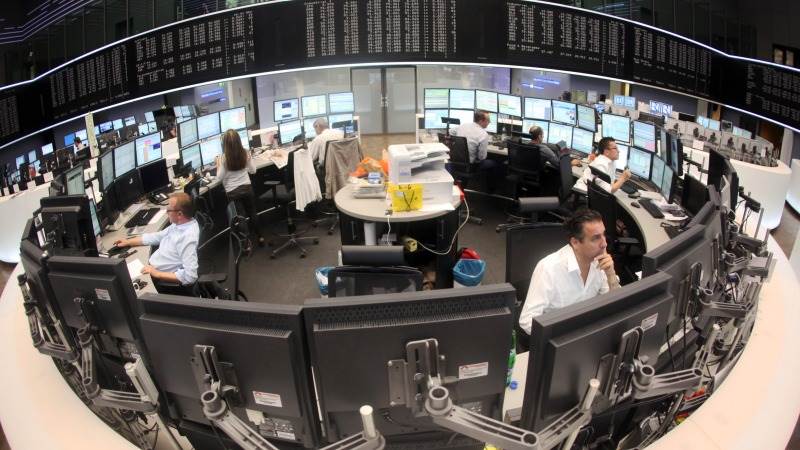
Stocks wilt on growing doubts about U.S. virus response

 Asian shares and Wall Street futures fell on Wednesday, as growing scepticism about Washington’s stimulus package to fight the coronavirus outbreak knocked the steam out of an earlier rally.
The markets were expecting Trump to come forward with concrete packages. Instead Vice President kiss ass told them to not shake hands

Markets had been recovering from a brutal global selloff on Monday that was triggered by the double shock of an oil price crash and the worsening outbreak. Those gains faded away in Asia, with U.S. stock futures falling 3% and MSCI’s broadest index of Asia-Pacific shares outside Japan down 1.3%. Australian shares were down 3.6%, while Japan’s Nikkei stock index slid 2.27%. Euro Stoxx 50 futures were up 0.17%, but German DAX futures were down 0.2%, and FTSE futures fell 0.56%. Earlier this week, U.S. President Donald Trump said he would take “major steps” to ease economic strains caused by the spread of the flu-like virus. Headlines focused on discussions of payroll tax cut, which helped lift market sentiment.

However, the lack of major announcements since then has left some investors unimpressed.

“We were promised something substantive from the Trump administration, and if it hasn’t come yet at this hour, then it looks like it is being delayed,” said Michael McCarthy, chief market strategist at CMC Markets in Sydney.

“That’s why markets have a negative tone. From a global investor’s perspective, there are still a lot of downside risks.” On Wall Street, all three major indexes jumped nearly 5% on Tuesday, one day after U.S. equities markets suffered their biggest one-day losses since the 2008 financial crisis. The dollar resumed its decline against the yen, the Swiss franc and the euro as uncertainty set in. Market participants largely expect the Fed to cut interest rates for the second time this month at the conclusion of next week’s regularly scheduled policy meeting after surprising investors last week with 50 basis point rate cut.

The euro is also in focus before a European Central Bank meeting on Thursday, where policymakers will face pressure to ease policy after Italy put its entire country on lockdown in an attempt to slow new coronavirus infections. U.S. crude rose 1.37% to $34.38 per barrel, while Brent crude rose 1.96% to $37.95 in a topsy-turvy session. Futures initially jumped on signs that U.S. producers will cut output but then pared gains as the trading day progressed. Many analysts say investors need to remain on guard for further market volatility because the coronavirus still poses a risk to public health in many countries, which could place additional strains on the global economy. Restrictions on movement and factory closures aimed at stopping the epidemic are putting the brakes on global economic activity. Nick Note: It s critical you hear me. Its not about the death toll. Its about the disruption to business all over the globe.

THE ONLY WAY TO  STOP THIS THE ONLY TOOL  IS QUARANTINES. 

And that spells economic disaster if extraordinary actions are not initiated. Know Trump has as the tools….. their is no need for further legislation. The markets want concrete solutions and Trump is not their YET! He and Hanity told the public their was no pandemic Its all a fake news and a deep state conspiracy. So Trump has a problem if he declares a nations emergency that opens up his emergency tool box he gives Biden a ammo dump of bullets to use against him. . If he does not move fast he crashes the markets and we all know its the stock market STUPID TRUMP. So you can see why the mixed messaging. HE HAS TO ACT FAST BEFORE THE MASS QUARANTINES THAT ARE COMING. WHICH WITH OUT  EXTRAORDINARY FISCAL AND CENTRAL BANK INTERVENTION  THEIR WILL BE A ECONOMIC DISASTER.  See rare video in Market update called: Liar Liar Trumps Pants Are On FIRE!

Dow jumps more than 1,100 pts at close


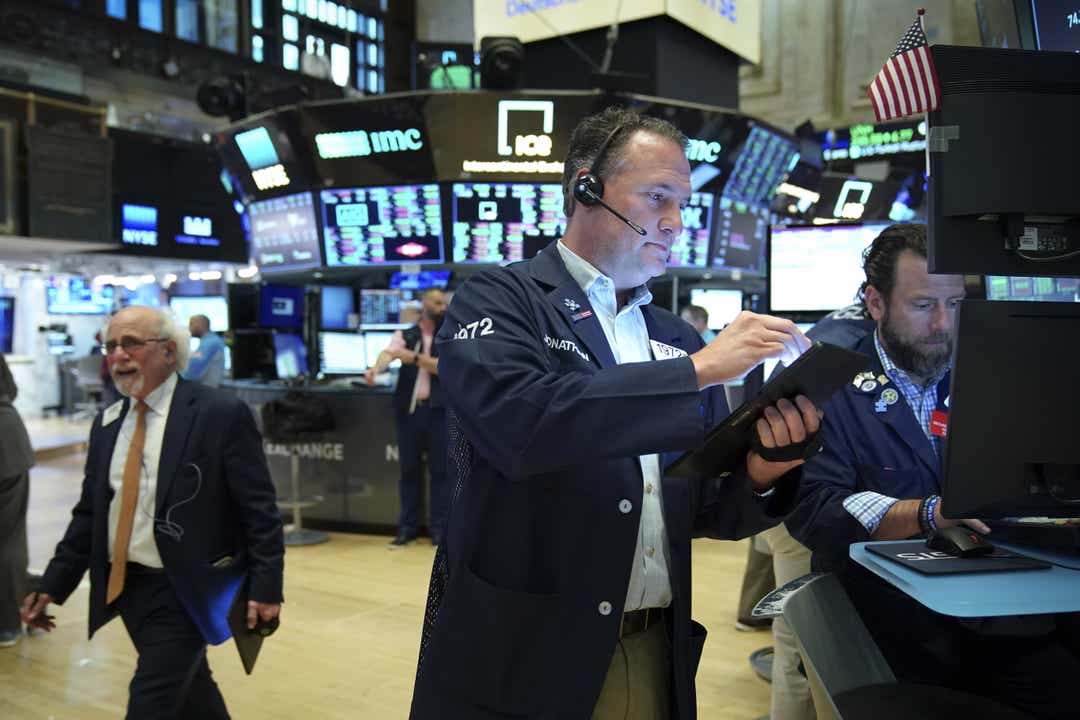
U.S. stocks bounced back Tuesday, a day after crude suffered a historic rout while the broader stock market recorded its worst day since the financial crisis. The Dow Jones industrial average jumped 1,167 points, or 4.9%, to close at 25,018.16, in a wild trading session that saw the blue-chip average swing 1,330 points from its high to its low.  Tuesday’s moves came after the Dow plunged more than 2,000 points on Monday. A free fall in oil prices and mounting coronavirus cases rattled jittery investors a day earlier and pushed major indexes to the edge of a bear market, or a drop of 20% from a recent peak.  The Standard & Poor’s 500 climbed 4.9% Tuesday to end at 2,882.23, after the broad index posted its worst one-day percentage drop since October 2008 on Monday. The index is off about 15% from its Feb. 19 record. The technology-heavy Nasdaq Composite climbed 4.9% to finish at 8,344.25.  Dizzying swings have been relentless in markets the last few weeks. Stocks had a couple days last week where they rose more than 4%, only for the bottom to give out again. “We’re in a volatile period, and investors seeking long-term growth will benefit from staying calm and waiting for the current downturn to pass,” Michael Hanson, senior vice president of research at Fisher Investments, said in a note. Since U.S. stocks set their record high just a few weeks ago, traders have crossed over from dismissing the economic pain created by COVID-19 — thinking it’s similar to the flu and could stay mostly contained in China — to being in thrall to it — worrying that it may cause a worldwide recession. Stocks received a boost Tuesday after President Donald Trump said late Monday he will seek financial relief for workers and businesses affected by the coronavirus outbreak, as new cases were reported across the country.  The number of confirmed worldwide cases was approaching 115,000 early Tuesday. The death toll from the virus has now topped 4,000 — including 26 in the U.S.  Trump’s comment that he will seek relief for workers gave some investors an excuse to resume buying. “This is not like the financial crisis where we don’t know the end is in sight,” said Treasury Secretary Steven Mnuchin. “This is about providing proper tools and liquidity to get through the next few months.”

Trump, MbS discussed oil price slump

The White House confirmed on Tuesday that United States President Donald Trump held a telephone conversation with Saudi Crown Prince Mohammed bin Salman (MbS) to discuss Monday’s sharp losses in the oil markets following Riyadh’s decision to pump significantly more oil. The meeting took place on Monday and “other critical regional and bilateral issues” were also discussed. However, no exact information was given on exact topics. Saudi Arabia decided to increase its oil production after failing to agree with Russia on further output cuts during Friday’s OPEC+ meeting in Vienna. Meanwhile, reports suggested that Saudi Arabia was facing an internal crisis as a number of princes allegedly tried to oust MbS. Several princes are said to have been arrested in the afteermath

Trump struggles to calm nation after days of increasing pressure

WASHINGTON – President Donald Trump confronted one of the most perilous days of his presidency Monday by first erupting in a barrage of commentary that failed to calm the cratering financial markets, struggling to inspire confidence that his administration could stop the spread of the novel coronavirus. But by the time the sun set in Washington, Trump sounded momentarily chastened by the turbulence and previewed a raft of emergency measures to shore up the economy. “We have a very strong economy,” the president told reporters, “but this blindsided the world.”

Responding to days of mounting pressure from Wall Street executives and congressional allies, Trump said he plans to visit the Capitol on Tuesday to advocate for a payroll tax cut and other proposals to provide relief for hourly workers and others affected by the fallout.

Trump, who for weeks has resisted such steps, described the policies at a White House news conference as “very dramatic,” before ceding the lectern to Vice President Mike Pence and top public health experts to deliver a coronavirus update. Trump’s overall handling of the converging crises – while spreading misinformation and blaming others – has unsettled many of his Republican allies on Capitol Hill and even inside the White House, where some aides acknowledged that the president is compounding problems with his grievances and conspiratorial mind-set. President Donald Trump steps from the podium to allow Vice President Mike Pence to speak in the briefing room of the White House in Washington, Monday, March, 9, 2020, about the coronavirus outbreak.

The coronavirus and market meltdown present Trump with a challenge unlike any he has faced as president, and one for which he has no ready solution. At a moment when anxious citizens are turning to the government for facts and assurance, Trump is playing down risks and immersing himself in feuds with Democrats, the media and other perceived enemies.

During a meeting with the nation’s governors Monday in the White House Situation Room, Pence and his team tried to assuage their concerns and explain how states could seek emergency federal funds or provide guidelines on school closures and quarantines, which they anticipate only the hardest-hit communities might need. Maryland Gov. Larry Hogan, a Republican, expressed dismay after leaving the Pence meeting, saying Trump’s statements “sometimes conflict with the information we’re getting from the rest of the administration.” Inside the White House, some officials privately acknowledged Monday that Trump has exacerbated the problem with his series of mistruths and false statements, as well as his callous comments – such as saying he hoped infected cruise passengers would stay aboard the Grand Princess at sea because he didn’t want domestic coronavirus case numbers to rise. Markets plummeted Monday amid global alarm over the coronavirus and a showdown over oil prices, with the Dow Jones industrial average falling more than 2,000 points, or roughly 7.8%. It was the biggest drop for stocks since the beginning of the 2008 recession, and trading was so volatile that the New York Stock Exchange tripped the “circuit breaker” to temporarily halt trading in a bid to encourage stability.

Trump had resisted taking dramatic action, aides said, because he was fearful of causing alarm among the public or further rattling investors. But he changed course Monday after aides presented him with options they thought could help deal with the economic problems caused by the outbreak.

Trump told reporters that he will ask Congress to cut payroll taxes, provide relief to hourly workers and provide assistance to the airline, hotel and cruise industries, which are suffering because many Americans are canceling travel plans. “We’re taking care of the American public and we will be taking care of the American public,” Trump said.

Members of Trump’s coronavirus task force have also discussed declaring a national emergency, which would involve invoking the 1988 Stafford Act to enable the Federal Emergency Management Agency to take disaster-level action, officials said, but those discussions remain preliminary.

Treasury Secretary Steven Mnuchin and White House National Economic Council Director Larry Kudlow will meet with Senate Republicans at their lunch Tuesday, according to two people briefed on the plans. In addition, the White House has invited top Wall Street executives to meet this week. Trump has been reluctant “to shut down an industry” or “tell anyone they can’t go anywhere,” said a senior administration official. On Sunday, however, the State Department and the Centers for Disease Control offered guidance urging Americans – especially older adults with underlying health conditions – to defer cruise travel.

The day before, during a meeting with cruise executives, Pence issued a far sterner warning in private, according to someone familiar with the conversation. Pence told cruise executives that if they do not develop by Tuesday a clear plan to prevent another coronavirus outbreak from happening again on a ship, Trump is prepared to take much stronger actions than he has so far.

Publicly, Trump has accused the media of hyping coronavirus to damage his political standing. Privately, he brooded throughout the weekend about news stories that detailed the ways his administration squandered precious weeks and bungled its handling of the crisis, with much of the blame falling on the president.

“He sees the stories as everyone just being out to get him,” said one administration official, who spoke on the condition of anonymity to describe the president’s mind-set.

Trump is proud about the initial restriction he imposed on travelers from China and has repeatedly complained that he does not get enough credit, to the point of mentioning it in nearly every meeting, several senior Republicans said.

Trump has spent much of the past four days tending to campaign benefactors and preoccupied with his own political future. He has used those settings to complain about what he considers to be coronavirus hysteria in the media and overreaction by financial markets.

“It’s not that big of a deal,” Trump said at one of the events, according to people who heard the comments.

People who interacted with Trump over the weekend at his Mar-a-Lago Club in Palm Beach, Florida, or the nearby Trump International Golf Club, said the president was in gleeful spirits. He stopped by to toast Kimberly Guilfoyle, the girlfriend of his son Donald Trump Jr., at her 51st birthday party.
CDC: Americans over 60 should ‘stock up’ on supplies, avoid crowds

Older Americans, especially those with underlying health conditions, should stockpile supplies and avoid unnecessary travel, a top official at the Centers for Disease Control and Prevention (CDC) said Monday. Most Americans are likely at risk of catching the novel strain of the coronavirus, said Nancy Messonnier, director of the CDC’s National Center for Immunization and Respiratory Diseases. Older Americans are especially susceptible to serious outcomes.   “As the trajectory of the outbreak continues, many people in the U.S. will at some point in time this year or next be exposed to this virus, and there’s a good chance many will become sick,” Messonnier said. “The reason to stock up now is to kind of stick close to home.” Messonnier said global data from Japan and South Korea show that people younger than 60 generally have better outcomes if they catch the virus.  However, people older than 60 are at higher risk for serious illness, especially if they have underlying health conditions such as diabetes, heart disease or lung disease, Messonnier said.  Younger people with underlying health problems are also at risk, but older people with health problems are the most vulnerable. She added that her parents are in their 80s, and even though they don’t live in an area where there is currently community spread of the virus, she advised them to stay close to home.  “The highest risk is those who are older and with underlying health conditions,” Messonnier said. “I think if you’re in one of those groups, separately or together, you need to be thinking towards what personal protections you want to take.” Messonnier’s warning follows new guidance from the CDC that emphasized that older adults and people with underlying health conditions are most at risk for severe disease caused by the coronavirus, and should avoid crowded places, long plane trips and “especially” cruise ships. Health officials have steadily ratcheted up their warnings to the public, even as some in the Trump administration attempt to downplay the severity and impact of the virus. Officials have also begun moving toward a strategy of mitigation, after efforts to contain the virus to just a few areas have failed. Nick Note: This is easy for me since i hate ALL people equally. And and i have had a gentlema’s farm called “Rancho Perro” for  15 years. With cameras, 2 meter high fences, Self Sufficient and stocked to the gills. After all i must protect my dogs!

Italy expands lockdown to whole country

People walk in an almost empty St. Mark’s Square in Venice, Italy, Monday, March 9, 2020. Italian Premier Giuseppe Conte says he is restricting travel  nationwide to try to stop the spread of the new coronavirus. Conte said Monday night a new government decree will require all people in Italy to demonstrate they need to work, have health conditions or other limited legitimate reasons to travel outside their home areas. The battle to halt the coronavirus brought sweeping new restrictions Monday, with Italy expanding a travel ban to the entire country, Israel ordering all visitors quarantined just weeks before Passover and Easter, and Spain closing all schools in and around its capital. Even as workers in Beijing returned to their jobs and new infections in China continued to subside, Italians struggled to navigate the rapidly changing parameters of the nation’s self-imposed lockdown.

The fears fanned by the virus sent Wall Street stocks tumbling to their biggest drop since 2008, with the Dow Jones Industrial Average down 7.8%. Global oil prices suffered their worst percentage losses since the start of the 1991 Gulf War.

“Now that the virus has a foothold in so many countries, the threat of a pandemic has become very real,” said World Health Organization chief Tedros Adhanom Ghebreyesus. “The great advantage we have is the decisions we all make as governments, businesses, communities, families and individuals can influence the trajectory of this epidemic.” More than 113,000 people have been infected with the virus, and more than 3,900 have died of the COVID-19 illness it causes. Most of the cases are in China, but its proportion is shrinking as the caseload grows elsewhere. More than 62,000 people have already recovered. But Italy’s intensifying struggle to halt the virus’ spread emerged as a cautionary tale. “There won’t be just a red zone,” Italian Prime Minister Giuseppe Conte said, in announcing that a lockdown covering about 16 million people in the north would be expanded to the entire country starting Tuesday.

Italian doctors celebrated one small victory after the first patient diagnosed with the illness, a 38-year-old Unilever worker, was moved out of intensive care and began breathing on his own. But the virus’ rapid spread was forcing them to operate like war-time medics, triaging patients to decide who get access to scarce ICU beds.

“Unfortunately we’re only at the beginning,” said Dr. Massimo Galli, head of infectious disease at Milan’s Sacco hospital. Italy’s 9,172 cases and 463 deaths are the second-most in the world. China on Tuesday recorded just 19 new cases over the previous 24 hours, its lowest total since it began reporting national figures on Jan. 20.

Israel will quarantine anyone arriving from overseas for 14 days, a decision coming barely a month before Easter and Passover.

All St. Patrick’s Day parades were canceled in Ireland, including one in Dublin that typically draws half a million to its streets.

All schools in and around Madrid will close for two weeks. The rising number of cases around Spain’s capital “imply a change for the worse,” the country’s Health Minister Salvador Illa said.

In China, the slow emergence from its extreme quarantine measures spotlighted the virus’ continued economic impact. ds“Our business is one-fifth of what it was before,” said Cheng Sheng, who helps run a stand in Beijing that sells sausages and noodles. “There’s much less foot traffic. There are no people.”

Infections were reported in more than half the world’s countries, and flashpoints were erupting around the globe. Nick Note: its not the virus its the quarantines and business shut downs that is the problem!

Saudi Arabia to hike oil output above 10 million bpd in April after OPEC+ deal collapse

DUBAI (Reuters) – Saudi Arabia, the world’s top oil exporter, plans to raise its crude oil production significantly above 10 million barrels per day (bpd) in April, after the collapse of the OPEC supply cut agreement with Russia, two sources told Reuters on Sunday. Saudi Energy Minister Prince Abdulaziz bin Salman visited state oil giant Aramco on Saturday and asked the company to boost its crude output after the current OPEC+ cut deal expires at the end of March, the sources said. On Saturday, Aramco slashed its official selling price (OSP) for April for all its crude grades to all destinations, after OPEC’s oil supply cut pact with Russia fell apart on Friday, sending oil into a tailspin. The sources said that April’s production will be significantly higher than 10 million bpd, possibly closer to 11 million bpd. Saudi Arabia has been pumping 9.7 million bpd in the past couple of months. The message from the Saudi energy minister was that Aramco should maximise its output and sell more crude to protect its market share, the sources said. Saudi Arabia has an oil output capacity of 12 million bpd, giving it the ability to swiftly increase production. A three-year pact between OPEC and Russia ended in acrimony on Friday after Moscow refused to support deeper oil cuts to cope with the outbreak of the coronavirus and OPEC responded by removing all limits on its own production. Oil prices plunged 10% as the development revived fears of a 2014 price crash, when Saudi Arabia and Russia fought for market share with U.S. shale oil producers, which have never participated in output-limiting pacts. “The kingdom is not at war with anyone, but it is pursuing its own interest. Once the deal expires, everyone will raise production,” said the second    source. Nick Note: This oil market has over priced the price war.  US producers need $50 WTI. They cannot do it at even $40. this is a automatic supply cut. ALSO Crown Prick Salamander has really fucked it up this time..  For the record Oil has put in a major bottom and will rally from here.                                                 

Europe tanks at open amid coronavirus, oil crisis

European equity indices were red across the board at the open on Monday as the coronavirus outbreak coupled with crashing oil prices rattled markets. Adding to the turmoil were plunging Treasury yields with the 10-year US Treasury note dropping below 0.4% for the first time ever. Brent futures for May settlement were down 25.98% to $33.51 per barrel at 8:48 am CET, while West Texas Intermediate for April tumbled 27.91% to $29.76 a barrel at the same time. The drop in prices comes after last week’s failed OPEC+ meeting, which led Saudi Arabia to slash crude prices for April. The DAX sank 7.47% at the open, as the FTSE 100 lost 1.82% in the first minute of trade, only to fall nearly 9% minutes later. The euro gained 1.13% against the dollar at 9:05 am CET, buying 1.14335. At the same time, the pound advanced 1.10% versus the greenback to go for 1.31762.

Dow plummets over 1,500 pts in premarket trade

Shares on Wall Street crumbled further in premarket trade on Monday as markets continued to be gripped by fears over the coronavirus outbreak and crashing oil prices. Following a collapse in talks between Saudi Arabia and Russia at the OPEC+ meeting in Vienna last week, the Gulf kingdom decided to engage in a so-called price war, cutting prices of its crude for April. The move triggered a 30% drop in crude benchmarks overnight. Treasury yields also tanked, with the 10-year US Treasury note dropping below 0.4% for the first time ever. The Dow was down 1,562 points at 4:39 am ET. At the same time, the S&P 500 fell 6.72% while the Nasdaq 100 lost 5.08%.