- The US and Iran’s interim peace has collapsed after American forces reimposed a naval blockade and launched airstrikes, while Tehran attacked oil tankers sailing through the Strait of Hormuz.
- The US launched airstrikes at military sites in southern Iranian towns and cities, and Iran targeted US bases in Jordan and Bahrain, and hit two oil tankers from the United Arab Emirates with cruise missiles.
- US President Donald Trump proposed a 20% reimbursement fee on all cargo shipped through the Strait of Hormuz, which would account for costs of providing safety and security, but the plan’s implementation and legality are uncertain.
The interim peace between the US and Iran effectively collapsed after American forces reimposed a naval blockade and launched another wave of airstrikes, while Tehran attacked more oil tankers sailing through the Strait of Hormuz. US President Donald Trump’s decision to restart a blockade of Iranian ports overnight came after hostilities between the two sides worsened in the past week, with tensions centered on control of the strait.
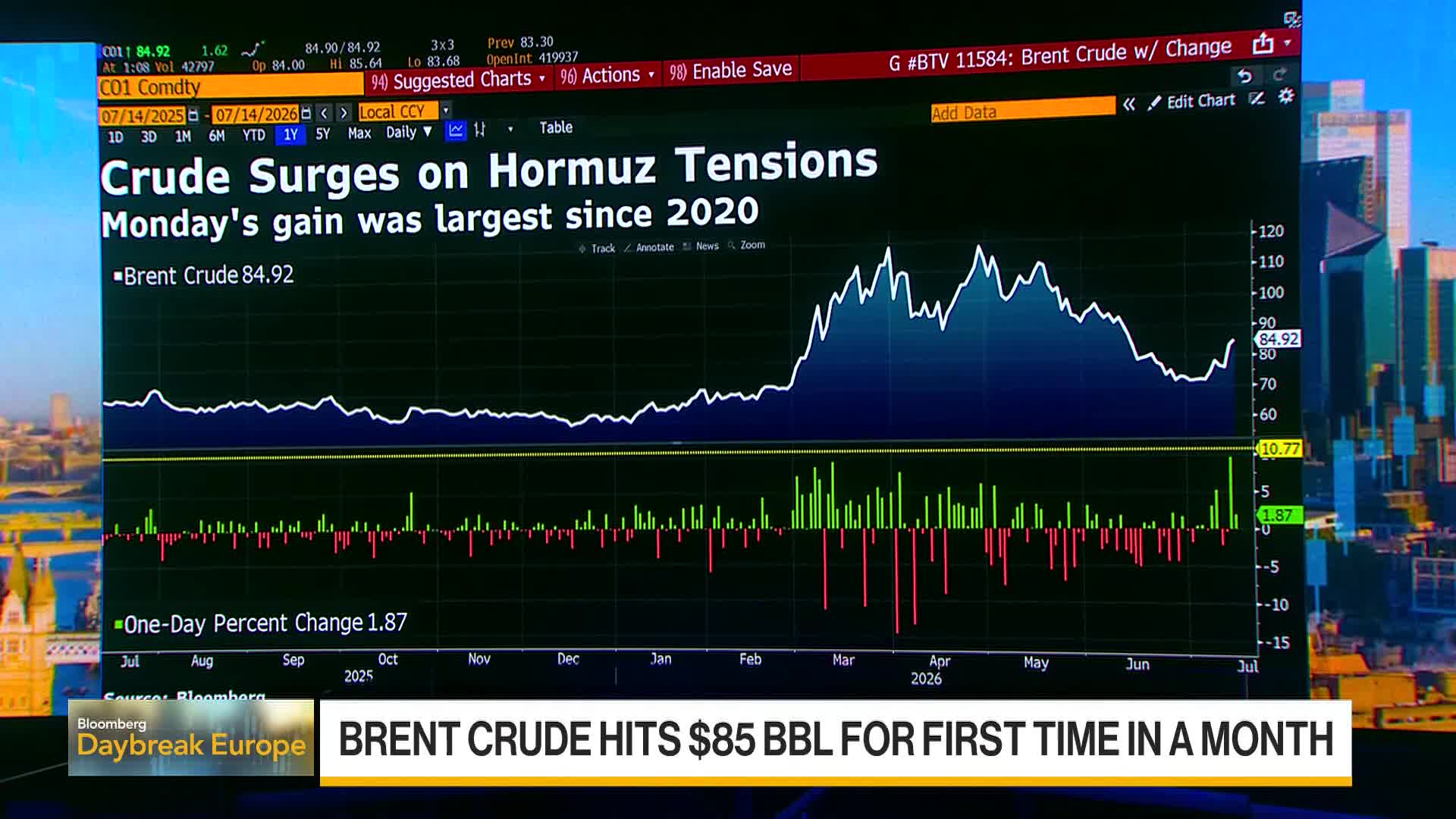
Traffic through the all-important waterway has dwindled and oil has surged 20% since attacks rekindled, with Brent trading around $86 a barrel.
On Monday night, the US launched airstrikes at military sites in several southern Iranian towns and cities over a five-hour period. Iran targeted US bases in Jordan and Bahrain, and hit two oil tankers from the United Arab Emirates with cruise missiles. The latter attack killed an Indian crew member and wounded about eight others. Iran’s Islamic Revolutionary Guard Corps said the tankers had ignored warnings and that the US had “incited” them to deviate from navigating channels approved by Tehran. The latest incident adds to a spate of shipping attacks by Iran, including on Saudi Arabian and Qatari tankers, since July 7. The US has reacted by firing upon hundreds of Iranian military targets, prompting counterstrikes by Tehran on American allies such as Kuwait, Bahrain, Qatar and Oman. The “shaky peace established by the June deal has ended,” said Eurasia Group analysts including Gregory Brew and Firas Maksad. “Rapid de-escalation appears unlikely, given how both sides have committed to their positions, and an environment of heightened tensions and depressed Hormuz traffic is likely to endure through July.
Brent crude is up almost 20% since early last week
The escalation in fighting between the US and Iran stems in large part because their preliminary deal from last month — meant to set the stage for talks over Iran’s nuclear program and a permanent end to the war — was ambiguous about the Hormuz strait. Each side claims the other has breached the terms of the so-called memorandum of understanding. The US said the document allowed for free passage of ships through the waterway, while Iran claims it was given the right to manage traffic.
Trump, late on Tuesday, said the strait was “open” HAHAHAHAHAH but added to the chaos for energy companies and shippers by saying he would demand a reimbursement fee of 20% on all cargo shipped through. That would account “for any and all costs necessary to do the job of providing safety and security to this very volatile section of the World,” he said on Truth Social. The number of vessels transiting through the strait fell to the lowest level in a month on Sunday, according to Bloomberg ship-tracking data. Trump’s latest declaration and the increased US strikes underscore his precarious position just over three weeks after signing the MOU. That deal helped lower gasoline prices in the US, raising his Republican Party’s hopes ahead of midterm elections in November. “At least rhetorically, Trump appears to be trying to play the Iranians at their own game,” said Holly Dagres, a senior fellow at the Washington Institute for Near East Policy. “Rest assured, the Iranians won’t be giving up the strait that easily.”