EIA Weekly Petroleum Data for the week ending December 6, 2019

U.S. commercial crude oil inventories (excluding those in the Strategic Petroleum Reserve) increased by .8 million barrels from the previous week. At 447.9 millionbarrels, U.S. crude oil inventories are about 4% above the five year average for this time of year. U.S. crude oil refinery inputs averaged 16.6 million barrels per day during the week ending December 6, 2019, which was 201,000 barrels per day less than the previous week’s average. Refineries operated at 90.6% of their operable capacity last week. Gasoline production decreased last week, averaging 9.8 million barrels per day. Distillate fuel production decreased last week, averaging 5.2 million barrels per day. U.S. crude oil imports averaged 6.9 million barrels per day last week, up by 899,000 barrels per day from the previous week. Over the past four weeks, crude oil imports averaged about 6.3 million barrels per day, 17.4% less than the same four-week period last year. Total motor gasoline imports (including both finished gasoline and gasoline blending components) last week averaged 579,000 barrels per day, and distillate fuel imports averaged 162,000 barrels per day. Total motor gasoline inventories increased by 5.4 million barrels last week and are about 5% above the five year average for this time of year. Finished gasoline and blending components inventories both increased last week. Distillate fuel inventories
increased by 4.1 million barrels last week and are about 9% below the five year average for this time of year. Propane/propylene inventories increased by 1.7 million barrels last week and are about 10% above the five year average for this time of year. Total commercial petroleum inventories increased last week by 17 .2 million barrels last week.
Total products supplied over the last four-week period averaged 20.4 million barrels per day, down by 2.4% from the same period last year. Over the past four weeks, motor gasoline product supplied averaged 9.1 million barrels per day, up by 0.1% from the same period last year. Distillate fuel product supplied averaged 4.0 million barrels per
day over the past four weeks, down by 2.1% from the same period last year. Jet fuel product supplied was up 2.6% compared with the same four-week period last year.

Saudi Aramco IPO: Oil giant nears $2trn valuation on opening day

RIYADH/DUBAI (Reuters) – Saudi Aramco shares surged the maximum permitted 10% above their IPO price on their Riyadh stock market debut on Wednesday, in a move hailed by the government as a vindication of its towering $2 trillion valuation of the state oil company. The shares leapt to 35.2 riyals ($9.39) each, up from the initial public offering (IPO) price of 32 riyals and at the daily limit of price moves allowed by the Tadawul exchange. That gives Saudi Arabian Oil Co (Aramco) a market value of about $1.88 trillion, comfortably making it the world’s most valuable listed company and closing in on the $2 trillion price tag long coveted by Saudi Crown Prince Mohammed bin Salman. “It’s a great day for Saudi Arabia and the leadership of Saudi Arabia and for the people of Saudi Arabia. It’s a D-Day for Aramco, it’s a day of reckoning and vindication,” Energy Minister Prince Abdulaziz bin Salman told Reuters in Madrid. Aramco raised a record $25.6 billion in its IPO last week, the culmination of a years-long effort by the Crown Prince to open up the energy giant to outside investors and raise funds to help diversify the economy away from oil. But the kingdom cut back original plans to sell a 5% stake and include a foreign listing after lukewarm interest from international investors worried about Aramco’s governance, the environment and regional instability – particularly after drone attacks on major Aramco facilities in September. The company sold just a 1.5% stake and relied on mainly domestic and regional buyers. Prince Abdulaziz said last week that Aramco was worth well over its IPO valuation of $1.7 trillion and predicted investors who didn’t buy into the offering would be “chewing their thumbs” after missing out.

The flotation propels the Riyadh bourse into the world’s top 10 by value of listed companies.

The early share price gain values Aramco at more than six times U.S. oil major Exxon Mobil Corp more than twice Saudi Arabia’s annual gross domestic product; and far ahead of U.S. tech giant Apple’s $1.2 trillion price tag. “This is a successful IPO and the Aramco listing will add depth to the local market by providing exposure to a vital sector of Saudi Arabia’s economy,” said Bassel Khatoun, managing director, frontier and MENA at Franklin Templeton Emerging Markets Equity.

But investing in Aramco is a bet on the price of oil and growth in global demand for crude is expected to slow from 2025 as global steps to cut greenhouse gas emissions are rolled out and the use of electric vehicles increases. If Aramco shares gain 10% on both Wednesday and Thursday, its valuation will surpass $2 trillion. The company is expected to be included in the MSCI emerging markets index on Dec. 17. Nick Note: A star is born. American capitalism has become corrupt and inbred. These sovereign wealth funds government controlled are the future. GOD help us all

API data show an unexpected weekly climb in U.S. crude supply

The American Petroleum Institute reported late Tuesday that U.S. crude supplies rose by 1.4 million barrels for the week ended Dec. 6, according to sources. The API data also reportedly showed stockpile increases of 4.9 million barrels for gasoline and 3.2 million barrels for distillates. Inventory data from the Energy Information Administration will be released Wednesday. The EIA data are expected to show crude inventories down by 2.8 million barrels last week, according to analysts polled by S&P Global Platts. They also forecast supply increases of 3.3 million barrels for gasoline and 2 million barrels for distillates. January West Texas Intermediate crude CLF20, +0.12% was at $59.07 a barrel in electronic trading, down from the contract’s $59.24 settlement on the New York Mercantile Exchange.

Source of UK-US trade document leak must be found

Boris Johnson has said an investigation is needed into the source of leaked documents on UK-US trade negotiations posted on Reddit. Labour says the documents show the NHS would be at risk under a post-Brexit trade deal with the US. On Friday, forum website Reddit said unredacted documents were uploaded as “part of a campaign that has been reported as originating from Russia”. It has suspended 61 accounts that showed a “pattern of coordination”. The government said it was looking into the matter with help from the National Cyber Security Centre. Speaking on Saturday, Mr Johnson said “we do need to get to the bottom” of the leak but said he had seen “no evidence of any successful interference by Russia in any democratic event in this country”. The Culture Secretary Nicky Morgan said this all pointed towards foreign involvement: “I understand from what was being put on that website, those who seem to know about these things say that it seems to have all the hallmarks of some form of interference.” Labour’s shadow transport secretary Andy McDonald reiterated his call for Mr Johnson to release an intelligence report into Russian covert actions in the UK, which No 10 has been accused of suppressing until after the election. In a post on its site, Reddit did not provide any further details about the evidence behind its conclusions, nor did it identify any specific individuals. The BBC has approached the Russian foreign ministry spokesperson but they have yet to comment.  The contents of the documents have played a significant part in Labour’s election message on the NHS, after Mr Corbyn highlighted them at a press conference on 27 November. The Labour leader said the papers were evidence that the UK government was in advanced stages of negotiations with the US to open up the NHS to American pharmaceutical companies A bit like journalists never reveal their sources, Labour are quite happy to focus on what these documents say rather than where they come from. We’re still talking about these documents and what Labour claims that they show – that the NHS is up for sale, in their words. Boris Johnson and the Conservatives flatly deny that. Speaking on Saturday, the Labour leader said the controversy surrounding the source of the documents was “nonsense” and accused Mr Johnson of wanting to “hide the issues and the truth” over the future of the NHS in trade deals. Neither UK nor US governments have disputed the authenticity of the documents.

Repo Blowup Was Fueled by Big Banks, Hedge Funds, BIS Says

https://youtu.be/6L24A_rKs54

Washington — The September mayhem in the US repo market suggests there is a structural problem in this vital corner of finance and the incident was not  just a temporary hiccup, according to a new analysis from the Bank for International Settlements (BIS).

This market, which relies heavily on just four big US banks for funding, was upended in part because those firms now hold more of their liquid assets in Treasuries relative to what they park at the Federal Reserve, officials at the Basel-based institution concluded in a report released on Sunday.

That meant “their ability to supply funding at short notice in repo markets was diminished”. And hedge funds are financing more investments through repo, which “appears to have compounded the strains”, the researchers said. This brings the BIS, the central bank for central banks, into a controversy that has vexed observers for almost three months: Why did the repo market get so bad, so quickly? On September 17, rates on general collateral repo briefly surged to 10% from about 2%. Many, including the Fed, concluded in the immediate aftermath that two transitory events collided: investors used repo to finance the purchase of a large batch of newly auctioned Treasuries at the same time that quarterly corporate tax payments drained liquidity from that market. But the BIS doubts an ephemeral supply-and-demand imbalance is totally to blame.

“None of these temporary factors can fully explain the exceptional jump in repo rates,” Fernando Avalos, Torsten Ehlers and Egemen Eren wrote in the latest BIS Quarterly Review.

Reserves — or cash that banks stash at the Fed — are the easiest asset for banks to tap when they want to quickly move money into repo. And it would have  been logical for banks to pour cash into repo to get those 10% returns from an overnight loan.

The four banks that dominate the market hold about 25% of the reserves in the US banking system, but 50% of the Treasuries. That mismatch likely slowed the movement of cash into repo, the BIS researchers postulated.

Volatility in the amount of cash the US Treasury keeps parked at the Fed also affected banks’ reserves. “The resulting drain and swings in reserves are likely to have reduced the cash buffers of the big four banks and their willingness to lend into the repo market,” the team wrote.Along with changing market structure, the researchers also connected the repo ruckus to banks being somewhat out of practice in daily reserve management. That is because trillions of dollars worth of Fed asset purchases — the so-called quantitative easing programme meant to help the economy recover from the 2008 financial crisis — had left the banking system flush with cash for years. “The internal processes and knowledge that banks need to ensure prompt and smooth market operations may” have started to decay, they wrote. “This could take the form of staff inexperience and fewer market-makers, slowing internal processes.”

The Fed in 2017 started shrinking its balance sheet and shortages began to re-emerge last quarter. The Fed stopped paring back its holdings in August and started buying Treasury bills in October, an attempt to add reserves to the banking system. That was part of its campaign to keep the repo market calm, an effort that began in September with overnight and then longer-term repo operations. “These ongoing operations have calmed markets,” the BIS researchers wrote. Still, market participants are wary that trouble may resurface at year-end — a time when repo liquidity has historically been scarce. There has been high demand from money-market participants for cash via repo that the Fed’s been offering with tenors that will extend into 2020. The report also took a look at the European repo market, which escaped the kind of turmoil that engulfed the US in September. But that does not  mean all is calm. Beneath the surface, the $9-trillion  market is becoming increasingly fragmented, raising the risk that cash may not flow through properly, the BIS said. That meant “their ability to supply funding at short notice in repo markets was diminished.” And hedge funds are financing more investments through repo, which “appears to have compounded the strains,” the researchers added. Nick Note: This is concrete proof of the mayhem that is coming. Get out of real estate. Close out ALL loans, Start buying Zeros (see Today’s  Reco) Ge ALL exces cash in Treasury direct. And prepare yourself to male a killing.

Britain Gears Up for Its Most Divisive Election in Decades

Boris Johnson holds a double-digit lead in opinion polls ahead of a crucial vote to decide Brexit’s fate

LONDON—British Prime Minister Boris Johnson holds a double-digit lead in opinion polls as Britain prepares to vote Thursday in a crucial general election that will determine Brexit’s fate. If reflected in the election, the lead would be enough to give him a comfortable majority—though a recent narrowing of the lead reflected in some polls is enough to keep the outcome uncertain. The bitterly fought election campaign bookends more than three years of political stalemate over how—or even if—the U.K. should quit the European Union. If Mr. Johnson’s Conservative Party wins enough votes to form a majority in Parliament it will open the way for the U.K. to leave the EU on Jan. 31.

If Mr. Johnson fails to gain a majority, a combination of opposition parties likely led by the Labour Party could come to power and call for another referendum on Brexit, further extending the uncertainty of Britain’s split with its biggest trade partner.

The pound has already rallied against the dollar in recent days in anticipation of a comfortable Conservative victory but with Brexit scrambling traditional party allegiances and pollsters warning that many voters are still undecided, the election could yet slip away from Mr. Johnson. On Friday, Mr. Johnson dueled with Labour Party leader Jeremy Corbyn during a televised debate but neither managed to land a convincing blow on the other. “The biggest thing we need to get right is Brexit,” Mr. Johnson said on Sunday. “That is the thing that has been hanging over us the last three years.” Nick Note: I want to be very clear here. It looks like Boris will win. BUT BUT BUT what the markets fail to understand without a legislative majority his goose is cooked (just in time for Christmas) we are short the pound mostly in the soon to expire December contract which comes up for experiation on December 27.  I want to hold these shorts before i roll them into March to see the results of the December 12 elections. I am sure your broker will try to yank your dick or pinch your pussy with the ole G ET Out  GET OUT  before deliver… Here is a news flash their is no delivery its a cash settled contract so tell him to get the rough end of the pineapple ad stick it up his ASS.

N. Korea conducts ‘important test’ at once-dismantled site

People watch a TV news program reporting North Korea’s announcement with a file footage of North Korean leader Kim Jong Un, at the Seoul Railway Station in Seoul, South Korea, Sunday, Dec. 8, 2019. North Korea said Sunday it carried out a “very important test” at its long-range rocket launch site that U.S. and South Korean officials said the North had partially dismantled as part of denuclearization steps. The letters, top left, read “North. Very important test.” (AP Photo/Lee Jin-man)

SEOUL, South Korea (AP) — North Korea said Sunday that it carried out a “very important test” at its long-range rocket launch site that it reportedly rebuilt after having partially dismantled it at the start of denuclearization talks with the United States last year. The announcement comes amid dimming prospects for a resumption of negotiations, with the North threatening to seek “a new way” if it fails to get major U.S. concessions by year’s end. North Korea has said its resumption of nuclear and long-range missile tests depends on the United States. Saturday’s test at the Sohae Satellite Launching Ground will have “an important effect on changing the strategic position of (North Korea) once again in the near future,” an unidentified spokesman from the North’s Academy of National Defense Science said in a statement, carried by the country’s official Korean Central News Agency. North Korea didn’t say what the test included. Kim Dong-yub, an analyst at Seoul’s Institute for Far Eastern Studies, said that North Korea likely tested for the first time a solid-fuel engine for an intercontinental ballistic missile. The use of solid fuel increases a weapon’s mobility and reduces the amount of launch preparation time. The long-range rockets that North Korea used in either ICBM launches or satellite liftoffs in recent years all used liquid propellants. CNN reported Friday that a new satellite image indicated North Korea may be preparing to resume testing engines used to power satellite launchers and intercontinental ballistic missiles at the site. Seoul’s Defense Ministry said in a brief statement later Sunday that South Korea and the United States are closely monitoring activities at the Sohae site and other key North Korean areas. President Donald Trump reacted to the development by saying that North Korea “must denuclearize.” “Kim Jong Un is too smart and has far too much to lose, everything actually, if he acts in a hostile way,” Trump tweeted Sunday.“North Korea, under the leadership of Kim Jong Un, has tremendous economic potential, but it must denuclearize as promised,” he said. Nick Note: Breaking up is so hard to do. Kim Yon Num Chucks made it clear he is NOT NOT NOT giving up the nukes..And why should he? He knows a clown when he see one!!

Dennis Gartman ends newsletter after more than 30 years

The famed investor, who called it quits on his namesake “The Gartman Letter” last week after 30 years, said Donald Trump’s multiple trade wars and other threats mean it’s time to raise cash
Dennis Gartman said he won’t give up TV, radio or print interviews, even as he ceases publication of his newsletter. Dennis Gartman plans to halt publication of “The Gartman Letter” after more than three decades of producing his daily investor report. “There comes a time when retirement calls,” Mr. Gartman wrote in the Nov. 29 edition of the newsletter. “The simple sums of information available to everyone have made our efforts difficult and yet easier at the same time. Add to this the increased tax and regulation requirements and we’ve chosen to stop doing business as we have in the past.”

Mr. Gartman said he won’t give up TV, radio or print interviews and that a biweekly bulletin and podcasts are among the options being considered “to make certain that we are not immediately forgotten.” Mr. Gartman got his start in the early 1970s as an economist at Cotton Inc. before he moved on to roles at NCNB National Bank in Charlotte, N.C., and A.G. Becker & Co. in Chicago, according to a bio on the CNBC website. He moved to Virginia in the early 1980s, where he ran the futures brokerage operation for Sovran Bank before starting his eponymous newsletter in 1987. “The Gartman Letter” addressed economic, political and technical trends. Its subscribers include hedge funds, banks, brokerage firms and mutual funds, among others. Like everyone making predictions about markets, Mr. Gartman made calls that didn’t always pan out, and he has taken more than his share of social media lumps for wrong-way forecasts. In February 2018, he lamented putting the volatile stock Riot Blockchain Inc. into his retirement account — just a couple months after saying on CNBC that Bitcoin was nonsense and he wouldn’t buy or sell any. Emails and calls to Mr. Gartman went unanswered. Nick Note: Bottom lie its the GREATEST trading market EVER. This year ALL as in All of my trades made money… And for smart people with the  3 B’s as in Balls, brains and bucks we have made a killing. See its kind if hard to me recos when one no longer can get to steal Great Trade ideas from successful people…. He was WAY WAY past his sell buy date!!

Saudi Arabia Voluntarily Pledges Even Deeper Cuts

Here is the information th eTrade assholes forgot to give you…. And ole Porter tor. Unfortunately Gartman can’t give you the real information since his trading has been such a big loser… this year….. Oh did I mention he stopped publishing………

oil trader

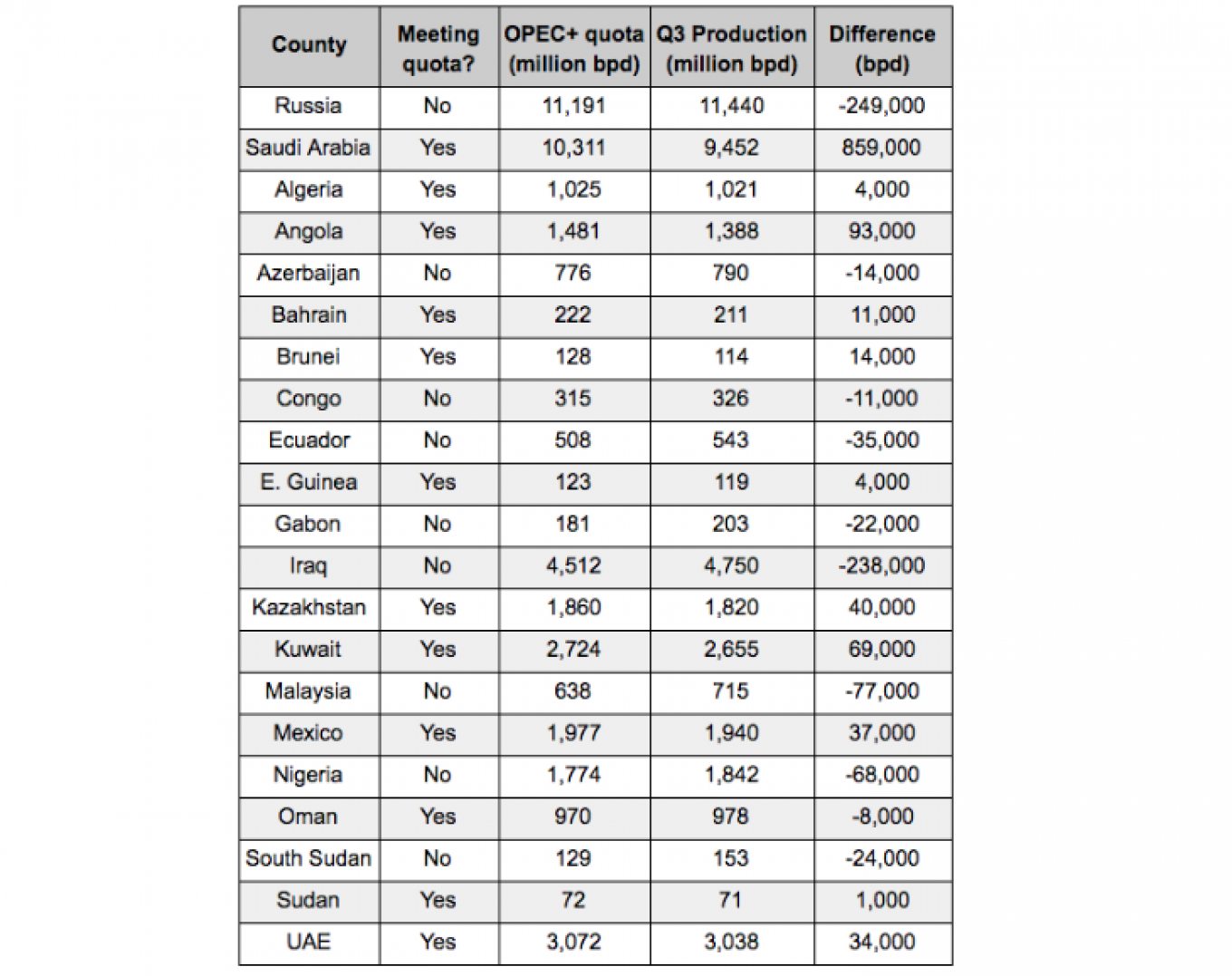
Saudi Arabia shocked the oil market on Friday, with its energy minister Prince Abdulaziz bin Salman pledging to voluntarily cut even more oil production than its new quota, according to S&P Global Platts. Under the existing oil production quota, Saudi Arabia had agreed to keep production under 10.311 million bpd—a cut of 322,000 bpd. But on Friday, OPEC divvied out an additional 372,000 bpd of cuts to its members, with Saudi Arabia’s new production cap coming in at 10.145 million bpd—an additional cut of 166,000 bpd. But Saudi Arabia is planning to do more than even that—planning to keep its production at or below 9.744 million bpd. For reference, Saudi Arabia’s production for October was 9.890 million bpd, so this new voluntary pledge to cut even more than the group had asked it to is even more of a reduction. If all members, including the non-OPEC side which must cut an additional 131,000 bpd, stick to their new production quotas including Saudi Arabia’s voluntary cuts, (HA HA HA HA HA HA)  it would mean a total of 2.1 million bpd in restrictive oil production.     The fact that Saudi Arabia was willing to shoulder even deeper cuts than it was asked to is telling of the position of the Kingdom, who has long carried the production cut deal nearly singlehandedly, motivated by its upcoming Aramco IPO, which depends significantly on oil prices. As additional motive for Saudi Arabia and the cartel to agree on a deeper production quota despite losing market share by doing so is the expectations of depressed demand growth going forward, which is expected to continue to weigh on oil prices without additional supply restrictions. The news of an OPEC win and the Saudi Surprise has already started to lift oil prices, with WTI and Brent up roughly 1.27% and 1.56% respectively on the close of NY trading Friday. Nick Note: We are shorting the shit out of this bullshit. Give ma a DAH! its pretty simple the IPO funds next week and the pretradig buyers are going to get a BIG payday as Armeco stock soars……. Then they get near their 2 trillion dollar valuation. AND THEN its time to screw high cost producers to the wall with a BIG price decrease…. Bye Byre fracking billionaires……

OPEC and allies agree to deepen oil output cuts

A ministerial committee of OPEC and its partners led by Russia recommended that the OPEC+ oil production cuts be deepened by 500,000 bpd, two sources told Reuters on the sidelines of the OPEC meeting in Vienna.  The Joint Ministerial Monitoring Committee (JMMC) of the OPEC and non-OPEC countries with representatives of the leaders of the two groups, Saudi Arabia and Russia, respectively, met to discuss the state of the oil market and to suggest a course of action for the full OPEC ministerial meeting which is taking place at the time of writing. The full ministerial OPEC plus Russia-led non-OPEC meeting will be held on Friday. Russia’s Energy Minister Alexander Novak said at the end of the OPEC+ JMMC panel meeting that the recommendation is to deepen the cuts by 500,000 bpd in the first quarter of 2020 with full compliance and JMMC to meet again in March to review the market situation. On Thursday, the much-anticipated meeting in Vienna began with rumors among analysts that a so-called “Saudi surprise”—deepening the cuts by 800,000 bpd or even more—may be in the making. The unusual level of ‘no comments’ from delegates and unusually cohesive discipline in (the lack of) messages to the media raises questions, Financial Times Energy Editor, David Sheppard, tweeted.
Then word began to circulate that Saudi Arabia and Venezuela proposed at the OPEC+ panel deepening the cut by 500,000 bpd. A Saudi official told Energy Intelligence that there was “No deeper cut being advocated by the kingdom.” There are also reports that Saudi Arabia told on Thursday its partners that it is no longer tolerating any cheating on quotas, and, according to Bloomberg, they are offering a quid pro quo—”we will cut, if you stop cheating.”   According to analysts who have run the numbers, deepening the cuts by 500,000 bpd—considering the October 2018 baseline in the current deal—would not be much of a hassle for the OPEC+ group, because they are currently overcomplying as a whole with the level of the cuts. If laggards in compliance, such as Iraq and Nigeria, fall in line, and if Russia wins with its request to have condensate out of the crude oil production numbers, then these additional 500,000 bpd ‘cuts’ are no actual cuts at all. Nick Note: I am waiting for this theater to run its course. I regular this as a potential  selling opportunity. The cuts which they will never stick to are not enough, Is time for OPEC to fuck US oil producers once again.