The Dow Jones Industrial Average dropped 200 points on Wednesday after media reports said that there is a chance the United States and China will not reach the “phase-one” of their trade deal until the end of the year. Earlier in the day, President Donald Trump stated that it will be up to him to decide if he wants to ink a deal with China as the US is benefiting from tariffs.The Dow was 0.71% in the red at 1:05 pm ET as it was led lower by The Home Depot Inc which lost 1.70% at 12:50 pm ET. The Nasdaq 100 was down 0.92% at 1:06 pm ET as Ulta Beauty Inc led the losses as it fell 2.68% at 1:07 pm ET. Meanwhile, the S&P 500 was down 0.69% at 1:07 pm ET. L Brands Inc fell 5.88% at 12:53 pm ET ahead of its third quarter earnings release which is due after the bell.
Russian Oil Boss: OPEC+ Won’t Decide On Output Cuts Before 2020

Vagit Alekperov, the chief executive of the second-biggest Russian oil producer, Lukoil, expects OPEC and its Russia-led non-OPEC partners to decide next March whether to roll over the production cuts through the rest of 2020. “It is going to be decided in March,” Alekperov told reporters on Wednesday, as carried by Reuters, referring to the ongoing production cuts which currently expire in March 2020. OPEC and its non-OPEC allies are set to meet in the first week of December to discuss the state of the global oil market and possible additional moves to rebalance supply and demand. Despite reports and speculation that the OPEC+ coalition could consider deeper cuts when energy ministers meet in Vienna on December 5 and 6, the partners may not make a decision on the ongoing cuts and leave such discussions for March, when the restrictions are currently set to expire. Going into the December meeting, the Saudis are reportedly pressuring non-compliant cartel members to fall in line with their quotas, instead of pushing aggressively for a deeper overall cut. Russia is still non-committal, as it has been ahead of all previous such meetings, before agreeing to rollover of the deal. OPEC and its partners could decide in December to wait and see how global oil demand growth will hold up in the coming months, and only decide how to proceed with the cuts in March next year. Separately, Kirill Dmitriev, chief executive at the Russian Direct Investment Fund (RDIF), said on Wednesday that oil demand growth could accelerate if trade wars abate. “Of course, the committee will look at demand in the oil markets,” Dmitriev told Reuters, asked about his expectations from the December meeting. “But we see that the situation with demand may improve as the United States reduces pressure on China in trade wars,” Dmitriev noted.
U.S. diplomat Sondland says he ‘followed the president’s orders’ on Ukraine
WASHINGTON (Reuters) – A U.S. diplomat who is a pivotal witness in the impeachment inquiry into President Donald Trump said on Wednesday he worked with his personal attorney Rudy Giuliani on Ukraine issues on “the president’s orders,” confirming Trump’s active participation in a controversy that threatens his presidency. Gordon Sondland, the U.S. ambassador to the European Union, told the inquiry that Giuliani’s efforts to push Ukrainian President Volodymyr Zelenskiy for investigations into Trump’s political rivals “were a quid pro quo for arranging a White House visit” for the Ukrainian leader. Quid pro quo is a Latin term meaning a favour exchanged for a favour. Sondland, a wealthy hotel entrepreneur and Trump donor, said U.S. Secretary of State Mike Pompeo was aware and “fully supportive” of their efforts on Ukraine, providing a fuller role of the top U.S. diplomat’s role in the affair. Pompeo, a close Trump ally, has declined to defend State Department witnesses who have been attacked by Trump and other Republicans over the Ukraine controversy. Sondland was appearing on Wednesday before the House of Representatives Intelligence Committee, which is taking the lead in the impeachment inquiry. He smiled and laughed as he took his seat at the witness chair in the hearing room on Capitol Hill in the fourth day of public proceedings in the investigation.
Sondland testified that Trump had ordered him and two other senior officials to work with Giuliani, who has refused to cooperate with the impeachment inquiry. Giuliani at the time had been working to get Ukraine to carry out the investigations that would benefit Trump politically.
“We did not want to work with Mr. Giuliani. Simply put, we played the hand we were dealt. We all understood that if we refused to work with Mr. Giuliani, we would lose an important opportunity to cement relations between the United States and Ukraine. So we followed the president’s orders,” Sondland said. The inquiry focuses on a July 25 phone call in which Trump asked Zelenskiy to carry out two investigations that would benefit him politically including one targeting Democratic political rival Joe Biden. The other involved a debunked conspiracy theory embraced by some Trump allies that Ukraine, not Russia, interfered in the 2016 U.S. election. Ahead of his request that Zelenskiy carry out the two investigations, Trump froze $391 million in U.S. security aid approved by Congress to help Ukraine combat Russia-backed separatists in the eastern part of the country.
Democrats have accused Trump of using the frozen aid and Zelenskiy’s desire for an Oval Office meeting as leverage to pressure a vulnerable U.S. ally to dig up dirt on political adversaries. Trump is seeking re-election next year. “I think we know now … that the knowledge of this scheme was far and wide and included among others Secretary of State Pompeo as well as the vice president,” said Adam Schiff, the Democratic chairman of the Intelligence Committee, referring to Vice President Mike Pence.
Russia to continue working with OPEC despite ‘minor disagreements’: Putin
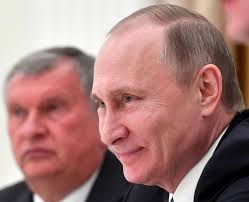
Moscow — Russian President Vladimir Putin said Wednesday his country will continue to work with OPEC on stabilizing oil markets despite “minor disagreements.” The current OPEC+ output cut agreement is in place until the end of March 2020. Participants will meet to discuss the market situation in early December, with prices continuing to hover around $62/b, which is significantly below the fiscal breakeven level for the cartel’s core Gulf producers. “We have some minor disagreements but overall we have a common task,” Putin said during the Russia Calling forum in Moscow on Wednesday. “The task is to balance the market so that it is acceptable for producers and consumers. The most important thing, I want to stress, is that it is predictable.” Earlier on Wednesday, Russia’s energy minister Alexander Novak told reporters that the Kremlin wanted new volumes of gas condensate — a high-value byproduct of natural gas — excluded from its quota as part of its OPEC + pact. “Only coordinated steps have the optimal impact for international energy markets,” Putin said, adding that Russia will always be a “responsible” participant in the energy market. Under the current OPEC /non-OPEC cuts deal — which runs to the end of March 2020 — Russia has committed to pare 230,000 b/d from its October 2018 output of 11.42 million b/d. Putin also described current US shale oil and gas technology as “barbaric” and too environmentally damaging for Russia to consider using. “We don’t need such production, despite all the possible economic benefits, we will never do this. We have options offshore and onshore, therefore there is not an urgent need,” he said. He added that he does not expect serious shale oil growth in the US in future. Finally Putin said that Russia is not planning to use funds from the National Welfare Fund to develop the oil and gas industry, but will prioritize development of the infrastructure and technology sectors.
EIA Weekly Petroleum Data for the week ending November 15, 2019
U.S. commercial crude oil inventories (excluding those in the Strategic Petroleum Reserve) increased by 1.4 million barrels from the previous week. At 450.4 million barrels, U.S. crude oil inventories are about 3% above the five year average for this time of year. U.S. crude oil refinery inputs averaged 16.4 million barrels per day during the week ending November 15, 2019, which was 519,000 barrels per day more than the previous week’s average. Refineries operated at 89.5% of their operable capacity last week. Gasoline production decreased last week, averaging 10.1 million barrels per day. Distillate fuel production increased last week, averaging 5.1 million barrels per day. U.S. crude oil imports averaged 6.0 million barrels per day last week, up by 222,000 barrels per day from the previous week. Over the past four weeks, crude oil imports averaged about 6.1 million barrels per day, 18.0% less than the same four-week period last year. Total motor gasoline imports (including both finished gasoline and gasoline
blending components) last week averaged 515,000 barrels per day, and distillate fuel
imports averaged 315,000 barrels per day.
Total motor gasoline inventories increased by 1.8 million barrels last week and are about 2% above the five year average for this time of year. Finished gasoline inventories decreased while blending components inventories increased last week.
Distillate fuel inventories decreased by 1.0 million barrels last week and are about 11% below the five year average for this time of year. Propane/propylene inventories decreased by 3.4 million barrels last week and are about 6% above the five year average for this time of year. Total commercial petroleum invento ries decreased last week by 5.0million barrels last week. Total products supplied over the last four-week period averaged 21.4 million barrels per day, up by 0.5% from the same period last year. Over the past four weeks, motor gasoline product supplied averaged 9.4 million barrels per day, up by 1.9% from the same period last year. Distillate fuel product supplied averaged 4.4 million barrels per day over
the past four weeks, down by 1.3% from the same period last year. Jet fuel product supplied was virtually unchanged compared with the same four
-week period last year.
A White House Now ‘Cannibalizing Itself’
“This White House appears to be cannibalizing itself,” said William C. Inboden, a former national security aide to President George W. Bush. “While many previous White House staffs have feuded with each other and leaked against each other, this is the first time in history I am aware of a White House openly attacking its own staff — especially for merely upholding their constitutional duties.”
In part, that reflects the challenge for a president facing an impeachment inquiry where every witness called so far either currently or previously worked in the government over which he presides. To defend against potential charges of high crimes and misdemeanors, Mr. Trump evidently feels he must undercut the believability of the witnesses testifying about his pressure campaign on Ukraine for help against his domestic rivals. It also reflects the president’s longstanding distrust of the career professionals who populate his White House, just as they have every other. While such officials characterize their work as nonpartisan in service of presidents of either party, Mr. Trump has felt burned since the early days of his administration when internal documents were leaked, including transcripts of two of his phone calls with foreign leaders.
Corbyn: I will carry out result of 2nd Brexit referendum
Leader of the Labour Party Jeremy Corbyn said on Tuesday he will carry out the result of a second referendum on Brexit. He further explained that his party’s priority is to get Brexit sorted. “We will negotiate incredible leave options in 3 months and in the next 6 months give the choice to British people to decide whether we leave or stay,” Corbyn said, adding that Prime Minister Boris Johnson Johnson “cannot protect jobs. We have to maintain firm and good trade relations with Europe because if we don’t, more jobs will be lost.” Johnson, answering a question on his Brexit timetable on itvNEWS said that Conservatives “certainly will come out on January 31 entire and perfect – England, Wales and Northern Ireland together.” He added that the problem is in the fact that there is a “deadlocked parliament that will not deliver Brexit. We conservatives can. If you vote for us, we have a deal that we want to get through parliament in the next few weeks. We can break the deadlock and get Brexit done.”
More Bad News For Oil As The API Reports A Large Crude Build
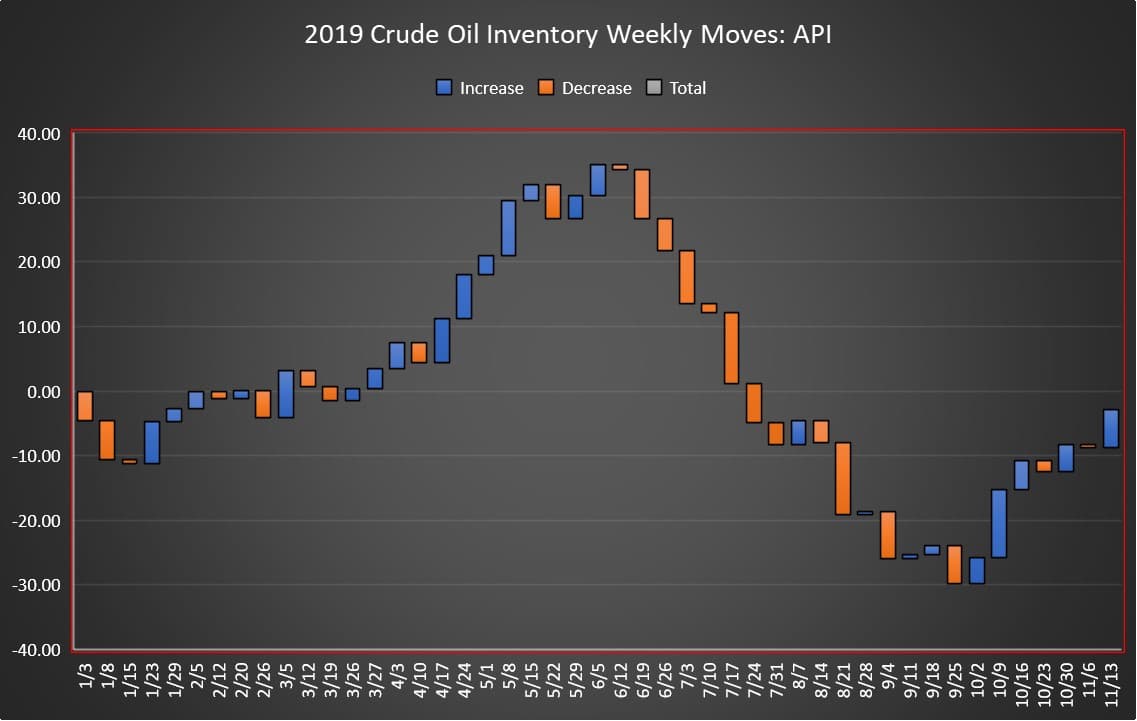
The American Petroleum Institute (API) has estimated a crude oil inventory build of 5.954 barrels for the week ending November 14, compared to analyst expectations of a 1.543-million-barrel build—a huge discrepancy for the much-watched inventory figures. Last week saw a draw in crude oil inventories of 500,000 million barrels, according to API data. The EIA’s estimates, however, reported a build of 2.2-million barrels for that week. After today’s inventory move, the net draw for the year now sits at just 2.81 million barrels for the 47-week reporting period so far, using API data. Oil prices were trading down on Tuesday prior to the data release as analysts suspected US oil inventories had increased last week, in combination with stalled trade talks between China and the United States, and Russia’s balking at the prospect of deeper oil production cuts. At 2:38pm EST, WTI was trading down $1.60 (-2.80%) at $55.54—roughly $2 per barrel below last week’s prices. Brent was trading down $1.34 (-2.15%) at $61.10, down roughly $1.40 a barrel from last week. The API this week reported a build of 3.354 million barrels of gasoline for week ending November 14, almost quadruple the build that analysts predicted, which was for a build in gasoline inventories of 870,000 barrels for the week.
Distillate inventories saw a draw of 2.19 million barrels for the week, while Cushing inventories fell by 1.351 million barrels.
US crude oil production as estimated by the Energy Information Administration showed that production for the week ending November 8 moved to a brand new all-time high of 12.8 million bpd.
European oil refining margins turn negative, fall to six-year low
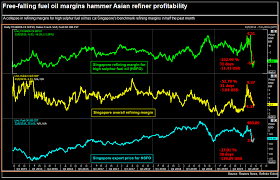 LONDON (Reuters) – Northwest European oil refining margins turned negative on Tuesday, falling to around -$0.49 a barrel, Reuters calculations showed. Margins fell to their lowest since October 2013. A sharp fall in gasoline and fuel oil margins in recent days precipitated the fall, with a relative strength in middle distillates failing to keep overall margins in positive territory, traders said.“The return of refineries from maintenance has seriously reduced refinery economics, and this is not a sign of strong global oil product demand,” consultancy Petromatrix said in a note on Tuesday. Traders and analysts were expecting that refiners, particularly simple ones that don’t have equipment to upgrade fuel oil into more valuable products, would have to cut runs. Gunvor Group on Monday said it had shut one of its two crude distillation units at its Rotterdam oil refinery in the Netherlands as it was uneconomical to run. The unit will be down into next March when the 88,000 barrel-per-day refinery will undergo maintenance. “The current price evolution indicates that there is not enough demand for the current output of oil products,” Petromatrix said. Even margins for complex refineries have turned negative in recent days, traders said, with crude grades such as Russia’s Urals becoming uneconomic to process.
Saudi Arabia’s Latest Trick To Boost Aramco Investment
Wall street assholes are sitting out the biggest ipo ever for now because of global warming…. told you they were beyond stupid
Saudi Arabia is doubling the leverage limits for loans that banks will extend to domestic retail investors who want to buy shares in the Kingdom’s aoil giant Aramco in what would be the world’s largest initial public offering (IPO) ever. The central bank, the Saudi Arabian Monetary Authority (SAMA), has told banks that they can lend money to retail customers at a 2-to-1 ratio for every riyal they will invest in Saudi Aramco, compared to average leverage ratio limit for loans of 1-to-1, the chief executive officer of Samba Financial Group, Rania Nashar, told the Al Arabiya news outlet. The move from the monetary authority in Saudi Arabia is aimed at ensuring that more retail customers will buy shares in the oil giant Aramco. Banks are also allowed to extend loans to corporate and institutional investors for buying Aramco’s shares at higher leverage ratios, depending on each corporate customer’s creditworthiness, Nashar told Al Arabiya. Saudi Arabia will be offering up to 0.5 percent in Aramco to retail investors, while in total the Kingdom plans to list 1.5 percent of the world’s biggest oil company on the Saudi stock exchange, the Tadawul. On Sunday, Aramco set an indicative price range of 30-32 Saudi riyals, (US$8-8.52), in its long-awaited initial public offering, which would give the company a total value of some US$1.7 trillion. The Final Offer Price will be determined at the end of the book-building period, which began on Sunday. Individual Investors will subscribe shares based on a price of 32 riyals, which is the top end of the price range, Aramco said. Saudi Arabia relies on retail investors for part of Aramco’s IPO, while a larger part will be sold to domestic institutional investors and a small group of international investors with permission to invest in Aramco. Days before Aramco announced an indicative price range for the offering, a Bloomberg News poll of money managers showed that the Saudi oil giant is worth no more than US$1.5 trillion. Neither money managers, nor the indicative price range, value the company at as much as the coveted US$2 trillion valuation, on which Saudi Crown Prince Mohammed bin Salman has insisted since he announced plans for Aramco to go public more than three years ago.