Trump Says Discussed “Negative Rates” In Unscheduled Monday Meeting With Chair Powell


 Following the report that Trump and Powell discussed negative rates, among other things, the dollar has slumped to session lows, with the Bloomberg dollar index dipping below 1,200.
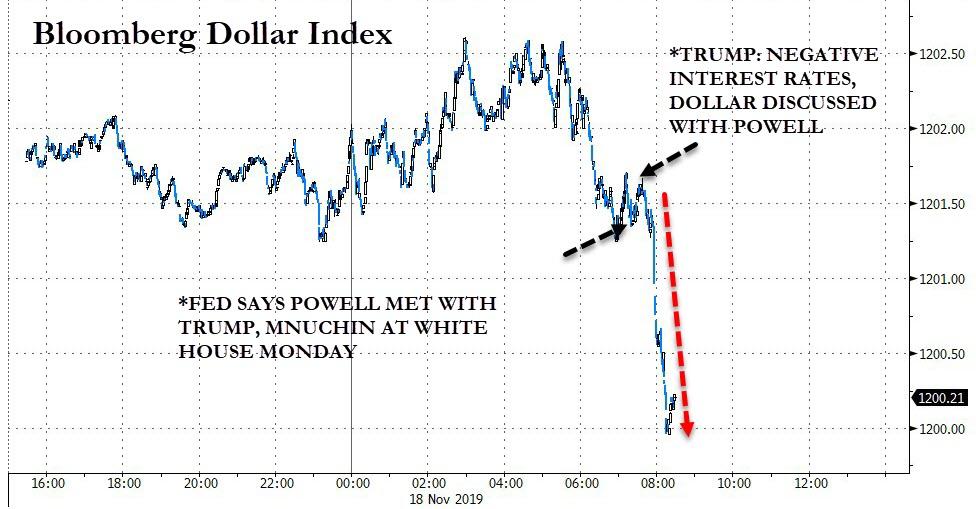
Source: Bloomberg

And in an amusing twist, CNBC’s Eamon Javers notes that this morning’s Fed meeting took place in the White House residence – the president’s personal quarters- not in the West Wing, where the Oval Office is

*  *  *

Moments ago, the Fed announced that in a previously unannounced meeting that was not on the official White House calendar, Fed Chair Powell met with Trump and Mnuchin at the White House “to discuss the economy, growth, employment and inflation”, marking the second face-to-face meeting between the world’s two most powerful people amid Trump’s relentless criticism of the central bank. As a reminder, Powell had dinner with the president in February and the two have spoken since by telephone since. The Fed’s boilerplate statement was followed by another, with the Fed noting that “Powell’s comments were consistent with his remarks at his congressional hearings last week. He did not discuss his expectations for monetary policy, except to stress that the path of policy will depend entirely on incoming information that bears on the outlook for the economy.” What is notable is the Fed’s addition that “Powell said that he and his colleagues on the Federal Open Market Committee will set monetary policy, as required by law, to support maximum employment and stable prices and will make those decisions based solely on careful, objective and non-political analysis.”

Statement on Chair Powell’s meeting with the President and the Treasury Secretary

At the President’s invitation, Chair Powell met with the President and the Treasury Secretary Monday morning at the White House to discuss the economy, growth, employment and inflation.

Chair Powell’s comments were consistent with his remarks at his congressional hearings last week. He did not discuss his expectations for monetary policy, except to stress that the path of policy will depend entirely on incoming information that bears on the outlook for the economy.

Finally, Chair Powell said that he and his colleagues on the Federal Open Market Committee will set monetary policy, as required by law, to support maximum employment and stable prices and will make those decisions based solely on careful, objective and non-political analysis.

it is worth noting that the Fed’s statement is almost word for word identical as the one released in February. Only difference as CNBC’s Eamon Javers adds, seems to be that today the Fed added the phrase “as required by law” to explain what the Fed’s priorities are for monetary policy. During his Congressional testimony last week, Powell called the U.S. economy a “star” performer and voiced solid confidence that its record expansion will stay on track even as, paradoxically, the Fed recently cut rates three times in the past four months and in October launched NOT QE (spoiler alert: it is QE) to purchase T-Bills in a move which Bank of America described is QE in all but name. And just to provide some color on what happened, Trump tweeted moments after the Fed press release that “Everything was discused including interest rates, negative interest, low inflation, easing, Dollar strength & its effect on manufacturing, trade with China, E.U. & others, etc.”

Nick Note: Don’t let them shit you again. The system is crumbling. Endless pumping of monye is close to the end. All that is left is massive negative interest rates……….

Trump’s weekend hospital visit draws a skeptical reaction

WASHINGTON (AP) — A lack of notice. Past failures to level with the American people. A tough week for the White House as public impeachment hearings got under way.

Add it all up, and President Donald Trump’s unscheduled weekend visit to Walter Reed National Military Medical Center raised suspicions about his health, despite White House officials’ insistence that the president was merely getting a head start on his annual physical.

For any president, a sudden trip to the hospital would raise questions. But such scrutiny was magnified with a president who has a history of exaggeration and playing loose with the facts, giving skeptics room to run with their own theories. “The one thing you can be absolutely sure of is this was not routine and he didn’t go up there for half his physical,” tweeted Joe Lockhart, a press secretary under President Bill Clinton, who was himself impeached for perjury and obstruction. “What does it mean? It means that we just won’t know what the medical issue was.” The president’s medical appointment wasn’t listed on his Saturday public schedule, and his last physical was just nine months ago. Press secretary Stephanie Grisham said the 73-year-old president was “anticipating a very busy 2020” and wanted to take advantage of “a free weekend” in Washington to begin portions of his routine checkup. Grisham followed up Monday night tweeting a memorandum from the president’s physician, U.S. Navy Cmdr. Sean Conley, who described Saturday’s visit as a “routine, planned interim checkup as part of the regular, primary preventative care he received throughout the year.” Conley said that due to scheduling uncertainties, the trip was kept off the record. He said after a little more than an hour of examination, labs and discussion, the president visited with medical staff and the family of a soldier undergoing surgery. “Despite some of the speculation, the President has not had any chest pain, nor was he evaluated or treated for any urgent or acute issues,” Conley wrote. Trump’s 2018 and 2019 physicals were both announced ahead of time. Grisham said after the visit that the president had gotten “a quick exam and labs.” “The real Donald Trump is getting exposed for what he’s done, and that’s what’s driving him to the doctor,” Rahm Emanuel, a former Clinton aide and Chicago mayor, said Sunday on ABC’s “This Week.”. Jamieson said there is a set of expectations about how a president’s annual exam is handled, which includes the advance public notice that the Trump White House provided for his first two exams. She said the reasonable question is: “If this is routine, why was it not handled in a routine manner?” First, annual physicals typically aren’t performed in installments unless someone needs a special test not available at their doctor’s office — something that shouldn’t be an issue at a military hospital. Nor are they usually performed three months early; Trump’s last physical was last February. Nick Note: Or favorite asshole is one sick demented puppy. As i have often said he will resign because he is in ill health. You can see it i his speeches. I pray he does not have a heart attack while in office carried out feet first… WHY? I want him to die a decrypted disgraced broken old man,,,, Hopefully at 90 years old.

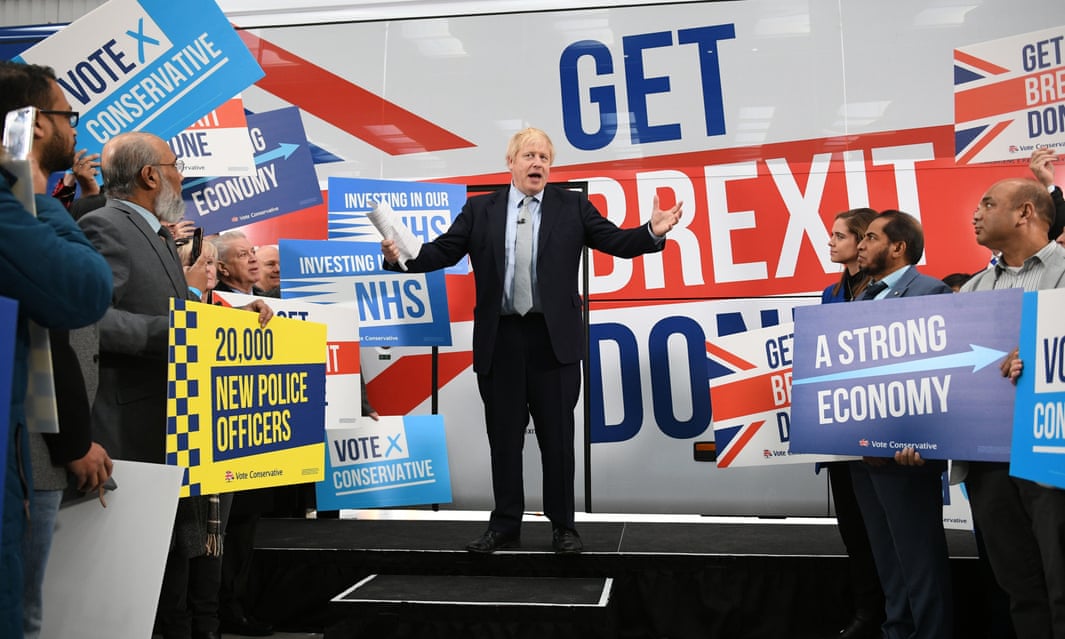
General Election 2019 polls tracker:  Boris Johnson leads but history tells us not to write off Jeremy Corbyn just yet

Boris Johnson has called a general election for December 12 after Parliament backed it, meaning that the country now faces its fourth national vote in five years. Opinion polls so far show the Conservative Party in the lead, but with four weeks to go until election day there is still ample time for public opinion to shift – just as it did away from Theresa May in 2017. Both parties have rolled out big campaign promises in an attempt to win support. Labour has promised to provide free full-fibre broadband to every UK resident by 2030 by part-nationalising BT, while Mr Johnson has announced a large spending package for neglected towns and the struggling British high street.

Tata Steel plans to cut around 3,000 European jobs

AMSTERDAM/London (Reuters) – Tata Steel (TISC.NS) plans to cut around 3,000 jobs across its European operations as it wrestles with excess supply, a source close to the discussions told Reuters on Monday. European chief executive Henrik Adam said Tata was planning to announce job cuts across the European business, which employs around 20,000 people, but did not give figures on job losses. Following a meeting of Dutch employees, a source told Reuters around 3,000 jobs would go and details would be worked out over the coming weeks. A Tata spokesman had no immediate comment on the number. Indian-owned Tata Steel, which launched a transformation programme in June to strengthen its European business, has operations including steelmaking in the Netherlands and Wales and downstream operations across Europe. There will be no plant closures but the aim is to shield the company against the “huge number of challenges” it faces, Tata said. “We are working hard on our plans to be operationally cash positive,” Adam said. A company spokesman confirmed Adam’s comments originally made to the Financial Times newspaper. Steel making in Europe has come under strain from international competition and high energy costs, putting large numbers of well-paid jobs under threat. European steelmakers blame China for the extent of a surplus in the market, but the world’s biggest steelmaker says it has made its own deep cuts to capacity. Britain last week said Chinese steelmaker Jingye has signed a provisional deal to buy British Steel, which went into compulsory liquidation in May. The agreement is politically resonant ahead of British elections as job opportunities have become a major issue. If confirmed, the rescue could save thousands of jobs. ArcelorMittal (MT.AS), the world’s biggest steelmaker, has idled a series of plants across Europe. Tata Steel said on Monday challenging market conditions had been made “worse by the use of Europe as a dumping ground for the world’s excess capacity”. The company’s European transformation programme launched in June aimed to develop “a simpler and leaner organisation, capable of sustainably financing high levels of investment, Tata said. Changes will include streamlining supply chains and using technology to improve efficiency, as well as seeking to cut employment costs. Tata’s quest to boost profitability follows a European anti-trust decision to block a joint venture with Germany’s Thyssenkrupp (TKAG.DE). Eurofer, which represents the European steel industry, said in an email job losses were “a worrying and upsetting trend” caused by global overcapacity and hesitant demand. It urged EU policy makers “to help stabilise the EU market by warding off import surges and supporting vital steel sector workers during this challenging period”.

India Shutters Power Plants Citing Lack Of Demand

133 units, switching off: Low demand behind half of thermal power plants shutting down

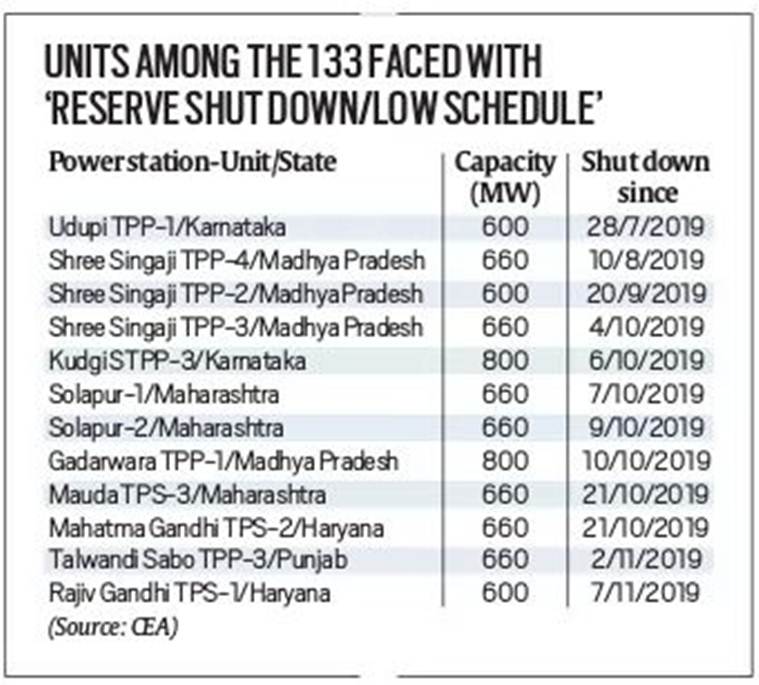
Of the country’s total installed generation capacity of 3,63,370 MW, the peak demand met was a little less than half at just around 1,88,072 MW on November 7, according to official data available with grid managers and analysed by The Indian Express. The electricity demand curve, a key indicator of industrial and domestic load trends, is on a downward spiral, with a mounting list of 133 thermal power units across the country reported as shut down due to lack of demand. As on November 11, of the 262 coal, lignite and nuclear units reported to be out-of-service for a variety of reasons, nearly half — or 133 units — were shut as operators were faced with low demand or were unable to ink pacts with distribution utilities for sale of power. Of the country’s total installed generation capacity of 3,63,370 MW, the peak demand met was a little less than half at just around 1,88,072 MW on November 7, according to official data available with grid managers and analysed by The Indian Express. A total of 119 thermal units across mostly India’s northern and western heartland were faced with “reserve shutdown,” a technical term for a unit shut down due to lack of demand, while another 14 units on account of developers not managing to ink power purchase agreements (PPAs — or commercial contracts) with electricity distribution utilities. Grid managers point to this being indicative of tepid industrial and commercial load. While the cumulative capacity of units under forced shutdown was over 65,133 MW, the worrying aspect is that most of these units have been shut for days, sometimes months, according to data of units monitored by the Central Electricity Authority’s (CEA) Operation Performance Monitoring Division updated till November 7. Additionally, there are well over a dozen thermal units that are down, according to official data, due to technical reasons, the most common being “water wall tube leakage.” According to an official in the CEA, this, normally, takes just days of repair. But the fact that these faults, in most cases, have stretched for days reinforces the belief that there’s general reluctance among developers to bring their units back on stream, presumably because demand is down.

Given that coal accounts for around 40 per cent of rail freight, analysts point to the downturn in thermal generation having a cascading impact on the driving down of railway volumes to the lowest this decade, spreading the stress to railway finances.

Oil prices fall below $63 on China trade talks uncertainty

SINGAPORE/LONDON (Reuters) – Oil prices edged lower on Monday, giving up some of last week’s gains, amid uncertainty over a trade deal between the United States and China.

Concerns about plentiful crude supplies in 2020 also weighed on the market, which expects OPEC to extend production cuts in early December to help avoid a new global glut.  Brent crude futures LCOc1 fell 2% or by $1.28 to trade at $62.17 per barrel at 1836 GMT. West Texas Intermediate (WTI) crude CLc1 was at $56.75 a barrel, down 41 cents. “In the short term, U.S.-China trade talks and (the) OPEC meeting in early December are the two biggest events oil traders are watching for,” Margaret Yang, an analyst at CMC Markets, said.  The 16-month trade war between the world’s two biggest economies has slowed global growth, prompting analysts to lower forecasts for oil demand growth and raising concerns that a supply glut could develop in 2020. China and the United States had “constructive talks” on trade in a high-level call on Saturday, state media Xinhua reported on Sunday, but it gave few other details.  On Monday, CNBC quoted a Chinese government source saying the mood in Beijing about a trade deal was pessimistic due to President Donald Trump’s reluctance to roll back on tariffs.  In a signal that policymakers are ready to act to prop up slowing growth, China’s central bank unexpectedly trimmed a closely-watched lending rate on Monday, the first such cut in more than four years.  The Organization of the Petroleum Exporting Countries (OPEC) said last week it expected demand for its oil to fall in 2020, supporting a view that there is a case for the group and other producers like Russia – collectively known as “OPEC+” – to maintain limits on production.  OPEC and its allies are expected to discuss output policy at a meeting on Dec. 5-6 in Vienna. Their existing production deal runs until March.

N.Korea says no more talks with U.S. just so Trump can brag

* Senior official says not interested in meaningless talks

* Another envoy travelling to Russia is at forefront of U.S. talks

* Kim Jong Un’s year-end deadline important to N.Korea-analyst (Recasts, changes dateline, adds analyst comment)

SEOUL, Nov 18 (Reuters) – North Korea said on Monday it was not interested in meaningless talks with the United States just so President Donald Trump had something to brag about, urging an end to what it called a policy of hostility if the United States wanted dialogue. The comment by senior North Korean official Kim Kye Gwan, who is a former vice foreign minister, came after Trump on the weekend called on North Korean leader Kim Jong Un to “act quickly” and hinted at another meeting.

Kim, in a statement carried by the state KCNA news agency, said he had seen the Nov. 17 Twitter post by Trump signalling another summit but added that little had improved despite three meetings between the two leaders since June last year.

“We no longer have interest in talks that have no benefit for us,” he said. “We will not give anything for the U.S. president to brag about as we have received nothing in return, and we want to receive the benefits of the accomplishments that President Trump is crediting himself for,” Kim said. Trump and North Korean leader Kim met for the first time in a landmark summit in Singapore in June last year, to push forward negotiations the United States hopes will lead to North Korea’s dismantling of its nuclear and missile programmes, in exchange for the lifting of punishing international sanctions. The talks have made no significant progress since a second summit between U.S. President Donald Trump and North Korean leader Kim Jong Un collapsed in Vietnam in February, even though the two leaders agreed in June, at a third meeting, to reopen negotiations. In April, Kim set a year-end deadline for the United States to show more flexibility, raising concern North Korea could resume nuclear and long-range missile testing, which it has suspended since 2017. Kim Kye Gwan said the United States must make a decisive move to abandon its hostile policy if it genuinely wanted dialogue. He did not elaborate. In his Twitter message, Trump urged Kim Jong Un, to “get the deal done”, signing off “See you soon!”. The message came hours after the United States and South Korea announced they were postponing military exercises in an effort to bolster the stalled peace push. Working-level talks between the two sides in October ended with the North Korean envoy accusing the Americans of coming to the table empty-handed. While North Korea wants the sanctions lifted, the United States has insisted Kim must dismantle his nuclear weapons programme first. Nick Note: the last few countries that gave up their WMD’s deeply regretted it! Kim is to smart to fall for that shit!

Russia Plans To Boost Crude Oil Exports

Russia flag

Russia expects to increase its crude oil exports by around 400,000 bpd-500,000 bpd to more than 5.6 million bpd within five years, Energy Minister Alexander Novak said in an article in Russian-language magazine Energy Policy.   Russia will not only keep its position on the global energy markets, but it expects to be able to boost its crude oil exports by up to 500,000 bpd, the equivalent of 25 million tons as the minister wrote. Russia’s total crude oil exports in five years could grow to 280 million tons, or 5.62 million barrels per day, according to Novak.  Russia’s crude oil exports rose by 2.9 percent on the year in 2018, to 260 million tons, or 5.22 million bpd, according to the TASS news agency. Russia exports a large part of its crude oil production, mainly to Europe, although China has emerged as a big buyer of Russian crude in recent years as Beijing’s oil demand continues to grow. China is the biggest buyer of Russian oil outside Europe, while Russia became the largest supplier of crude to China in 2016, surpassing Saudi Arabia for the first time on an annual basis, EIA estimates show. For two years after 2016, Russia was the single biggest supplier of crude oil to China, but Saudi Arabia has recently regained its number-one supplier status to China. In September, Saudi Arabia kept its number-one supplier spot, ahead of Russia and Iraq.

Russia’s plans to boost oil exports puts it, again, in direct competition in the most coveted oil demand market with Saudi Arabia—Moscow’s key ally in the OPEC+ production pact, which is cutting production, hoping to erase the global oversupply and boost oil prices

. The OPEC+ partners—led by Saudi Arabia and Russia for OPEC and non-OPEC, respectively—are set to discuss the fate of the production cuts and the future of their cooperation at a meeting in early December. Going into the meeting, the Saudis are reportedly pressuring non-compliant cartel members to fall in line with their quotas, instead of pushing aggressively for a deeper overall cut. Russia is still non-committal, as it has been ahead of all previous such meetings, before agreeing to rollover of the deal.

UK’s Johnson drops corporate tax cuts to fund spending as election nears

Britain’s Prime Minister Boris Johnson speaks at the annual CBI Conference in London, Britain November 18, 2019. REUTERS/Simon Dawson

LONDON (Reuters) – British Prime Minister Boris Johnson said on Monday he was putting on hold further cuts in corporation tax and told voters he would pump the money into services such as health instead, addressing a central issue in the Dec. 12 election. “We are postponing further cuts in corporation tax,” Johnson told business leaders at a conference organised by Britain’s main business lobby, the CBI. “This saves 6 billion pounds that we can put into the priorities of the British people, including the NHS (National Health Service),” he said. Britain had been due to cut its corporation tax rate to 17% next year, down from 19% now, which is already one of the lowest among the world’s big industrialised economies. Johnson has faced questions about how he would pay for the extra public spending that he has promised, without ramping up borrowing sharply. In September, his finance minister Sajid Javid announced the biggest increase in day-to-day spending in 15 years in what was widely seen as an attempt to counter the spending promises of the left-wing opposition Labour Party. Johnson’s announcement received a cautious welcome from the head of the CBI. “Postponing further cuts to corporation tax to invest in public services could work for the country if it is backed by further efforts to the costs of doing business and promote growth,” Carolyn Fairbairn said in a statement.

Pound gains, cable hits two-week high

The British pound rose against all major currencies on Monday the Conservative party asserted an increasingly strong position in the upcoming general election. The latest election polls suggested that Tories would get 43% of the vote, marking a three percentage point rise compared with the previous reading. Also, Prime Minister Boris Johnson is set to assure the Confederation of British Industry that a Tory majority in Parliament would put a stop to Brexit uncertainty and make sure the withdrawal is carried out in an orderly manner, his prepared remarks revealed.

The pound advanced 0.34% against the US dollar, hitting a fresh two-week high, going for $1.29482 at 8:40 am CET, while rising 0.40% versus the Japanese yen, to sell for ¥140.9815 at the same time. Against the euro, the British currency gained 0.26%, changing hands for €1.17035 at 8:43 am CET, whereas versus the Swiss franc, it gained 0.33%, selling for 1.28142 a minute later.