Israel is facing a shortage of operational Arrow missile defense systems, causing concern about the country’s ability to defend itself from Iran’s long-range ballistic missiles, the Wall Street Journal reported on Wednesday, citing a United States official. According to the report, Washington is aware of Israel’s shortage issues and has been boosting the country’s defense capabilities with systems on the ground, at sea, and in the air. However, there are now reportedly concerns that the US might also be “burning through” missile interceptors. Meanwhile, Iranian forces continued to launch missile attacks on Israel, with the country’s Islamic Revolutionary Guard Corps (IRGC) claiming that its Fattah-1 hypersonic missiles successfully broke through Israel’s defenses.
NN: Iran’s hypersonic missiles are giving Israel hell. Its much worse then they are reporting. 10% are getting through and with their 2000 pound war head they are doing a lot of damage. These are not the Hamas bottle rockets with a firecracker on top. Worse conventional rockets take two interceptor rockets to take them out. These new hypersonic missiles capable of traveling at 15 times the speed of sound, called Fattah, or “Conqueror” in Farsi are kicking the shit out of Israel defenses. They are faster, much more accurate and they pack a much bigger punch. It takes ten Arrow 3 rockets called the Squid to catch them. AN Arrow 3 missile cost has been estimated to range between $2 million to $3 million per interceptor missile. And Israel is running out. Worse Raytheon is producing all they can. When They requested funding for bigger orders and to increase production capacity. Biden and his liberal lefty wife (who ran the show) cut the budget to fund WOKE and fagot bullshit!
Israeli air forces targeted Iran’s nuclear facilities and missile production sites in overnight attacks, the Israel Defense Forces (IDF) said in its latest update on Wednesday.”As part of the extensive effort to harm the Iranian nuclear weapons development program, a centrifuge production site in Tehran was attacked, which was intended to allow the Iranian regime to expand the scope and rate of its uranium enrichment for the purpose of developing nuclear weapons,” the military said in a post on its Telegram channel. The IDF added that it hit several weapon production sites in the Tehran area, including facilities for the production of raw materials and components for the surface-to-surface missiles.
NN: fake news! Enriched uranium poses little contamination risk. Here is a statement from the IAEA: There is no wider radiological impact. “The level of radioactivity outside the Natanz site has remained unchanged and at normal levels,” the IAEA said. “However, due to the impacts, there is radiological and chemical contamination inside the facilities in Natanz,” it added – though the levels would be manageable.
You need to worry about the radiation from Iran popping off a nuke
Israeli President Benjamin Netanyahu, Defense Minister Yisrael Katz, and the Israeli security establishment believe that the United States will join the war in the coming days, according to a report by Axios on Tuesday. The report by journalist Barak Ravid said a likely US strike would target Iran’s underground uranium enrichment facility at Fordow. The report comes shortly after President Trump threatened the Iranian Supreme Leader, calling for an unconditional surrender.
Israeli Defense Minister Israel Katz told reporters on Tuesday that his country’s Air Force plans to strike “very significant targets, strategic targets, targets of the regime and infrastructure” in Tehran today. He noted that the Israel Defense Forces (IDF) will issue a n evacuation warning ahead of the attacks for those in the area. The Israeli minister also claimed that there are “more than ten nuclear targets” in Tehran that his country is “on the verge of destroying” and added that the Iranian underground nuclear enrichment facility Fordow is “an issue that will certainly be addressed.”
Iranian Islamic Revolutionary Guard Corps’s (IRGC) Aerospace Force announced on Tuesday that it struck Israel’s Military Intelligence (Aman) and Israel’s Institute for Intelligence and Special Operations (Mossad) with air-to-air missiles, according to the Iranian state news agency Irna. “By the grace of God Almighty, in the early hours of today, Tuesday, June 17, the fighters of the IRGC Aerospace Force, in an impact-oriented operation, despite the existence of highly advanced defense systems, hit the military intelligence center of the Zionist regime’s army called Aman and the center for planning terror operations and evils of the Zionist regime (Mossad) in Tel Aviv, and this center is currently burning,” the Iranian military reportedly said. The announcement follows the warning by Iran’s Army Ground Forces Commander Kioumars Heydari that his country will intensify the attacks on Israel in the coming hours.
Iran is “urgently signaling” its desire to end hostilities and resume nuclear negotiations, the Wall Street Journal reported Monday, citing Middle Eastern and European officials. As per the report, Tehran has conveyed through Arab intermediaries that it is open to returning to talks, on the condition that the United States does not participate in any military action. The same sources claim Iran also “passed messages to Israel,” saying it is in the interest of both sides to keep the violence “contained.” Missiles continue to fly between the two sides despite Iran’s reported outreach, with the latest explosions hitting Tehran amid escalating cross-border strikes.
Trump says “should talk and should talk immediately before it is too late”
United States President Donald Trump stated on Monday that Tehran expressed willingness to engage in negotiations amid the ongoing conflict with Israel. Replying to the reporter’s question at the G7 summit in Canada whether he received any messages from intermediaries seeking de-escalation, Trump replied positively, stating that he heard that Iranians “want to talk.” The leader underscored that Tehran should have done that before, seeing that they had 60 days to make a deal, adding that Iran “should talk and should talk immediately before it is too late,” as it is “not winning this war.” When asked about the possibility of Washington joining forces with Israel, the president replied: “I don’t want to talk about it.”
Director General of the International Atomic Energy Agency (IAEA), Rafael Grossi, stated in a press conference on Monday that there are no signs of further damage at the Natanz or Fordow enrichment facilities in Iran. “The agency is and will remain present in Iran. Safeguards inspections in Iran will continue as soon as safety conditions allow, as is required under Iran’s NPT safeguards obligations,” Grossi told journalists. He also informed that the electricity infrastructure at Nazans was destroyed, and the loss of power to a cascade hall may have damaged the centrifuges there.
NN: Trump needs to authorize the dropping of the bunker buster bomb on the Nazans and Fordow nuclear weapons sights and end this
Iran has partially suspended production at the South Pars gas field — the world’s largest — after an Israeli airstrike triggered a fire at the site, the semi-official Tasnim news agency reported on June 14, according to Reuters. If confirmed, it would mark the first Israeli strike targeting Iran’s vital oil and gas infrastructure. The South Pars field, located offshore in southern Bushehr province, is responsible for the bulk of Iran’s gas output. Tehran shares the field with Qatar, which refers to its portion as the North Field. A strike on South Pars represents a significant escalation, coming after oil prices surged 9% on June 13 following Israel’s initial wave of attacks, which had not targeted energy infrastructure, Reuters reports. Israel launched its air offensive against Iran on June 13, killing commanders and scientists and bombing nuclear sites, in what it described as an effort to prevent Tehran from developing nuclear weapons. The Iranian oil ministry said the fire caused by the strike has been extinguished. According to Tasnim, the fire broke out in one of four units of Phase 14 at South Pars, halting the production of 12 million cubic meters of gas. Iran, the world’s third-largest gas producer after the United States and Russia, produces around 275 billion cubic meters of gas per year, about 6.5% of global output. Due to international sanctions, the country consumes most of this domestically. Qatar, which operates the majority of the shared field with support from global firms such as Exxon and Shell, produces 77 million tonnes of liquefied natural gas annually, supplying both European and Asian markets.
Israel’s Haifa Oil Refinery Damaged in Missile Strike
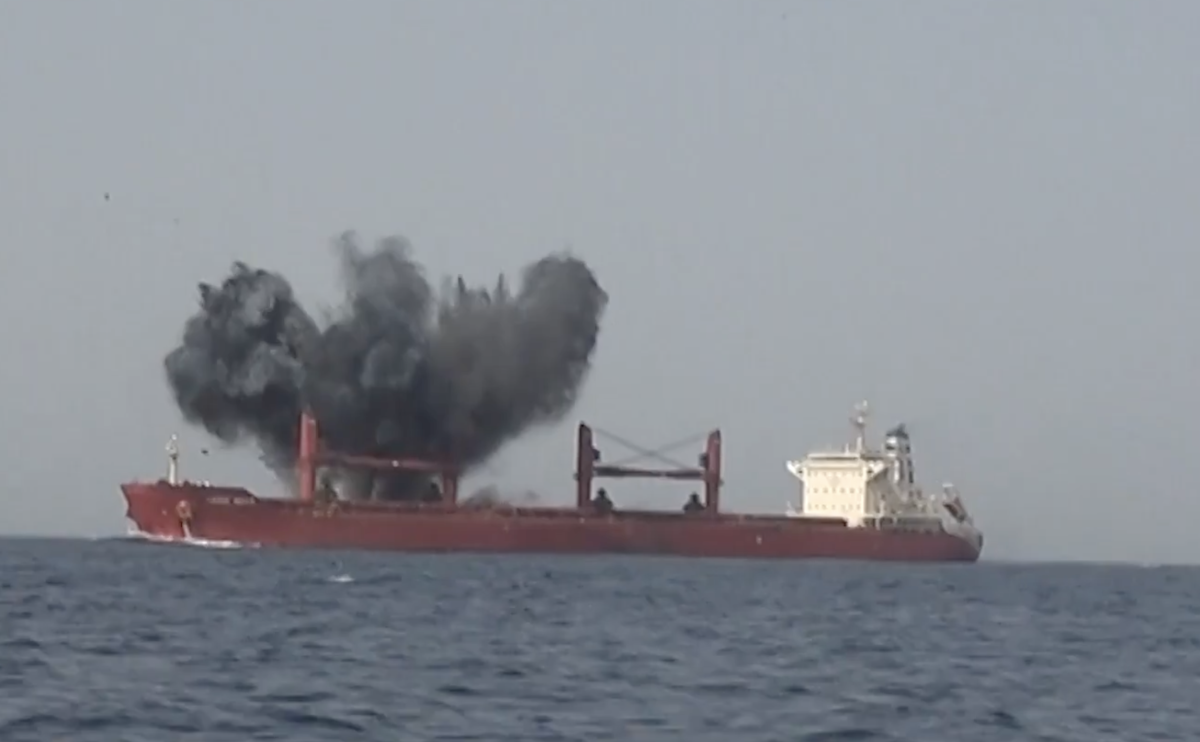
Iranian missile attack caused damage to the Haifa refinery in Israel over the weekend, prompting a partial shutdown, Israeli media reported, saying the facility remained operational. The damage, according to the Haifa refinery’s operator, Bazan, was localized at pipelines and transmission lines, the Times of Israel reported. The publication added that Iran launched some 40 missiles at the Haifa area on Saturday night. “The refining facilities continue to operate, while some downstream facilities at the complex have been shut down,” Bazan said in a statement, as quoted by Argus. Israel, meanwhile, struck two gas treatment plants in southern Iran and an oil storage site in Tehran, which caused fires at two or three storage tanks. Missiles continue flying, with Iran targeting Tel Aviv and Haifa, with worry rising that the conflict will continue escalating, possibly culminating in disruption of oil flows via the Strait of Hormuz, which handles over 20 million barrels daily in oil exports. Further Israeli attacks on Iranian oil infrastructure are also a distinct possibility. “If Iranian crude exports are disrupted, Chinese refiners, the sole buyers of Iranian barrels, would need to seek alternative grades from other Middle Eastern countries and Russian crudes,” S&P Global Commodity Insight’s head of near-term oil analysis, Richard Joswick, said, as quoted by Reuters. “This could also boost freight rates and tanker insurance premiums, narrow the Brent-Dubai spread, and hurt refinery margins, particularly in Asia,” Joswick added. Tanker owners are already refusing to send their vessels to the Persian Gulf and pulling out the ones that are already there, with the chief executive of Frontline, the world’s largest tanker operator, saying that “Trade is going to become more inefficient and, of course, security has a price.”
In the wee hours of Friday morning, Israel launched not merely a string of attacks on Iran, as had been the case with recent incursions, but the start of an all-out war, whose goal seems to be the destruction of not just the country’s nuclear facilities but also its military command and, possibly, the Islamic regime itself. The question now is what happens next. Iran has pledged to inflict “severe punishment” against Israel, but its first retaliatory strike, involving 100 drones, did little if any damage. Will Iran soon launch hundreds of ballistic missiles, as it has in the past? Will this trigger a wider war in the region? Will the U.S. get pulled into the fight, despite President Donald Trump’s deep reluctance to get directly involved in a war? And how will Israel’s campaign—by far the largest and most ambitious it has ever mounted against Iran—reshape the dynamics of the entire Middle East?
US helps Israel shoot down Iranian missiles amid growing conflict
Clearly the attack, which began in the early hours Friday, had been in the works for months. It involved more than 200 fighter planes dropping ordnance on 100 targets, wiping out command and control centers, killing several Iranian military commanders as well as top nuclear scientists, and damaging the vital uranium enrichment facility at Natanz. Soon after the air raids began, Israel’s Prime Minister Benjamin Netanyahu said that this was only the first phase of attacks that could go on for days or weeks, for as long as it takes to destroy Iran’s ability to threaten Israel’s survival. He called the campaign Operation Rising Lion—a symbol of victory and divine protection in Hebrew mythology. Later in the day Friday, Israel’s attacks on Iran had reportedly resumed.
President Trump had urged Netanyahu not to launch this attack as long as his chief negotiator, Steve Witkoff, was engaged in talks to dismantle Iran’s nuclear program through diplomacy. Witkoff and his Iranian counterparts were scheduled to hold their sixth round of talks in Oman this Sunday. Just hours before the attack began, Trump still publicly held out the possibility that the talks would succeed—though he also allowed that the prospects seemed dimmer than he’d thought a couple of weeks earlier. On Wednesday, he ordered the evacuation of nonessential U.S. personnel from Iraq as well as American military families from bases throughout the Middle East. He did this in anticipation of a possible Iranian attack, which would presumably be launched in retaliation to an Israeli attack on Iran. Some took Trump’s order as a bluff—part of a ploy to frighten Iran into accepting stiff demands, which it had previously rejected, in the talks. It turned out not to be a bluff. More than that, Israel launched the attack two days before the talks were set to resume. It is not yet known whether Israel took this step without Trump’s consent—which would have been all but unprecedented in the history of U.S.–Israel relations. Soon after the attack, Marco Rubio, who holds the dual hats of secretary of state and national security adviser, issued a statement calling the attack “unilateral,” claiming that the U.S. had no involvement in it, and urging Iran not to attack American targets as part of its very likely retaliation—as firm a distancing from Israel’s actions as one could imagine.
Around one-third of global oil, 20% of LNG trade pass through Strait of Hormuz, making its potential closure due to possible wider conflict in region detrimental to Iran’s trade, market prices
Global markets are closely monitoring the Strait of Hormuz, a vital corridor for oil and liquefied natural gas (LNG), amid fears that a widening conflict between Israel and Iran could disrupt traffic through the narrow waterway.
The Strait of Hormuz, positioned in between the Persian Gulf and the Gulf of Oman, is a narrow but critical sea route that approximately one-third of global oil trade, accounting for 17 million to 20 million barrels of crude oil and condensate passes through daily. Around 70% of oil volume goes to Asia via this route, with China, Japan, India, South Korea, Singapore, Thailand, Pakistan, and the Philippines among the largest recipients, according to the International Energy Agency. The route is also essential for LNG exports, especially from Qatar and the United Arab Emirates, which account for 20% of global LNG trade. Europe is a key destination for LNG that transits through Hormuz. While Iran has previously threatened to close the strait in response to geopolitical tensions, it has yet to act on such threats. However, the prospect of a broader regional conflict following Israel’s airstrikes on Iran has renewed concerns over possible supply disruptions and rising energy prices.
– Strait of Hormuz’ closure to be ‘absolute nightmare’
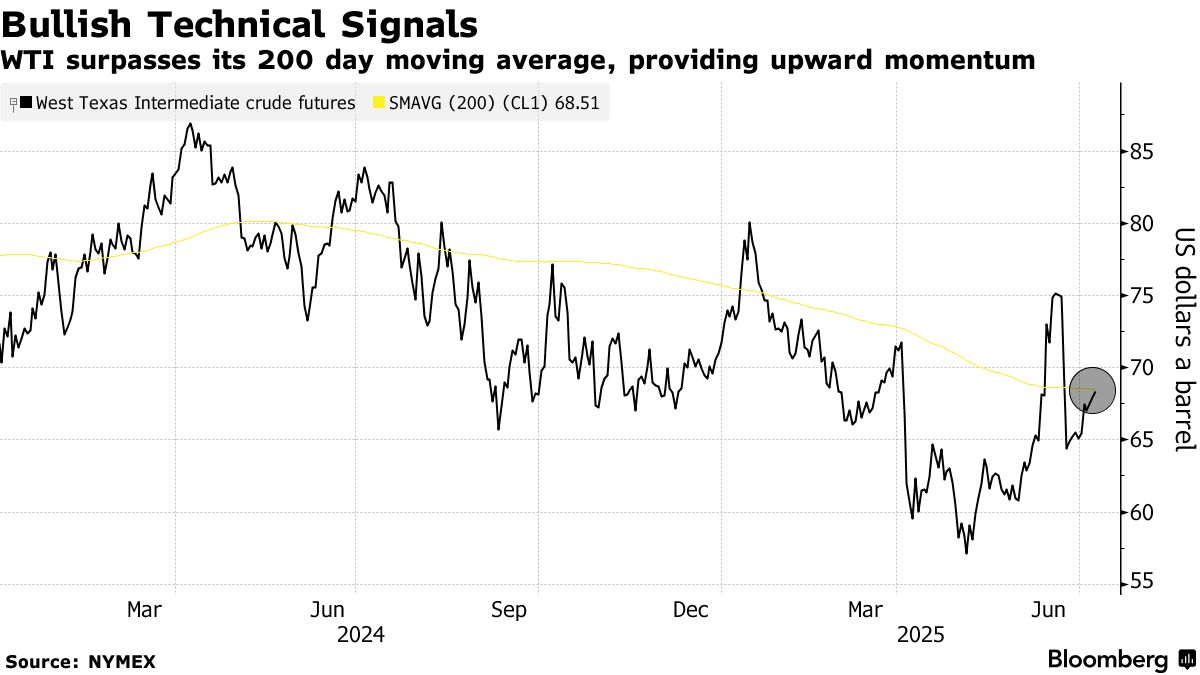
The UK Maritime Trade Organization said on Wednesday that the rising tensions in the region could escalate the military activity in critical waterways and affect maritime transport, while the Baltic and International Maritime Council also warned that any attack could directly impact maritime transport. Some analysts say that Iran has a lot at stake should they close the route, as almost all the country’s oil exports and a large portion of China’s oil imports comes through the Strait of Hormuz. Arne Lohmann Rasmussen, chief analyst and head of research at Global Risk Management, said that the closure of the Strait of Hormuz would be an “absolute nightmare” for the oil market. “If Iran blocks this narrow chokepoint, it could affect up to 30% of global oil flows,” he said. “A closure would likely send oil prices above $100.” Following Israel’s attacks early Friday on Tehran, the Natanz nuclear facility in Isfahan, and cities including Lorestan and Kermanshah, oil prices surged more than 7%, hitting $73.58, a nearly five-month high. Senior Iranian military officials, including Iran’s Revolutionary Guard Corps Commander-in-Chief Hossein Salami and Maj. Gen. Mohammad Bagheri, were reportedly killed in the strikes. Israel also reportedly struck residential areas in Tehran, resulting in numerous civilian deaths. Several nuclear scientists were also killed in the attack on the Natanz nuclear facility in Isfahan.
NN: see blackmask pod cast Titled: Look no further than the straights