US President Donald Trump said Friday he would “absolutely” bomb Iran again if intelligence indicated the country was still able to enrich uranium to nuclear-weapons grade.Asked in a White House press conference whether he would consider fresh air strikes if last week’s sorties were not successful in ending Iran’s nuclear ambitions, he said: “Without question. Absolutely.” Trump said Iran’s Ayatollah Ali Khamenei “got beat to hell” in the hostilities involving the United States and Israel and that “it was a great time to end it.”
NN: Iran is not settled business
Trump: Iran sanctions to remain due to Khamenei
United States President Donald Trump said on Friday that he was looking into sanction relief for Iran, but after Iranian Supreme Leader Ayatollah Ali Khamenei’s statement about victory, he will no longer consider it. “During the last few days, I was working on the possible removal of sanctions, and other things, which would have given a much better chance to Iran at a full, fast, and complete recovery – The sanctions are BITING! But no, instead I get hit with a statement of anger, hatred, and disgust, and immediately dropped all work on sanction relief, and more,” Trump wrote on his Truth Social account. He added that he saved Khamenei from a “very ugly death” and that the Iranian supreme leader lied about winning the war with Israel. Moreover, the president remarked that Tehran “should realize that you often get more with HONEY than you do with VINEGAR.”
The United States government has been considering potentially extending a hand to Iran, to help the latter get up to $30 billion that would be used for building a civilian-energy-producing nuclear program, CNN reported on Thursday citing sources. The investment in question would be funded by the US’ Arab partners. The sources added that sanctions removal, and giving access to billions of dollars in restricted Iranian funds, were also being discussed in order to get Tehran back to negotiating. Officials from the US and the Middle East have been holding talks with Iranian officials during the commotion between Israel and Iran, with discussions still ongoing. The media outlet revealed that while the Trump administration continues to push for the zero uranium enrichment clause, one preliminary draft proposal shows that Washington might be willing to offer Tehran some incentives.
United States Defense Secretary Pete Hegseth responded to claims that US strikes did not destroy Iranian nuclear sites, empty nuclear sights saying they worked “perfectly,” Sky News reported. “Based on everything we have seen – and I’ve seen it all – our bombing campaign obliterated Iran’s ability to create nuclear weapons.no it did not. they did destroy empty factories Our massive bombs hit exactly the right spot at each target – and worked perfectly,” yes they did Hegseth said.
“The impact of those bombs is buried under a mountain of rubble in Iran, so anyone who says the bombs were not devastating is just trying to undermine the president and the successful mission,” if the misson was to destroy underground bunkers that was done,,,…. empty underground bunkers he added, joining the White House in refuting reports that claim otherwise.
NN: its a case of misdirected new. Yes in an amazing strike the US destroyed the worlds deepest strongest underground bunker used for enriching bomb grade uranium. and researching the design and manufacturing of atomic bombs.
BUT
The destroyed facility Fordo was empty. No enriched uranium, no centrifuges, not nuclear triggers and no personal. In essence Mr. President you bombed a empty underground bunker.
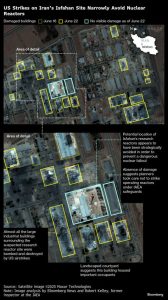
As far as other key components necessary for the bomb. The 2 breeder enrichment reactors were left untouched. The heavy water reactor was not hit. And the two “experimental” reactors staffed by Russians were also not hit.
Bottom line Iran’s nuclear bomb factories are up and running. No cookie for Donald! But the god news is he has a good shot the Nobel high explosive Peace Prize
And Israel has a good shot at being nuked!
EU said to think Iran moved uranium before US strike
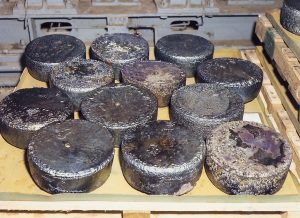
European capitals believe Iran moved its enriched uranium from Fordow before the United States carried out strikes on the facility, the Financial Times (FT) reported on Thursday. According to two sources with access to preliminary intelligence reports, 408 kilograms of uranium were moved to various other undisclosed locations in Iran. The bloc’s preliminary intelligence indicated that the facility suffered “extensive damages” as a result of the US strike, “but not full structural destruction.” Conflicting reports emerged as to the extent of the destruction caused to one of Iran’s most important nuclear sites. US President Donald Trump, however, today repeated that “nothing was taken out of [the] facility.” He argued that removing any materials from the site “would take too long” and would prove “too dangerous, and very heavy and hard to move.” Not True… Moving these enriched uranium hockey pucks is well within the capacity of Iran’s personnel. The larger concern when handling these materials is their inherent toxicity. For this reason they are always handled with gloves and similar protection. One would have to spend a long period of time in close proximity to a very large quantity of uranium in order to receive a dose of radiation that was any more notable than the typical background radiation we receive in everyday life.
Iran’s Foreign Ministry spokesperson, Esmail Baghaei, confirmed to Al Jazeera on Wednesday that the country’s nuclear enrichment facilities were “badly damaged” following the United States’ strikes on Sunday. “Yes, our nuclear installations have been badly damaged. That’s for sure because [they have] come under repeated attacks,” Baghaei said, adding that Iran’s Atomic Energy Organisation and other agencies were looking into the matter. While Israeli sources already reportedly assessed that Tehran’s nuclear program suffered “very significant damage,” and US President Donald Trump claimed repeatedly that the nuclear sites were “completely destroyed,” this statement marks the first time that someone from Iran admitted to severe damage to the country’s nuclear program.
NN: false flag. Iran had 2 weeks notice the attacks were coming. In essence the US bombed underground empty bunkers….totally destroying the empty structures only. Satellite imagery we published in BlackMask Market News and Commentary Titled: Sell Out! explains all this.
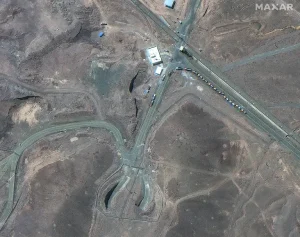
The above satellite imagine shows a line of trucks at the Fordo Bunker taking out the enriched uranium and the advanced centrifuges before the US attack. Which means all that was achieved was to force Iran to have a moving day.
as far as the reactors none were even attacked because the US did not want to risk a radiation leak.
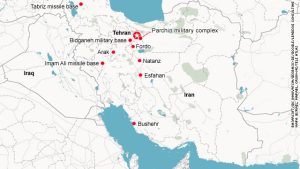
The satellite image below shows the untouched reactors
Bottom Line Iran is still racing to get the unclear bomb. And nothing has been done to stop them
U.S. commercial crude oil inventories (excluding those in the Strategic Petroleum Reserve) decreased by 5.8 million barrels from the previous week. At 415.1 million barrels, U.S. crude oil inventories are about 11% below the five year average for this time of year U.S. crude oil refinery inputs averaged 17 million barrels per day during the week ending June 20, 2025, which was 125 thousand barrels per day more than the previous week’s average. Refineries operated at 94.7% of their operable capacity last week. Gasoline production remained flat last week, averaging 10.1 million barrels per day. Distillate fuel production decreased by 185 thousand barrels per day last week, averaging 4.8 million barrels per day. U.S. crude oil imports averaged 5.9 million barrels per day last week, increased by 439 thousand barrels per day from the previous week. Over the past four weeks, crude oil imports averaged
about 6 million barrels per day, 17.4% less than the same four-week period last year. Total motor gasoline imports (including both finished gasoline and gasoline blending components) last week averaged 1,007 thousand barrels per day, and distillate fuel imports averaged 73 thousand barrels per day. Total motor gasoline inventories decreased by 2.1 million barrels from last week and are about 3% below the five year average for this time of year. Both Finished gasoline inventories and blending components inventories decreased last week. Distillate fuel inventories decreased by 4.1 million barrels last week and are about 20% below the five year average for this time of year. Propane/propylene nventories increased by 5.1 million barrels from last week and are 9% above the five year average for this time of year. Total commercial petroleum inventories decreased by 4.2 million barrels last week. Total products supplied over the last four-week period averaged 20 million barrels a day, down by 1.6% from the same period last year. Over the past four weeks, motor gasoline product supplied averaged 9.1 million barrels a day, up by 0.2% from the same period last year. Distillate fuel product supplied averaged 3.5 million barrels a day over the past four weeks, down by 3.2%
from the same period last year. Jet fuel product supplied was up 4.3% compared with the same four-week period last year
NEW YORK, June 24 (Reuters) – Zohran Mamdani, a 33-year-old state lawmaker and self-described democratic socialist, was poised on Tuesday to win New York City’s Democratic mayoral primary in a surprising upset over former New York Governor Andrew Cuomo. In brief remarks to supporters, Cuomo, 67, who had been seeking a political comeback four years after resigning amid sexual harassment allegations, said he had called Mamdani to congratulate him.. Mamdani, who entered the campaign as a virtual unknown, was ahead of Cuomo 43.5% to 36.4% with nearly 95% of ballot scanners reporting, according to the city’s elections board. Nine other Democratic candidates trailed far behind. Mamdani declared victory addressing his supporters. “Today… with the vision of the city that every New Yorker can afford, we have won,” he said in a speech broadcasted by ABC7 New York TV channel.
He promised to reject President Donald Trump’s policies and “to govern our city as a model for the Democratic Party. The outcome will not be final until next week, due to New York’s ranked-choice system that allows citizens to pick up to five candidates in order of preference. But Mamdani’s lead in Tuesday’s preliminary results appeared too large for Cuomo, or any other candidate, to overcome, particularly since the third-place finisher on Tuesday, City Comptroller Brad Lander, encouraged his supporters to list Mamdani second. The race was seen as an early read on the direction Democrats believe the party should take five months into Republican President Donald Trump’s tumultuous second term. Their differences were clear: Cuomo, a moderate backed by the establishment who served a decade as governor, or Mamdani, a progressive newcomer who promised a break with the past. Mamdani will likely be the favorite in November’s general election in a city where Democrats dominate. The current mayor, Democrat Eric Adams, will also appear on the November ballot as an independent, but a series of corruption scandals and his perceived ties to Trump have weakened his standing.
The Republican candidate is Curtis Sliwa, a radio host best known as the founder of the Guardian Angels anti-crime patrol who lost to Adams in 2021.
Born in Uganda to a family of Indian descent, Mamdani, who would be the city’s first Muslim mayor, has a history of pro-Palestinian activism.
He was elected to a state assembly seat in New York’s Queens borough and has garnered the support of U.S. Senator Bernie Sanders and Representative Alexandria Ocasio-Cortez, two prominent progressives.
nn: a Jew hatting Palestine terrorist supporter commie anti democracy ant free enterprise socialist handing out free gifts including state subsided grocery stores like they have in cuba and Russia…. good luck!
The American Petroleum Institute (API) estimated that crude oil inventories in the United States fell again, this time by 4.277 million barrels in the week ending June 20 after analysts had estimated a much more conservative 600,000-barrel draw.
The draw adds to last week’s shockingly massive 10.133 million barrel inventory decrease
Earlier this week, the Department of Energy (DoE) reported that crude oil inventories in the Strategic Petroleum Reserve (SPR) climbed 200,000 barrels to 402.5 million barrels in the week ending June 13. Inventory levels in the SPR are hundreds of millions shy of the levels in inventory prior to the SPR withdrawal that took place under the Biden Administration. Gasoline inventories rose in the week ending June 20, by 764,000 barrels, after falling by 20,000 barrels in the week prior. As of last week, gasoline inventories were 2% below the five-year average for this time of year, according to the latest EIA data. Distillate inventories fell this week by 1.026 million barrels. In the week prior, distillate inventories rose 318,000 barrels. Distillate inventories were already a starting 17% below the five-year average as of the week ending June 13, the latest EIA data shows. Cushing inventories—the benchmark crude stored and traded at the key delivery point for U.S. futures contracts in Cushing, Oklahoma—fell 75,000 barrels in the week after falling 800,000 barrels in the week prior.
WASHINGTON — President Trump was formally nominated for the Nobel Peace Prize on Tuesday for his efforts in securing the Israel-Iran cease-fire. In a letter to the Norwegian Nobel Committee, Rep. Buddy Carter (R-Ga.) recommended Trump for the prestigious prize “in recognition of his extraordinary and historic role in brokering an end to the armed conflict between Israel and Iran and preventing the world’s largest state sponsor of terrorism from obtaining the most lethal weapon on the planet.” “President Trump’s influence was instrumental in forging a swift agreement that many believed to be impossible,” added Carter, who has represented the Peach State’s Savannah-based 1st District since 2015.
President Trump was formally nominated for the Nobel Peace Prize on Tuesday for his efforts in securing the Israel-Iran cease-fire.AP
“His leadership at this moment exemplifies the very ideals that the Nobel Peace Prize seeks to recognize: the pursuit of peace, the prevention of war, and the advancement of international harmony. “In a region plagued by historical animosity and political volatility, such a breakthrough demands both courage and clarity. President Trump demonstrated both, offering the world a rare glimpse of hope.” Trump, 79, on Monday evening announced a cease-fire between Iran and Israel — and proposed naming the conflict the “12 Day War” — just two days after ordering an unprecedented US attack on three Iranian nuclear sites in support of Israeli strikes. Members of national parliaments, university professors, and others can submit nominations for the award, though Trump has made clear he doesn’t expect to win it
In a letter to the Norwegian Nobel Committee, Rep. Buddy Carter (R-Ga.) recommended Trump for the prize.Getty Images“I should have gotten it four or five times… They won’t give me a Nobel Peace Prize because they only give it to liberals,” he said. Three sitting presidents have won the Nobel Peace Prize, including Republican Teddy Roosevelt in 1906 for brokering a peace deal between Russia and Japan. The other two commanders-in-chief to win the prize were Democrats Woodrow Wilson (1919) and Barack Obama (2009), with the latter receiving the award fewer than nine months after he took office.
nn: trump wants the Nobel high explosives peace prize more than he wants oxygen. if he has to sell out Israel and allow Iran to get nukes so be it
United States President Donald Trump stressed that the US strikes on Iranian nuclear sites resulted in their complete destruction, pushing back against reports claiming that the attacks were not as effective as advertised.
“FAKE NEWS CNN, TOGETHER WITH THE FAILING NEW YORK TIMES, HAVE TEAMED UP IN AN ATTEMPT TO DEMEAN ONE OF THE MOST SUCCESSFUL MILITARY STRIKES IN HISTORY,” Trump wrote on Truth Social, referring to reports about the leaked intelligence assessment of the US strikes on Iran.
“THE NUCLEAR SITES IN IRAN ARE COMPLETELY DESTROYED! BOTH THE TIIMES AND CNN ARE GETTING SLAMMED BY THE PUBLIC,” he added.
nn: yes irans nuclear bunkers ……. the empty nuclear bunkers suffered a lot of damage. the problem is they moved all the enriched uranium and their most advanced centrifuges before the attack. and the us decided not to attack their “research” breeder and heavy water reactors untohed.
Crude oil prices extended their losses on Tuesday, tumbling by more than 5.5% after United States President Donald Trump stated that China can now continue to buy oil from Iran, following Tehran’s ceasefire agreement with Israel. Israel Defense Forces (IDF) Chief of Staff Eyal Zamir’s statement that his country is shifting its focus from Iran back to Gaza also reaffirmed investors’ belief in the new ceasefire deal. West Texas Intermediate (WTI) for August’s deliveries fell by 5.61% at 1:28 pm ET, going for $64.61 per barrel. Meanwhile, Brent for the same month’s settlements declined by 5.64% and went for $667.45 per barrel at 1:29 pm ET.