Russian President Vladimir Putin said during a meeting with Defense Ministry officials and weapons developers on Friday that the country plans to continue testing its new intermediate-range Oreshnik missiles. Russia first used the missiles in an attack on Ukraine earlier this week, in what Putin called “successful” tests. He added that his country has a “stockpile” of the new missile systems and called Oreshnik a “guarantor” of Russia’s sovereignty. Following the use of the new missiles, the Russian president insisted that Moscow decided to use them in response to Ukraine striking its territory with American long-range ATACMS missiles.
Ukraine’s First-Ever ATACMS Strike in Russia
- Ukraine fired US-made ATACMS missiles at Russia, the Kremlin said on Tuesday.
- It appears to mark the first time that Ukraine has used these powerful weapons on Russian soil.
- The attack caused a fire at a military facility in Russia’s western Bryansk region.
Ukraine fired US-supplied ATACMS long-range missiles into Russia for the first time, according to multiple reports citing US and Ukrainian officials. The attack could mark a significant escalation in the war. The strikes came shortly after President Joe Biden authorized the use of the powerful missiles by Ukraine, a major change in long-held US policy. Russia’s defense ministry said five Army Tactical Missile Systems, or ATACMS, were shot down early Tuesday morning local time, adding that missile fragments caused a fire at a military facility in the country’s western Bryansk region. There were no injuries or substantial damage, Russia’s defense ministry said. Ukrainian media also reported on the strikes, with a defense source telling RBC-Ukraine that ATACMS had been used in a successful attack on a military facility in Bryansk. Ukraine’s military said that it “inflicted fire damage” at an arsenal in Bryansk, with 12 secondary explosions recorded. Kyiv said it destroyed Russian warehouses with ammunition, although it did not specify what weapon it used in the strikes. In recent months, Ukraine has relied heavily on domestically produced long-range attack drones to strike ammunition depots and other sensitive military targets inside Russia since it had been restricted from using Western missiles to do the job. Earlier on Tuesday, President Vladimir Putin approved an update to Russia’s nuclear doctrine, widening the scenarios in which it would consider a strike. The move seemed a direct response to US approval for Ukraine to use ATACMS in strikes on Russian territory. Russia has long warned the West against allowing Ukraine to use the weapons in attacks on its territory, and the Russian Foreign Ministry on Monday said any such strikes would result in “an appropriate and tangible” response.
Ukraine has used ATACMS, which have a maximum range of around 190 miles, as well as French and UK-made Storm Shadow cruise missiles in strikes on Russia-occupied territory in eastern Ukraine and on the Crimean peninsula. But until Tuesday, Ukraine had not used any of these long-range Western missiles to strike Russia itself.
Russia and Ukraine Conflict Pushes Oil to Two-Week High
Crude oil prices extended their gains today and were set to end the week higher after Russia shot a new kind of ballistic missile at Ukraine in the latest sign that the escalation there continues. The strike, featuring a hypersonic medium-range missile that has not been used before in warfare, came in response to a Ukrainian attack with U.S. and British ATACMS missiles on Russian territory. There were fears that Russia would escalate to using nuclear weapons, especially after President Vladimir Putin this week reiterated the changes in Russia’s nuclear doctrine, which stipulate that a nuclear strike is acceptable on a country that is not itself a nuclear power but is being supported by a nuclear power.
“There’s an element of uncertainty as to how far each party could go in its attacks, which is injecting some anxiety into the oil market,” energy analyst Vandana Hari told Bloomberg. NB: Market reactions are blowing this way out of proportion.
The price rise could have been more substantial, perhaps, had it not been for the latest EIA weekly petroleum status report, which showed builds in both crude oil and fuels.
“We will be expecting a rebound in production as well as US refinery activity next week that will carry negative implications for both crude and key products,” Jim Ritterbusch from Ritterbusch and Associates told Reuters. In a note from earlier this week, ING’s Warren Patterson and Ewa Manthey wrote that the impact of the Russian-Ukrainian escalation on oil prices was muted by the news that Iran was ready to cap its enriched uranium stocks, which would reduce the risk of harsher U.S. sanctions that would threaten supply security. They also noted the return to normal operation at the Johan Sverdrup field in Norway after a short suspension due to a power outage. NN: PERFECT Let them go off half cocked. That way we can sell oil at even higher prices.
If Putin uses nukes, U.S. could wipe out Russian forces in Ukraine
WASHINGTON — If Russian President Vladimir Putin makes good on his threat to use nuclear weapons in Ukraine, the United States would likely respond with a sweeping economic embargo combined with a massive conventional attack on Russian military positions that could quickly wipe out the Russian president’s invading military forces, said Joseph Cirincione, a national security analyst and leading expert on nuclear warfare. The U.S. and NATO “could destroy the Russian forces in Ukraine in a matter of days,” said Cirincione, author of the book “Nuclear Nightmares: Securing the World Before It Is Too Late,” in an interview on the Yahoo News “Skullduggery” podcast. “That would be the end of the Russian army in this.” But Cirincione also acknowledged that such a direct U.S. or NATO military strike against the Russian military — even in response to the Russian use of tactical nuclear weapons on the battlefield — could also spiral out of control. “There are no good responses once you start down the nuclear path,” he said. “It’s extremely difficult to terminate it for the same reason that a poker player losing a hand is hesitant to fold. They keep thinking there’s one more move they could make, one more bet they could raise to try to cause the other side to fold. So there’s no good responses.”
Cirincione said that if Putin were to actually make good on his threat to go nuclear, it would not be a large-scale thermonuclear bomb attack, but a more limited deployment of tactical weapons — far more limited in scope but still a major and unprecedented escalation. And Cirincione said that the U.S. military response would not be limited to the battlefield.
There would also likely be a sharp escalation in psychological warfare such as was used to unnerve Iraqi generals on the eve of the U.S. invasion of that country. “The U.S. was calling Iraqi generals in their home and telling them to stand down. And they did that for two reasons. One, to let them know we know where you live, right? Two, we can reach out and touch you,” said Cirincione, predicting that the U.S. might well adopt such a tactic in the Ukraine crisis. White House national security adviser Jake Sullivan said that U.S. officials have warned that the Russians there would suffer “catastrophic consequences” if they used nuclear weapons, though he did not without specify what those were. But even as Sullivan has gone public on the issue, Cirincione acknowledged that the threats have not deterred Putin from talking up a nuclear scenario.
Last Friday, Putin gave a speech at the Kremlin in which he announced the annexation of four regions of Ukraine mostly occupied by Russia but where it is getting pushed back by Kyiv’s forces. Putin said that Russia would use “all means available” to defend its territory.
When asked about the fact that U.S. warnings have not in any way curbed Putin’s talk of nuclear weapons, Cirincione replied: “It tells me that he’s desperate and he’s convinced of his own power and that the pressure on him is not enough yet. So you’re absolutely right. He hasn’t stopped. Would he really do this? I think the answer to that is we don’t know.
But one reason to be alarmed, said Cirincione, is that Russian military doctrine now explicitly contemplates the use of nuclear weapons, not just to respond to a nuclear attack on the country, but also in the event of a large-scale conventional military attack that endangers Russia’s national security. “They call this strategy ‘escalate to deescalate,’” said Cirincione. “We will use a nuclear weapon in a variety of ways.” As the Russians see it, if they used tactical nuclear weapons in such a scenario, they would argue: “‘We won’t be starting a nuclear war. We’ll be ending a conventional war,’” said Cirincione. “That’s how their thinking goes. And that’s why you have to worry about this more and more as Putin continues to lose the war in Ukraine. It’s exactly in these kinds of circumstances that the use of nuclear weapons comes into play in doctrine and in Putin’s thinking.” “I consider Putin a fascist,” he added. “I think he has built a fascist regime in Russia. We have never seen a fascist regime with nuclear weapons before. We’ve had authoritarians. We’ve had some brutal dictators, but nothing on this scale before. So this is very dangerous territory.” NN: I know a bluff when i see one. The odds of Russia’s pair of duces winning when NATO is holding a queen and jack of hearts and the US is holding a queen and jack of spades is ZERO and the US and NATO will win in a tie 100% of the time.

Help for your Liberal Lefty WOK Fagot Binary Trans Gender family and friends
Election blues got you down? Meet Don’t Cry Cryo – the ‘pharma’ company offering a hilarious ‘solution’ to get you through another Trump term! In this parody commercial, unhappy voters are invited to cryogenically freeze themselves for four years, waking up when the term ends. Complete with side effects, a soothing voiceover, and pharmaceutical-style disclaimers, this satirical ad is sure to have you in stitches! Watch now, laugh out loud, and share with anyone who’s counting down the days to the next election
Putin confirms using new medium-range missiles in Ukraine
Russian President Vladimir Putin confirmed on Thursday that Russia has successfully tested a new medium-range ballistic missile, called Oreshnik, against Ukraine as part of its ongoing military efforts. He stated that long-range strikes from Ukraine have introduced “global elements to the conflict,” but emphasized that the “enemy has failed” to achieve its military objectives. Addressing Russians in a televised speech, Putin stressed that attacks using Western weapons will not change the outcome of Russia’s special operation in Ukraine. He also adressed Russia’s use of advanced weaponry, stating that if hypersonic weapons are deployed against Ukraine, civilians would be warned in advance. Putin reaffirmed Russia’s right to target military objects of those who use weapons against them, reinforcing Moscow’s stance on the legitimacy of their military actions in the ongoing conflict with Kiev. The Russian president’s remarks come amid heightened tensions in the region.
NN: Everyone needs to calm down here. This is Russian propaganda . Not a game changer. In fact the experimental missile missed its target. What you are seeing is postering before the upcoming peace negotiations. Where Ukraine well be forced to face reality. It can’t defeat Russia without NATO troops on the ground. And that is not going to happen. So after the blow and go Ukraine will be forced to accept the reality it has lost the Dunbar region just like it lost the Crimea . So best course of action is to arrange the best terms of surrender and cut your loses.
ICC issues arrest warrants for Netanyahu, Gallant….. US rejects ICC’s arrest warrant for Netanyahu
The International Criminal Court (ICC) issued on Thursday an arrest warrant for Israeli Prime Minister Benjamin Netanyahu (pictured) and former Defense Minister Yoav Gallant. ICC Prosecutor Karim Khan applied for the warrants in May, claiming they are responsible for war crimes and crimes against humanity in the Gaza Strip. The ICC said it has reasonable grounds to believe Netanyahu and Gallant bear criminal responsibility for the war crime of starvation as a method of warfare, and the crimes against humanity of murder, persecution, and other inhumane acts. The court argued that there was “no justification” for restricting humanitarian aid and that Netanyahu and Galalnt’s conduct “deprived a significant portion of the civilian population in Gaza of their fundamental rights.” The court also noted that they had “measures available to them” to prevent these crimes but that they failed to employ them. The ICC also issued an arrest warrant for the leader of Hamas’ al-Qassam Brigades Mohammed Diab Ibrahim al-Masri, accusing him of committing crimes against humanity and war crimes against Israel.
US rejects ICC’s arrest warrant for Netanyahu
The Biden administration “fundamentally” rejected on Thursday the International Criminal Court’s arrest warrants for Israeli Prime Minister Benjamin Netanyahu and former Defense Minister Yoav Gallant. A White House spokesperson told Barak Ravid, a global affairs correspondent for Axios, that Washington is currently talking about the “next steps.” “We remain deeply concerned by the Prosecutor’s rush to seek arrest warrants and the troubling process errors that led to this decision. The United States has been clear that the ICC does not have jurisdiction over this matter,” the spokesperson remarked. Meanwhile, European officials stated that the ICC’s decision had nothing to do with politics and “has to be respected and implemented.”
Kremlin: Biden admin prevents war from ending…… Zelensky says Putin using Ukraine as ‘training ground’
Kremlin spokesperson Dmitry Peskov blamed on Thursday the Biden administration for the recent escalation in the war with Ukraine, claiming that it “adds fuel to the fire of the Ukrainian conflict, preventing any dynamics toward its completion and using Ukraine as a tool in their hands in their war with the Russian Federation.” The United States allowed Ukraine to use long-range missiles to strike Russia last week, resulting in Ukraine firing US-made ATACMS missiles earlier this week. Peskov insisted that Russia “takes a responsible position” regarding nuclear weapons, making “maximum efforts” to prevent a nuclear conflict. He called on other nuclear states to act accordingly and refrain from “engaging in provocative actions.” NN: Trump will force a peace deal..
Zelensky says Putin using Ukraine as ‘training ground’
Ukrainian President Volodymyr Zelensky on Thursday accused Russian President Vladimir Putin of using Ukraine as a “training ground” after Kiev announced this morning that an intercontinental ballistic missile (ICBM) was launched from the Russian territory for the first time since the war started. “Today, our crazy neighbor once again showed what he really is and how he despises dignity, freedom, and people’s lives in general,” Zelensky wrote on his Telegram Channel. “He [Putin] is so afraid that he is already using new missiles,” the Ukrainian president stressed, noting that an investigation into the missile launch is currently underway. “It is obvious that Putin is afraid when there is simply a normal life around him,” Zelensky added. Tensions between the two countries escalated further after Washington approved the use of US-made missiles by Kiev to strike targets within Russian territory. The Russian Ministry of Defense also shared today that it intercepted 2 British-French long-range missiles. NN: Of course all this happened after the crazy Ukrainians launched several US ballistic rockets deep into Russian territory and blew a amination dump
Israel Has a New Operational Freedom After Crippling Hezbollah
- Some say Israel now has scope to attack Iran’s nuclear program
- Others say Hezbollah’s strength is threatened by ongoing militia fighting
For years, Israelis were told that in the next war with Hezbollah, the Lebanese militia would fire thousands of rockets and missiles a day, overwhelming their air defenses, causing blackouts, death and destruction. Yet three months after Israel turned its military to the north, Hezbollah is firing barely 100 on the most intense days and appears vastly degraded as a military threat, driving it to accept US-brokered negotiations for a cease-fire unrelated to the war in Gaza. Along with the dismantling of the Palestinian militant group Hamas and two air strikes on Iran, Israel’s campaigns have shifted domestic perceptions of its position from one of acute vulnerability after the devastating attack from Gaza a year ago to one of decisive strength. “Israel is now on the verge of a strategic turning point, in a position where it has restored its military superiority over Iran and its proxies,” Professor Eitan Shamir of the Begin-Sadat Center for Strategic Studies at Bar-Ilan University wrote in a research paper last month.
NB: Don’t screw with the Jew bastards because they will screw you to the Wall. Every war the Islamic savages have started in the past 70 years they have lost. And claimed human rights violations and looked for the UN to bail them out
For much of the world, Israel’s war on Hamas is about the unfathomable destruction of Gaza and the widespread killing of civilians there and in Lebanon. For Israel, it’s about reversing the feeling of weakness caused by the Hamas-perpetrated massacre in October 2023 and overcoming the Tehran-sponsored militias that surround it. Those militias, especially Hezbollah, are a main reason Israel long exercised caution in confronting Iran. The belief was that Iran had armed Hezbollah precisely so that, if Israel went after Iran, the Lebanese group would unleash its estimated 150,000 rockets and missiles on Israel in a weeks-long storm of destruction. “The fact that Israel hadn’t attacked Iran’s nuclear facilities was always connected to concerns about Hezbollah,” said Danny Citrinowicz, who used to oversee research on Iran inside the country’s military intelligence branch. Israel also worried about Iran’s capacity to fight back, but its October assault there with more than 100 warplanes appears to have stripped the Islamic Republic of a significant number of air defenses. That means Israel is far less afraid of Hezbollah’s missiles or of Iran’s capacity to defend itself, fundamentally altering its perception of the regional strategic picture and raising the possibility of a pre-emptive assault on Iran’s nuclear program. At a military ceremony last month, Prime Minister Benjamin Netanyahu remarked that his ultimate goal is to prevent Iran from building a nuclear weapon, adding that now, “we can reach any place in Iran we need to.”
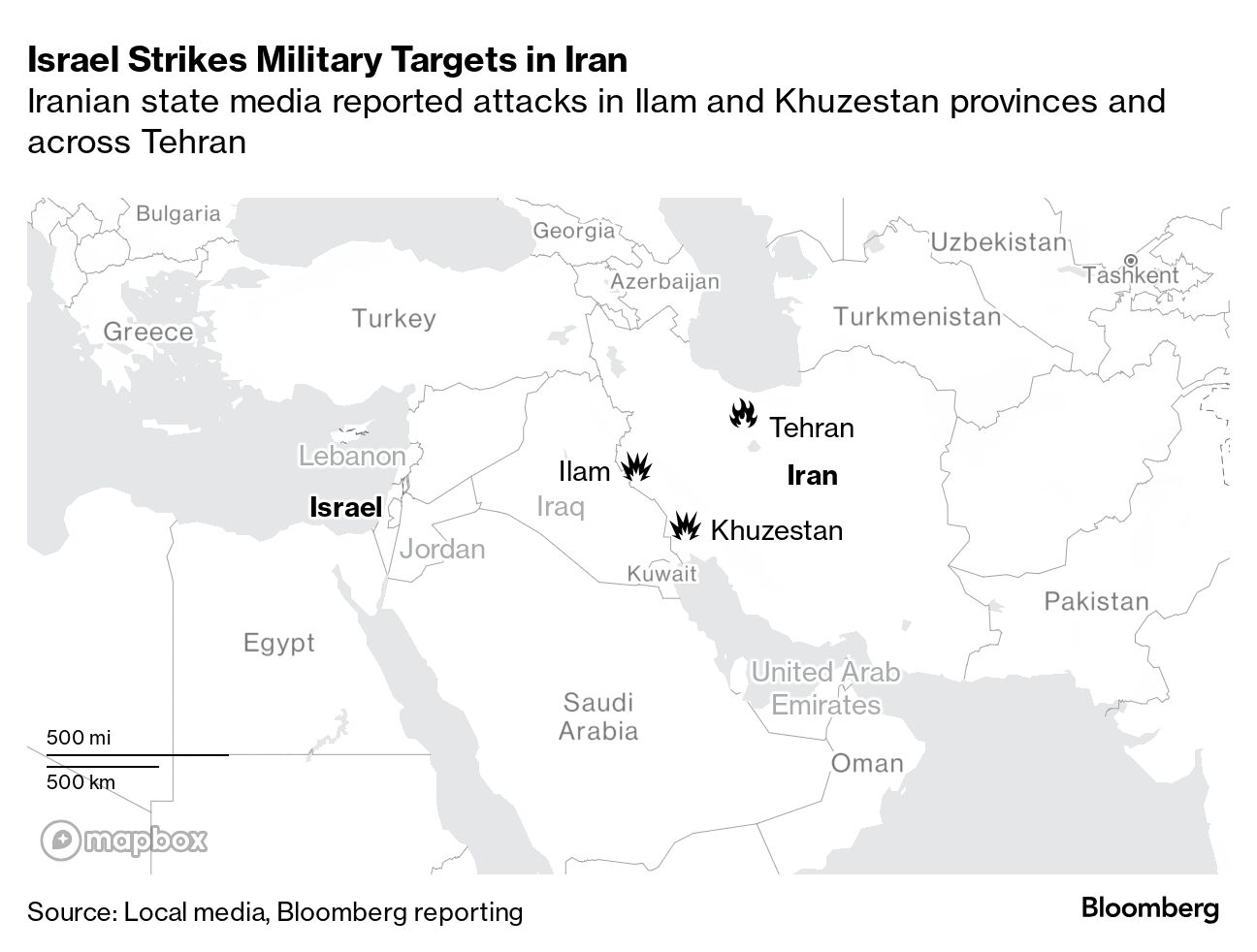
In a speech to Parliament this month, he said Israel had damaged “a specific component” of Iran’s nuclear program. In part, he’s warning Iran not to attack Israel again, as it has done twice this year. But his comments are also part of a public — and bipartisan — debate over whether Israel should seize the moment as Donald Trump enters the White House to impair Iran’s nuclear program, setting back any weapons ambitions. Israel’s ability to carry out an effective attack without the massive bombs and fighter planes deployed by the US is a matter of debate. So is the question of how the US would react if Israel acted alone. The discussion is influenced by the success of its assault on Hezbollah in recent months, one in which almost the entire senior leadership was killed, pagers and walkie talkies exploded in the pockets of thousands of operatives, and repeated bombings took out missile storage facilities and launchers. The attacks have devastated swathes of southern Lebanon and the south Beirut suburbs, pummeling parts of villages into rubble and displacing 1.2 million residents. “Hezbollah has been seriously degraded and now they badly need the cessation of hostilities to save what is left,” said Sami Nader, head of Beirut’s Levant Institute for Strategic Affairs. “The balance of power has seriously tilted in favor of Israel.” To appreciate how surprising and sudden the reduction of the Hezbollah threat has been, it helps to know what the expectations were. Ever since the 2006 war between Israel and Hezbollah, Israeli security experts have been warning about the growing missile arsenal funded by Iran.
A report from Reichman University’s International Institute for Counter-Terrorism last year, parts of which remain classified, is typical. The product of three years of work by 100 specialists, it asserts that if war broke out, Hezbollah could fire 2,500 to 3,000 rockets a day for three weeks. NB: WRONG….. WRONG…. SO WRONG1!
US-sponsored efforts at a cease-fire that would get Hezbollah away from the border, along with a strengthened multinational force and beefed up Lebanese military are under way. US envoy Amos Hochstein, who is in the region, says a deal is “within grasp,” although obstacles remain. There are also attempts to revive peace talks with Hamas, aimed at securing the return of the Israeli hostages still held in Gaza,
peace through strength
nn audio file:the storm before thhe storm


Supply concerns push oil prices 1% higher
Crude gained over 1% on Thursday as markets reacted to a fresh escalation in the Russia-Ukraine war. Earlier this week, Ukraine launched its first long-range missiles onto Russian territory, which prompted Moscow to fire an intercontinental ballistic missile this morning. The latest developments could impact oil supply, with Russia being a major exporter. NB: bullshit!! their is nothing to see here. These missile attacks having been going on for years, Meanwhile, crude oil stockpiles in the United States increased by US oil inventories reportedly up by 4.8M barrels according to the API in the week ending November 15, according to the latest report. The West Texas Intermediate (WTI) for deliveries in December added 1.34% at 4:01 am ET and sold for $69.64 per barrel. Brent for settlements in January rose by 1.14% a minute later, going for $73.64 a barrel.