Iran sends response to US proposal through Pakistan

Iran submitted its response to the latest US proposal for a ceasefire through Pakistani mediators, the state-run Islamic Republic News Agency (IRNA) reported on Sunday. According to IRNA, the proposed framework would form the basis for negotiations aimed at bringing the more than two-month conflict to an end and does not include nuclear negotiations, contrary to previous reports indicating the agreement would tackle Iran’s uranium enrichment program. Earlier, US President Donald Trump pressured Iran to accept the offer, threatening to renew the bombing campaign unless a deal was reached.

NN: No details were released. I am sure this is going nowhere fassst!

EIA: US Crude Oil Inventories Continue to Fall

Crude oil inventories in the United States decreased by 2.3 million barrels during the week ending May 1, according to new data from the U.S. Energy Information Administration (EIA) released on Wednesday. The decrease brings commercial stockpiles to 457.2 million barrels, according to government data, which is still 1% above the five-year average for this time of year. According to weekly EIA data, crude oil inventories in the United States have increased by 1 million barrels over the last 6 weeks. The EIA’s data release follows API’s figures that were released a day earlier, which reported that crude oil inventories saw a draw of 8.1 million barrels in the period. The gap between API and EIA prints is being driven in part by timing, with large draws and builds appearing across adjacent reporting weeks rather than in the same release.

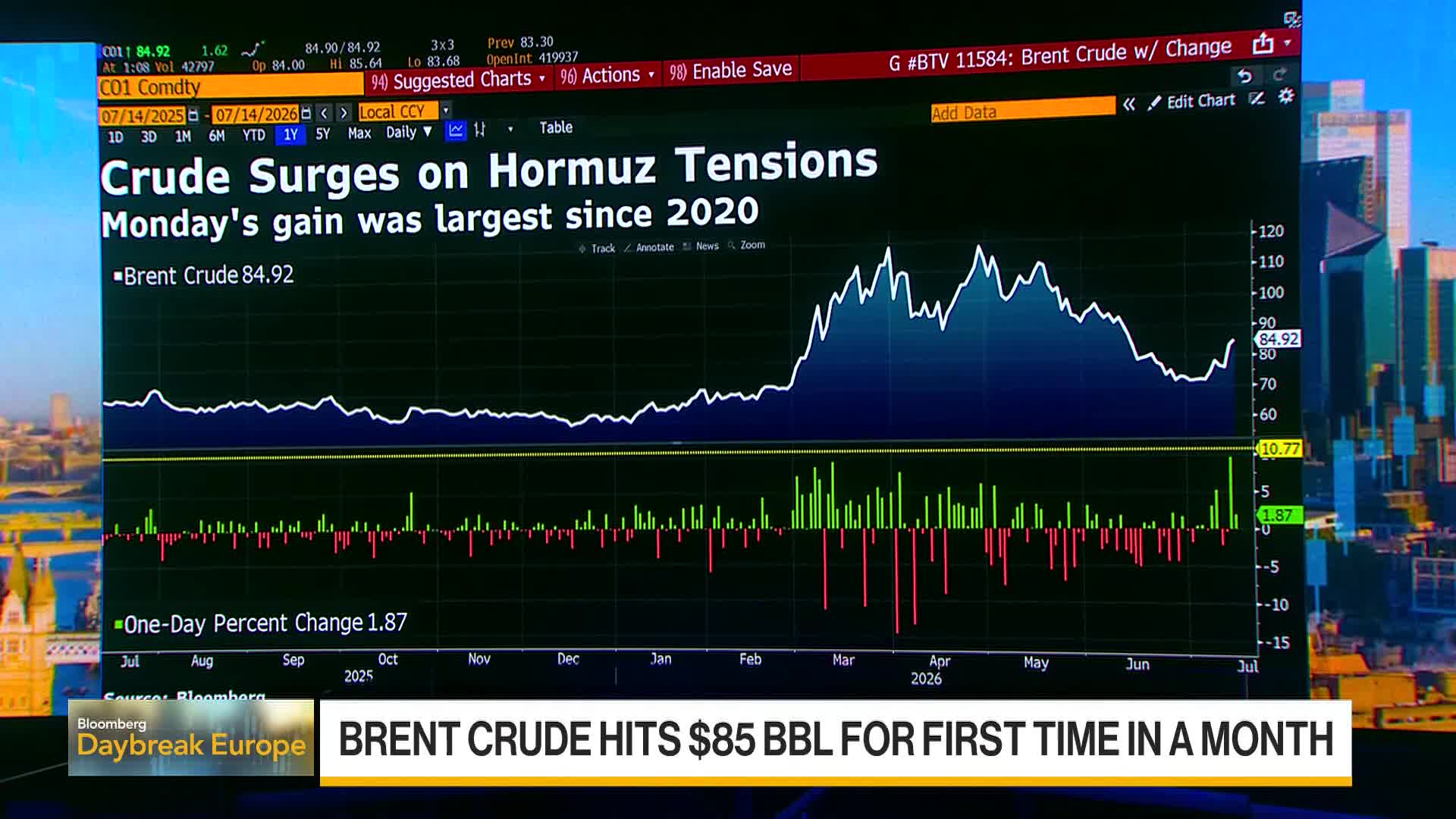
Crude prices came crashing down on Wednesday as President Trump halted Project Freedom, citing great progress toward a final agreement with Iran. At 9:49 a.m. in New York, Brent was trading at $102.50 per barrel—down $7.33 (-6.67%) on the day, and down roughly $14 per barrel from this time last week. WTI was also trading down on the day, by $6.49 per barrel (-6.35%) in early morning trade at $95.78, down nearly $9 per barrel week over week. For total motor gasoline, the EIA reported that inventories had decreased by 2.5 million barrels on top of the 6.1 million barrels lost in the week prior. The most recent figures showed that average daily gasoline production decreased to 9.6 million barrels. For middle distillates, inventories decreased by 1.3 million barrels, with production decreasing to an average of 4.9 million barrels daily. Distillate inventories are still 11% below the five-year average. Demand has not been swayed by the recent price hikes. Total products supplied—a proxy for U.S. oil demand—averaged 20.3 million barrels per day over the last four weeks, up 2.6% compared to the same period last year. Gasoline demand averaged 9.0 million barrels per day over the last four weeks, while the distillate four-week average supplied averaged 3.8 million barrels—up 3.5% percent year over year.

Iran War Is Draining World’s Oil Inventories at an Unprecedented Pace

The rapidly shrinking stockpiles mean that the risk of even more extreme price spikes and shortages is getting ever-closer, leaving governments and industries with fewer options to cushion the impact of the loss of more than a billion barrels of supply, two months into the near-closure of the Strait of Hormuz. The sharp depletion will also mean the market stays vulnerable for longer to future disruptions even after the conflict ends. Morgan Stanley estimates global oil stockpiles dropped by about 4.8 million barrels a day between March 1 and April 25 — far exceeding the previous peak for a quarterly drawdown in data compiled by the International Energy Agency. Crude accounts for almost 60% of the decline, and refined fuels the rest. Crucially, the system also requires a minimum level of oil, which means that the “operational minimum” is reached long before the inventories actually hit zero, said Natasha Kaneva, JPMorgan Chase & Co.’s head of global commodities research. “Inventories are acting as the shock absorber of the global oil system,” she said. But “not every barrel can be drawn.”

World Oil Inventories Are Falling at a Record Pace

Total visible oil inventories, in billions of barrels

Note: Total visible inventories are drawn from primary storage, and secondary storage such as distributors and wholesalers. Estimated inventories assume no resolution in June, and demand reduction at 5.6 million barrels per daySources: JPMorgan Commodities Research using data from Kpler, IEA, EIA, OilChem, PAJ, Singapore, JODI

The most immediate points of stress are in a handful of fuel-import-reliant countries in Asia, with traders pointing to Indonesia, Vietnam, Pakistan and the Philippines as the biggest worries, potentially hitting critical levels of supplies in as little as a month. Larger economies in the region, particularly China remain comfortable for now. However, European jet-fuel stocks are also depleting fast just as summer vacations approach, and some analysts predict they could hit critical levels as soon as June. The US, which has become the supplier of last resort to the world, has already drawn down domestic inventories of crude and fuels to below historical averages as exports surge. US crude stocks, including the nation’s Strategic Petroleum Reserve, have dropped for the last four straight weeks, according to government data. US distillate stockpiles were at their lowest point since 2005 at the end of last week, while gasoline stockpiles were hovering near their lowest seasonal levels since 2014.

Even if the waterway reopens, Gulf output and shipping is unlikely to return to normal levels any time soon, meaning fuel users could have to dig even deeper into storage tanks.

The conflict has already sent physical crude and key fuel prices surging, threatening higher inflation and intensifying the risk of a global recession. It has left India suffering liquefied petroleum gas shortages, prompted airlines to cancel flights and hit US drivers with soaring gasoline costs. “A lot of the inventory and spare capacity has been depleted already,” Chevron Corp. Chief Financial Officer Eimear Bonner told Bloomberg TV on May 1. “We are going to start to see some import-dependent countries potentially start to face critical shortages as we get into the June-July time-frame.”

Oil Prices Rallied on Biggest-Ever Supply Shock

Source: ICE Futures Europe

If the Strait of Hormuz doesn’t reopen by early June, some Asian countries will face a macroeconomic shock because of the shortage of gasoil, he predicted, while Europe may have one more month before the situation becomes difficult to manage. To be sure, some analysts and traders say that the stress points are lower than what JPMorgan estimates, meaning that the industry could have a bigger buffer, while further demand loss would also help reduce the pressure on the system. The JPMorgan estimates assume demand destruction of 5.6 million barrels a day for June through September.

Diesel — the lifeblood of the global economy — is also facing a crunch. Countries hit hardest are those with limited domestic crude production and refining capacity, said Xavier Tang, a senior market analyst at Vortexa Ltd. “Northeast Asian countries such as China, Japan and South Korea hold ample crude and product stocks in their storage tanks,” said Tang. “Vietnam, Philippines are in a more dire situation;

Europe and Jet Fuel

In Europe, the critical product is jet fuel. Inventories in independent storage at the Amsterdam-Rotterdam-Antwerp hub have plunged a third since the war started to a six-year low, according to Insights Global, which gets data from terminal operators.

Inventories Drop in Europe’s Oil Trading Hub

Stockpiles of jet fuel/kerosene held in independent storage

Note: Stockpiles of jet/kero in independent storage in the Amsterdam-Rotterdam-Antwerp area; figures do not cover Jan. 1-6 and Dec. 28-31

Source: Insights Global

“Since February, we have seen a steady drop in jet fuel stocks,” said Lars van Wageningen, research and consultancy manager at Insights Global. “Other regions like Asia and Australia also need to source this product, so everybody’s scrambling for whatever jet fuel they can get — with a cost.” While there’s enough supply in the short-term, summer demand could cause stocks to dry up in five months, he said. The UK, Germany and France are most vulnerable because of heavy traffic and insufficient local production.

NN: Don’t let them shit you. The world is running out of oil and distillates at an alarming rate. Its the most incredible case of denial i have ever seen. This is the kind of lala land denial  hallucinations i expect from the grenniewinnies, WOK DOPES,, FAGOTS AND OTHER CLUELESS IDIOTS. Not from captains of industry and world leaders. Rationing and long lines at gas stations are coming. Please note the memorandum { ha ha ha} Is little more than a wet dream.
I am up to four electric cars. My daughter parked her hummer and bought a Tesla! And i added another string of solar panels to sell electricity to my desoerate neighbors.  So tell me what  what are you doing? At least buy the shit out of oil!

Oil slick seen off Iran’s Kharg Island

An oil slick was detected off Iran’s Kharg Island, a central hub for the country’s crude exports, The New York Times reported, citing satellite images. The alleged spill that caused the slick took place on the island’s western side and was estimated by Orbital EOS to cover more than 52 square kilometres, with over 3,000 barrels of oil said to have leaked into the water. The site of the incident lies north of the Strait of Hormuz.

NN: Iran’s new oil storage sight.  The ocean!

Physical Oil Market Does Not REFLECT the under priced paper market

Rystad Energy said reports of a U.S.-Iran peace deal are gaining credibility, but warned that, even if a deal is made, “the consequences for physical oil markets will be slower and more conditional than futures prices are currently pricing in”. Rystad Energy Chief Oil Analyst Paola Rodriguez-Masiu, who is based in the Netherlands, stated in the update that a deal announcement “would move futures further immediately”, highlighting that “even the potential of a deal is already triggering a decline in oil prices”. Rodriguez-Masiu added, however, that the physical market “does not run on political timelines”. “Even under an optimistic scenario involving a 30-day phased reopening of the Strait of Hormuz, meaningful volume recovery would happen in June at the earliest, with processing port arrivals lagging by an additional four to six weeks after that,” the analyst warned. “Transit insurance markets need to reprice, vessel operators need verified and sustained access, and commercial confidence cannot be rebuilt overnight,” Rodriguez-Masiu said.

“The six to eight week lag between credible access conditions and real flow normalization is not a conservative estimate, it is a structural feature of how shipping markets work. Global markets should not mistake a ceasefire headline for a supply headline,” the analyst went on to state.

Rystad pointed out in its update that its prior estimate of six to eight weeks “between a credible access condition and meaningful volume recovery remains intact”. “Physical flows back to 80-90 percent of pre-disruption levels are a July story. Processing port arrivals lag by an additional four to six weeks,” it added. Rystad went on to state that several signals distinguish today’s situation from prior episodes where U.S. proposals have been floated and failed to materialize. The U.S. has made “a tangible operational concession”, the update outlined, noting that U.S. President Donald Trump has paused U.S. efforts to escort commercial vessels through the Strait. One more signal, according to the update, is that the IRGC is silent.  “Unlike every previous juncture where U.S. proposals have been floated, the Islamic Revolutionary Guard Corps has not commented,” the update stated.

Fitch Group  In a BMI report  early Thursday, BMI analysts revealed that they are keeping their forecast for front-month Brent crude oil futures unchanged at an annual average of $78 per barrel for 2026. “The forecast aligns with our Country Risk team’s core ‘Extension’ scenario, which sees an early May resolution to the war, sparking a sharp initial sell-off in oil, followed by a more gradual normalization of flows through the Strait of Hormuz and production upstream,” the analysts said in the report.

“That said, there is a significant risk that we soon shift to a longer extension scenario, in which the war drags on and disruption to the Strait of Hormuz continues for an additional four to six weeks, into mid to late June,” they added.

Under this scenario, the analysts said they would direct their forecast users to “shift from Brent futures (a financial contract) to Dated Brent (a physical contract) as their primary crude pricing benchmark”, noting that they believe the latter is “more reflective of conditions in the underlying market for oil”. The analysts also noted that, under this scenario, they would raise their 2026 annual average forecast for Dated Brent to $90 per barrel, “reflecting a larger cumulative loss of supply, increased damage to energy infrastructure, and longer post-conflict recovery horizon”.

Kudotrade In a market analysis, Konstantinos Chrysikos, Head of Customer Relationship Management  highlighted that oil was extending a decline “amid de-escalation hopes”. “Oil prices fell for a second consecutive session on Wednesday as markets reacted to growing expectations that diplomatic efforts between the United States and Iran could eventually lead to a broader easing of tensions in the Middle East,” Chrysikos said in that analysis. “Reassuring signals from Washington helped improve sentiment. At the same time, reports that an agreement between the two countries could be reached soon to end the gridlock and reopen the Strait of Hormuz raised hopes that supply currently trapped in the Gulf could return to global markets,” he added.

Chrysikos went on to warn in that report, however, that “constraints on maritime flows remain in place, leaving the physical market in a state of tightness”.

“In addition, any normalization is likely to be gradual,” he said. “Looking ahead, oil markets are likely to remain highly exposed to renewed volatility in the case of a setback, while market participants could remain cautious ahead of any new developments,” he cautioned. “While optimism around an agreement could maintain downward pressure on prices in the near term, failure to reach an agreement or renewed tensions could quickly reverse the recent decline,” Chrysikos went on to state.

NN: I am betting on failure. This stinks like shit from A ti Z.

US Waits on Iran’s Peace Deal Response as Israel Strikes Lebanon

The US is waiting on Iran to respond to its proposal to reopen the Strait of Hormuz and end a war that’s killed thousands of people, with tensions still high in both the Persian Gulf and in Lebanon. Iran’s leaders are yet to indicate whether they’ll accept the terms of the deal, though they’ve previously shown little sign of yielding on their nuclear program and accepting a moratorium on enriching uranium, which the US is calling for. Iran’s President Masoud Pezeshkian recently met with Supreme Leader Ayatollah Mojtaba Khamenei for nearly two and a half hours, the state-owned Mizan news agency reported Thursday, without saying what the talks were about or when they were held. Iran is expected to send a response via Pakistan, acting as a mediator, in the next two days, a person familiar with the matter said on Wednesday, asking not to be identified discussing sensitive information. Oil has declined sharply since news of the US offer emerged on Wednesday, signalling some traders are optimistic a deal could be reached. Washington has relayed a one-page memo to the Islamic Republic that could reopen the strategic Strait of Hormuz and lift the US blockade of Iranian ports, according to the person familiar with the matter. That would set the stage for a month of talks aimed at securing a final agreement to bring the 10-week conflict to a close. Should the negotiation get to that stage, the sides will discuss Iran’s nuclear activities. US President Donald Trump has repeatedly said the objective of the war is to prevent Tehran having a nuclear weapon, something Iran has always denied. Trump said Wednesday the US is “going to get” the Islamic Republic’s stockpile of highly enriched uranium as part of the agreement, though there’s been no indication Tehran is willing to make that concession.

The US will start a broader and more intense bombing campaign if Iran rejects the initial 14-point peace plan, Trump said earlier in a social media post, though he’s repeatedly walked back on threats to escalate the conflict. He told PBS News Hour he believes there’s “a very good chance” of a deal, possibly before his scheduled summit with Chinese President Xi Jinping in Beijing next week.

Iran’s state-affiliated news agency ISNA said reports on elements of the proposal amount to “media speculation and atmosphere-building,” adding that nuclear enrichment is not part of the current discussions.

Khamenei succeeded his father, Ali, who was killed by an Israeli strike on the first day of the war. He hasn’t been seen in public since. Last week, in a statement, he said Iran would not give concessions on its nuclear program, describing it as a “national asset” that Iranians would protect at all cost. Other outstanding issues include limits on Iran’s ballistic missile program and its support for allied militant groups such as Lebanon’s Hezbollah., Those are a priority for Israel, whose officials struck a cautious tone on the latest US push to wind down the campaign against Iran. Ambassador to the United Nations Danny Danon told Army Radio on Thursday that “we need to wait and not come out with declarations and headlines” about a potential deal. Reopening Hormuz, where a fifth of the world’s oil and liquefied natural gas flowed before the war brought traffic to a standstill, is a key objective for Trump.

NN: I smell BULLSHIT!!!

Saudi TV: Hormuz transit breakthrough within hours

A “breakthrough” to restart movement for stranded ships through the Strait of Hormuz is “expected in the coming hours,” Saudi Arabia’s state-owned and operated Al-Hadath television channel reported on Thursday. “A breakthrough regarding the ships stranded in the Strait is expected in the coming hours,” the outlet predicted. “Agreements have reportedly been reached regarding easing the blockade in exchange for a gradual reopening of the Strait.” The chokepoint is vital for Gulf energy exports, including from Saudi Arabia, which was also targeted during the recent Iran conflict. The strait has been largely closed since February, blocking roughly 25% of global seaborne oil and forcing costly route changes.

NN: A lot of hype. I am not buying into this. Forty years of history tells me this is just another stall tactic by the Iranians

CENTCOM: USS Bush enforces Iran blockade

United States Central Command (CENTCOM) stated on Wednesday that the aircraft carrier USS George H.W. Bush (CVN 77) is fully enforcing the US naval blockade against Iran. The carrier had been part of US President Donald Trump’s Project Freedom before he announced the operation would be “paused for a short period of time.” Up to now, the US has directed 52 commercial vessels to turn around or return to port, according to CENTCOM.


Trump: Too soon to talk about signing Iran deal

US President Donald Trump on Wednesday pushed back against reports that a peace agreement with Tehran may be getting close. When asked if a fresh round of negotiations with Pakistan was on the horizon, requiring media presence at the site, the American leader replied, “I don’t think so” to the New York Post. “I think we’ll do it – it’s too far,” he added, continuing with no, it’s too much.”

Meanwhile, Pakistani sources told Al-Arabiya that the two sides are closer to embarking on a negotiation process that “may take months.”

Trump’s comments come after he said yesterday that Project Freedom was paused to allow for the deal to be reached. However, the US president warned earlier today that Washington will continue to “bomb” the Middle Eastern country if Iran does not accept the terms of the already “agreed” terms.

NN: I would say that the market thinking their is a peace deal have gotten carried away.

US Boosts Efforts to End Iran War as Trump Suspends Hormuz Plan

The US believes it’s close to an agreement with Iran to end the near 10-week war, Axios reported, as China added its voice to global diplomatic pressure to wrap up the conflict. Washington and Tehran are working on a one-page memorandum of understanding that would set a framework for more detailed nuclear negotiations, Axios said Wednesday, citing two US officials and two other sources it didn’t identify. Nothing has been agreed yet, the news agency added, and the US expects Iranian responses on several key points in the next 48 hours.

Iran hasn’t commented on any progress toward a deal.

Oil fell on the report, with Brent dropping 5.6% to below $104 a barrel, a two-week low on a closing basis. Global government bonds extended gains.News of the potential breakthrough came after US President Donald Trump suspended a military initiative to guide stranded ships though the Strait of Hormuz, after a single day of operations resulted in clashes with the Islamic Republic. That forced Washington to insist the a fragile ceasefire remains in place, and Beijing used a rare public comment on the conflict to warn against a return to fighting.  “Project Freedom (The Movement of Ships through the Strait of Hormuz) will be paused for a short period of time to see whether or not the agreement can be finalized and signed,” Trump said in a social media post on Tuesday. “Great progress has been made toward a complete and final agreement with representatives of Iran.” Trump has repeatedly said significant progress has been made in negotiations with Iran to end the war, which began when the US and Israel started bombing the Islamic Republic in February. But disagreements remain over key issues such as the fate of Hormuz, where a fifth of the world’s oil and liquefied natural gas flowed before the war brought traffic to a standstill. The US is also demanding an end to Tehran’s nuclear enrichment program, a central part of a set of demands that Iran’s President Masoud Pezeshkian has called unrealistic. Trump’s challenge is to end an increasingly unpopular war while breaking Iran’s control of the strait, an objective he needs to achieve to lower energy costs. US gasoline prices topped $4.50 a gallon on Wednesday for the first time since July 2022, extending a climb that could hurt the Republican Party in the buildup to Midterm elections this November. Suspending Project Freedom also suggests he wants to avoid another flareup in violence like the one seen on the first day of the operation. Before Trump’s announcement, Secretary of State Marco Rubio told reporters at the White House that offensive operations against Iran were over. Project Freedom was meant to sit at the center of the next phase of the US approach to Iran. The US military said it helped two vessels exit Hormuz on Monday, repelling multiple attacks by Iranian drones, missiles and irregular navy fast-attack boats. The shipping industry is waiting for a way to guarantee safe passage through Hormuz without ships risking harassment by Iran or any other party, Dimitris Maniatis, the chief executive officer of Greek maritime risk company Marisks, told Bloomberg TV on Wednesday.

NN: Do not get caught up in the reality TV show game. Look at oil. Is oil coming through the straits… IF not all this talk is bullshit. Do not get shaken out of this great trade.