CENTCOM chief back in Israel amid fears of Iran, Hezbollah attack
US Air Force F-22 Raptors arrived in the Middle East on Thursday as the Pentagon gears up to fend off an anticipated retaliatory attack by Iran and its proxies against Israel for the assassination of a top Hamas leader in Tehran last week.
WASHINGTON — The top commander of US military forces in the Middle East, Army Gen. Michael “Erik” Kurilla, returned to Israel on Thursday to meet with defense officials ahead of an expected multifront attack by Iran and various militias it has armed throughout the region.
The visit marked Kurilla’s second to Israel in just three days as he toured US-aligned capitals in the region to coordinate air and maritime defense ahead of the anticipated attack. Axios first reported his latest stop.
Iran’s leadership has vowed to respond to the killing of Hamas’ late political leader Ismail Haniyeh in an explosion at an IRGC guest house in Tehran last week.
The Biden administration has rallied international pressure in the hope of dissuading Iran’s leaders from authorizing a major retaliation for Haniyeh’s killing, which Western and Arab officials fear could spiral into a wider regional war. To support that effort, the Pentagon has rushed additional forces to the region, including an additional aircraft carrier, the USS Abraham Lincoln, Navy destroyers capable of downing ballistic missiles and an undisclosed number of highly advanced F-22 fighter aircraft.
The F-22s arrived in-region on Thursday, US CENTCOM said in a statement. Another aircraft carrier already in theater, the USS Theodore Roosevelt, forward deployed F/A-18 aircraft ahead of the arrival of the F-22s.
Those assets join at least a dozen other US and allied warships, as well as fighter aircraft already in the Mediterranean and Gulf waterways. US Defense Secretary Lloyd Austin late last week also authorized the readying of land-based ballistic missile interception systems for potential deployment. “Everything that we’re doing is defensive in nature,” Pentagon deputy spokesperson Sabrina Singh said on Thursday of the new deployments. Singh declined to say whether that might change if US troops in the region come under attack. Singh called the F-22s an “invaluable” asset for the situation. “I think it sends a very powerful message of deterrence,” she added. US officials have warned Iran’s leadership of potentially devastating economic consequences for their country and instability for its incoming government should they authorize a major retaliation against Israel that triggers escalation, the Wall Street Journal reported Thursday.
Summary of Weekly Petroleum Data for the week ending August 2, 2024 U.S. crude oil refinery inputs averaged 16.4 million barrels per day during the week ending August 2, 2024, which was 252 thousand barrels per day more than the previous week’s average. Refineries operated at 90.5% of their operable capacity last week. Gasoline production increased last week, averaging 10.0 million barrels per day. Distillate fuel production increased last week, averaging 5.0 million barrels per day. U.S. crude oil imports averaged 6.2 million barrels per day last week, decreased by 729 thousand barrels per day from the previous week. Over the past four weeks, crude oil imports averaged about 6.8 million barrels per day, 0.7% more than the same four-week period last year. Total motor gasoline imports (including both finished gasoline and gasoline blending components) last week averaged 630 thousand barrels per day, and distillate fuel imports averaged 115 thousand barrels per day. U.S. commercial crude oil inventories (excluding those in the Strategic Petroleum Reserve) decreased by 3.7 million barrels from the previous week. At 429.3 million barrels, U.S. crude oil inventories are about 6% below the five year average for this time of year. Total motor gasoline inventories increased by 1.3 million barrels from last week and are about 2% below the five year average for this time of year. Finished gasoline inventories increased, while blending components inventories decreased last week. Distillate fuel inventories increased by 0.9 million barrels last week and are about 6% below the five year average for this time of year. Propane/propylene inventories increased by 0.5 million barrels from last week and are 13% above the five year average for this time of year. Total commercial petroleum inventories increased by 1.2 million barrels last week. Total products supplied over the last four-week period averaged 20.3 million barrels a day, down by 2.0% from the same period last year. Over the past four weeks, motor gasoline product supplied averaged 9.1 million barrels a day, up by 1.5% from the same period last year. Distillate fuel product supplied averaged 3.7 million barrels a day over the past four weeks, down by 2.2% from the same period last year. Jet fuel product supplied was down 1.2% compared with the same four-week period last year

U.S. commercial crude oil inventories (excluding those in the Strategic Petroleum Reserve) decreased by 3.7 million barrels from the previous week. At 429.3 million barrels, U.S. crude oil inventories are about 6% below the five year average for this time of year. U.S. crude oil refinery inputs averaged 16.4 million barrels per day during the week ending August 2, 2024, which was 252 thousand barrels per day more than the previous week’s average. Refineries operated at 90.5% of their operable capacity last week. Gasoline production increased last week, averaging 10.0 million barrels per day. Distillate fuel production increased last week, averaging 5.0 million barrels per day. U.S. crude oil imports averaged 6.2 million barrels per day last week, decreased by 729 thousand barrels per day from the previous week. Over the past four weeks, crude oil imports averaged about 6.8 million barrels per day, 0.7% more than the same four-week period last year. Total motor gasoline imports (including both finished gasoline and gasoline blending components) last week averaged 630 thousand barrels per day, and distillate fuel imports averaged 115 thousand barrels per day. Total motor gasoline
inventories increased by 1.3 million barrels from last week and are about 2% below the five year
average for this time of year. Finished gasoline inventories increased, while blending components inventories decreased last week. Distillate fuel inventories increased by 0.9 million barrels last week and are about 6% below the five year average for this time of year.
Propane/propylene inventories increased by 0.5 million barrels from last week and are 13% above the five year average for this time of year. Total commercial petroleum inventories increased by 1.2 million barrels last week.
Total products supplied over the last four-week period averaged 20.3 million barrels a day, down by 2.0% from the same period last year. Over the past four weeks, motor gasoline product supplied averaged 9.1 million barrels a day, up by 1.5% from the same period last year. Distillate
fuel product supplied averaged 3.7 million barrels a day over the past four weeks, down by 2.2% from the same period last year. Jet fuel product supplied was down 1.2% compared with the same four-week period last year
Nasdaq 100’s rally over 400 pts on tech sell-of recoveryf
Major stock market indexes in the United States extended their gains during Thursday’s session as the reported decrease in initial jobless claims and the possibility that the country might avoid a recession pushed traders toward investing. Numerous technological companies trading on the Nasdaq 100, such as ARM Holdings, ON Semiconductor, KLA Corporation, and Microchip Technology Inc., thus soared by more than 5%. The rise in the Dow Jones Industrial Average neared 600 points as the index grew by 1.53% or 593 points at 11:28 am ET. The Nasdaq 100 increased by 2.38% or 424 points after hitting more than 430 moments earlier. The S&P 500 expanded by 1.90%.
JPMorgan Says Three Quarters of Global Carry Trades Now Unwound
- Returns have fallen around 10% since May, Says JPMorgan
- Reiterates the clock is ticking for the G10 carry trade:
Three-quarters of the global carry trade has now been removed, with a recent selloff erasing this year’s gains, according to JPMorgan Chase & Co. Returns in Group-of-10, emerging market and global carry trade baskets tracked by the bank have fallen about 10% since May, quantitative strategists Antonin Delair, Meera Chandan and Kunj Padh wrote in a note to clients.
The moves have wiped out the year-to-date returns and significantly cut into profits accumulated since the end of 2022.
“The spot component of the global carry basket would suggest that 75% of carry trades have been removed,” the JPMorgan team wrote, reiterating that the “clock is ticking for the G10 carry.” The carry strategy – which involves borrowing at low rates to fund purchases in higher-yielding assets elsewhere — has been wobbling for months. Carry trades were pummeled over the past week as global market volatility jumped amid fears of rapid Federal Reserve rate cuts and after the Bank of Japan’s larger than expected rate hike. The recent selloff has been double the usual pace in a carry drawdown, with the strategists suggesting there may be small opportunity for a rebound in August as “the central bank calendar is light for this period and volatility already started to cool off.” However, the global carry trade strategy is “not offering an attractive risk-reward,” they emphasized. “The yield on the basket has plummeted since the highs of 2023 and is not a sufficient compensation for holding EM high betas through US elections and the risk of further repricing of low yielders if US yields fall.”
NN Audio File in BlaskMask Podcast:
Loses Are Humugus
War Enters New Phase as Ukraine Launches Offensive in Russian Territory
A Ukrainian ground assault on Russian regions across the border continued on Wednesday for their second day, forcing Russia to evacuate residents from the Kursk region, sparking a backlash against President Vladimir Putin for failing to thwart the attacks.
According to The Moscow TImes, this latest campaign by Ukraine is “larger in scale and more prepared than previous efforts”. The English-language daily cited local officials as reporting at least five people had been killed in the attack so far, and scores of others injured.
Some three Ukrainian troops, accompanied by 11 tanks and nearly two dozen armored vehicles launched the attack on Kursk, according to The Moscow Times.
On Tuesday, Ukrainian forces attacked the border town of Sudzha, in the Kursk region, some 300 miles southwest of Moscow, Reuters cited the Russian Defense Ministry as saying, with Putin calling the move a “major provocation” and accusing Ukraine of indiscriminately targeting civilians. On Telegram on Wednesday, Kursk Governor Alexei Smirnov confirmed that “over the past 24 hours, our region has been heroically resisting attacks by Ukrainian Nazis. All emergency services have been put on high alert”. While attacking both Ukraine and Russia have in the past resorted to targeting each others’ energy infrastructure, the war is now entering a new phase and expanding to the African front, with Moscow’s Wagner mercenaries using the continent in a flanking maneuver and Kyiv following. Both Mali and Niger have severed diplomatic ties with Kyiv, accusing it of supporting terrorist groups in the countries as a counterbalance to Wagner forces. Last week, Ukraine was under scrutiny for its alleged intelligence role in an attack conducted by Tuareg rebels in the north against Mali’s military government, during which dozens of Wagner mercenaries and Malian soldiers were reportedly killed . NN: f16’s equipped with Israeli modified missals is a game changer.
Gallant: Conflict with Lebanon may escalate into war……. Israel strikes Hamas, PIJ arms production facility
Israel’s Defense Minister Yoav Gallant ensured on Wednesday that his country is ready to expand its operations against Lebanon if necessary, and warned that the current conflict with Lebanon-based Hezbollah “could also deteriorate into a state of war.” “This is not theoretical, it is real,” he told Israeli soldiers. Gallant further said that Hezbollah Secretary General Hassan Nasrallah’s threats “may drag Lebanon into paying extremely heavy prices,” adding that the militant group “can’t even imagine what might happen.” The day before, Nasrallah stressed that Hezbollah’s retaliatory response to the assassination of the group’s senior commander, Fuad Shukr, committed by Israeli forces, has not yet started, adding that the militant organization intends to target new Israeli sites, “deeper into the country.”
Israel strikes Hamas, PIJ arms production facility
A weapons production facility allegedly owned by Hamas and Palestinian Islamic Jihad located within a designated humanitarian area in Deir al-Balah in central Gaza was demolished in an airstrike, according to the Israel Defense Forces (IDF) on Wednesday. Earlier, the military informed it targeted Hamas’ rocket launchers, which they claimed were placed near aid warehouses in southern Gaza. The strikes come following an evacuation order in Beit Hanoun in the northern Gaza Strip, showing how the Israeli army is targeting north, south, and central areas of Gaza, making it more and more difficult for civilians to find shelter. The latest Gaza death toll update revealed the number is getting closer to 40,000.
Oil extends gains, WTI surges 2.45%
The prices of oil futures continued to move upward on Wednesday as supply concerns seemingly intensified. With the recent unravellings in the Middle East, the whole world turned its attention to Iran, awaiting its strike on Israel, after the latter killed Hamas’ top member, Ismail Haniyeh. Even though Tehran insisted it doesn’t seek further escalation, worries over the Gaza conflict turning into a regional war persisted. In addition, production disruptions in Lybia added to supply woes.
Trump: Strategic Oil Reserves must be filled up ‘immediately’
Former United States President and Republican presidential nominee Donald Trump stressed on Wednesday that the country’s Strategic Oil Reserves have to be filled up “immediately.”
Crude oil traded 1% higher on Wednesday as uncertainty over steady supply persisted in light of a possible Middle East conflict. In addition, the Libyan state oil company announced yesterday the production at its Sharara oil field will be rolled back due to the ongoing unrest in the country.
Oil Rebounds from Seven Month Lows
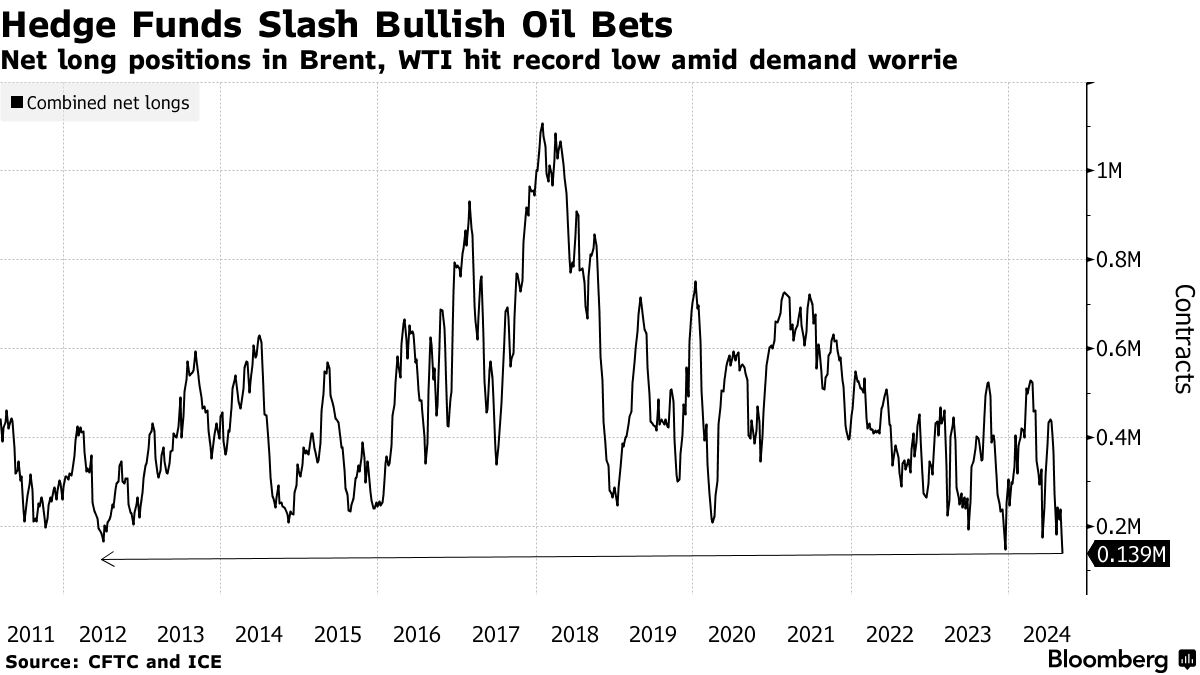
Oil bounced back from a seven-month low as equities led risk assets in a recovery from a global market selloff. West Texas Intermediate edged higher to settle above $73 a barrel, its first daily gain after tumbling more than 6% over three straight losing sessions. As prices neared the lowest levels this year, traders received multiple warning signs that futures were oversold. Still, it was only when the S&P 500 recovered in New York trading hours that was crude able to recoup its losses. Meanwhile, traders continued to weigh signs of potential physical market tightness. Those risks include the loss of some Libyan supplies and concerns that the conflict in the Middle East could hurt production from the region. “Oil prices have fallen in the last few days in lockstep” with equities, with limited reaction to developments in the Middle East, Goldman Sachs Group Inc. analysts including Daan Struyven wrote in a note. They see Brent finding support at $75 a barrel due to the limited risk of a US recession and room for an increase in speculative positioning. Last week, oil notched its fourth straight weekly decline on signals of faltering demand in the US and China, with the Asian nation rolling out plans to spur domestic consumption over the weekend. On Tuesday a US government report flashed warning signs about consumption in China, citing a weak economy in the Asian country for sputtering oil demand growth. Traders are bracing for a retaliatory attack on Israel by Iran and regional militias, though Tehran has underlined that it wants to avoid all-out war. Hezbollah and Israeli forces exchanged fire on Tuesday. For months, traders were concerned the conflict could spiral into a more devastating proxy war, embroiling the US and Iran and possibly hampering crude exports. Oil’s dive also may have been partly arrested by algorithmic traders approaching the peak of their bearish positioning, according to analysis firms.
- WTI for September delivery AT 6:00 AM New York Time were trading at $73.20 a barrel
- Brent for October settlement was quoted at $76.48 a barrel.