EIA Weekly Petroleum Report…. Oil inventories decreased by 3.4 million barrels

Weekly Petroleum Data for the week ending July 26, 2024

U.S. commercial crude oil inventories (excluding those in the Strategic Petroleum Reserve)
decreased by 3.4 million barrels from the previous week. At 433.0 million barrels, U.S. crude oil
inventories are about 4% below the five year average for this time of year.
U.S. crude oil refinery inputs averaged 16.2 million barrels per day during the week ending July
26, 2024, which was 258 thousand barrels per day less than the previous week’s average.
Refineries operated at 90.1% of their operable capacity last week. Gasoline production decreased
last week, averaging 10.0 million barrels per day. Distillate fuel production increased last week,
averaging 5.0 million barrels per day.
U.S. crude oil imports averaged 7.0 million barrels per day last week, increased by 82 thousand
barrels per day from the previous week. Over the past four weeks, crude oil imports averaged
about 6.9 million barrels per day, 5.9% more than the same four-week period last year. Total
motor gasoline imports (including both finished gasoline and gasoline blending components) last
week averaged 917 thousand barrels per day, and distillate fuel imports averaged 140 thousand
barrels per day.
Total motor gasoline inventories decreased by 3.7 million barrels from last week and are about 3% below the five year average for this time of year. Both finished gasoline and blending components inventories decreased last week. Distillate fuel inventories increased by 1.5 million barrels last week and are about 7% below the five year average for this time of year. Propane/propylene inventories
increased by 2.9 million barrels from last week and are 16% above the five year average for this
time of year. Total commercial petroleum inventories decreased by 2.4 million barrels last week.
Total products supplied over the last four-week period averaged 20.5 million barrels a day, up by
1.4% from the same period last year. Over the past four weeks, motor gasoline product supplied
averaged 9.2 million barrels a day, up by 4.2% from the same period last year. Distillate fuel
product supplied averaged 3.7 million barrels a day over the past four weeks, up by 3.2% from
the same period last year. Jet fuel product supplied was up 1.2% compared with the same four week period last year

Israel’s Twin Strikes in Tehran, Beirut Ratchet Up Tensions

  • Hezbollah, Hamas leaders said assassinated in Beirut, Tehran
  • Risk of regional conflagration increases as revenge is vowed

Within seven hours overnight, Israel targeted top leaders of Hezbollah in Beirut and Hamas in Tehran in a show of its willingness to risk retaliation and regional conflagration while hunting down enemies abroad.Israeli officials said the killing of Hezbollah’s Fuad Shukr in the Lebanese capital was in response to a rocket attack last weekend from Lebanon that claimed the lives of a dozen young people playing soccer in the Golan Heights. Shukr was said to be Hezbollah’s chief of staff, in charge of its military activity. The missile fired into the Tehran guest house occupied by Ismail Haniyeh, the political chief of Hamas, killed him and his bodyguard. Israel has vowed to eliminate every Hamas official since the Oct. 7 attack that triggered the war in Gaza. Israel hasn’t official claimed responsibility, but no one in the country doubts who did it. “It’s part of Israel’s long-term counter-terrorism paradigm that you go after the leaders of terror organizations,” noted Yohanan Plesner, president of the Israel Democracy Institute, a think tank focused on political reform and critic of Prime Minister Benjamin Netanyahu. “There’s a broad consensus among Israelis that all those who perpetrated the Oct. 7 massacre should cease to exist.”

From the outside, the risks appear steep. Talks under way with Hamas to free hostages and impose a cease-fire on the nearly 10-month-old war in Gaza seem likely to stall if not break down.

While Lebanon’s Hezbollah has not confirmed Shukr’s death, the diplomacy aimed at getting it to stop firing missiles at Israel and move its forces away from the border seems equally likely to be affected. Israeli analysts noted that Haniyeh was killed in Iran where he was visiting, not in Qatar, where he lives, in order not to alienate the Qataris who are key to the hostage talks. Less clear is how Iran — chief sponsor of both Hamas and Hezbollah, as well as the Houthis in Yemen, all groups that are attacking Israel — will react to having a visitor to a state ceremony assassinated under its nose. On Wednesday, Iran’s Supreme Leader, Ayatollah Ali Khamenei, spoke not of diplomacy but retaliation, vowing that Israel has “prepared the ground for its severe punishment.”

Now, says Firas Modad, founder of Modad Geopolitics, a consultancy for investors, there is likely to be “a severe increase in risks to energy infrastructure” in the Persian Gulf as well as “to shipping in the Persian Gulf-Arabian Sea-Indian Ocean, to assets located near US bases in the region, to aviation” in the region and “to US and UK personnel.”

US Defense Secretary Lloyd Austin, asked while visiting the Philippines about the impact of the killings, said he didn’t think war was inevitable. “We’re going to do everything we can to make sure that we keep things from turning into a broader conflict throughout the region,” he said. “If Israel is attacked, we certainly will help defend Israel. You saw us do that in April. You can expect to see us do that again.” NN: The battle lines are being drawn. And yes their will be one hell of a battle. By the way all air traffic has been grounded i the north part  of Israel. Reguard this as the quiet in  the eye  storm . 

Haniyeh’s killing was called by Palestinian’s Mahmoud Abbas a “cowardly act and dangerous development.”

Palestinian President Mahmoud Abbas condemned the killing in Tehran of Hamas leader Ismail Haniyeh as a “cowardly act” in a statement issued on Wednesday. The head of the Palestinian Authority described the killing as a “dangerous development.” The secretary general of the executive committee of the Palestine Liberation Organization (PLO), Hussein al-Sheikh, wrote on the platform X that his organization denounced “the assassination of the head of the Political Bureau, the national leader, Ismail Haniyeh.” Haniyeh’s killing was met with immediate condemnation and outrage across the Arab and Muslim world, with Iran threatening to retaliate. A spokesman for Iran’s Foreign Ministry said the killing would “strengthen the deep and unbreakable bond between the Islamic Republic of Iran and dear Palestine and the resistance.”

The head of the Palestinian Authority, Mahmoud Abbas, called it a “cowardly act and dangerous development.”

“We consider it a cowardly act, this pushes us to remain more steadfast in the face of the occupation, and the necessity of achieving the unity of the Palestinian forces and factions,” al-Sheikh wrote. An alliance of various political groups in the West Bank called for a general strike in response to Haniyeh’s death. Furthermore, it was suggested that confrontations with Israeli soldiers at checkpoints should be sought. Whether these were meant to be demonstrations or attacks remained unclear.

“We consider it a cowardly act”   And what do they call that ditty on October 7?   Where they shot,    dismembered  heads arms legs breasts,  raped,   and slaughtered Babbie’s, school, girls and unarmed civilians. 

Well I can guarantee them many many more cowardly acts to come…

Brent Breaks Above $80 on Fears of Middle East Escalation

Brent Crude prices spent just a few hours below the $80 a barrel mark as tensions in the Middle East flared up again, pushing oil prices up by 2.5% early on Wednesday after the killing of the Hamas political leader in Iran. In morning trade in Europe, Brent Crude prices were rising by 2.51% at $80.50, while the U.S. benchmark, WTI Crude, was rallying by 2.62% to $76.70. Brent had fallen below the $80 per barrel threshold on Tuesday amid continued concerns about oil demand in China. But oil prices rebounded on Wednesday, rallying in morning trade in Europe, following reports that the leader of Hamas, Ismail Haniyeh, was killed in Iran. The assassination came just hours after Israel said it had killed Hezbollah senior commander Fuad Shukr in an air strike on Beirut, Lebanon, in retaliation for a Hezbollah strike on the Golan Heights in the weekend. In response to the suspected Israeli assassination of the Hamas leader, Iran’s Ayatollah Ali Khamenei said, as posted on his official website, “The criminal, terrorist Zionist regime martyred our dear guest in our territory and has caused our grief, but it has also prepared the ground for a severe punishment.”

“[F]ollowing this bitter, tragic event which has taken place within the borders of the Islamic Republic, we believe it is our duty to take revenge.”

The initial market reaction to the escalation in the Middle East is growing fear that some kind of a direct Israel-Iran conflict could emerge, and the geopolitical price premium trumped on Wednesday concerns about weaker-than-expected oil demand in China. While details are still emerging from Iran about the killing of the Hamas leader, the market was “allocating a higher risk premium for oil” early on Wednesday, ING commodities strategists Warren Patterson and Ewa Manthey wrote in a note early today. NN:  This shoots any chance of a piece deal in the ass. Told You So….. $100 here we come.

Ismail Haniyeh, Hamas leader on Israel’s hit list since Oct. 7, is killed in an airstrike at 62

BEIRUT (AP) — Ismail Haniyeh, Hamas’ top leader in exile who landed on Israel’s hit list after the militant group staged its surprise Oct. 7 attacks, was killed in an airstrike in the Iranian capital early Wednesday. He was 62. Hamas said Haniyeh was killed at his residence in Tehran in an Israeli airstrike after he attended the swearing-in ceremony of Iran’s new president. Israel has not commented on the accusation. Haniyeh’s death would make him the latest Hamas official to be killed by Israel since the Hamas-led Oct. 7 attacks, when militants killed 1,200 people and took about 250 hostages. The devastating Israel-Hamas war the attacks set off has become the deadliest and longest in the Arab-Israeli conflict. More than 39,000 Palestinians have been killed, according to health officials in Gaza. While Hamas’ Gaza leader Yahya Sinwar is believed to have been the mastermind of the attacks, Haniyeh, head of the group’s political bureau who was seen as a more moderate force in Hamas, lauded them as a humiliating blow to Israel’s aura of invincibility. “The Al-Aqsa flood was an earthquake that struck the heart of the Zionist entity and has made major changes at the world level,” Haniyeh said in a speech in Iran during the funeral of late Iranian President Ebrahim Raisi in May. “We will continue the resistance against this enemy until we liberate our land, all our land,” Haniyeh said.

Hours after the Oct. 7 attacks, Haniyeh appeared in a video released by Hamas leading prayers with other top Hamas officials. They thanked God for the success of the attack, which blasted through Israel’s vaunted defenses and resulted in the deadliest assault in Israel’s history.

Michael Milshtein, a Hamas expert at Tel Aviv University, said Haniyeh had a commanding role in the group’s foreign policy and diplomacy, but was less involved in military affairs. “He was responsible for propaganda, for diplomatic relations, but he was not very powerful,” said Milshtein, a former military intelligence officer. “From time to time, Sinwar even laughed and joked: ‘He’s the more moderate, sophisticated leader, but he doesn’t understand anything about warfare.’” Still, Israel pledged to target all of Hamas’ leaders following the attacks and has gradually worked to fulfill that promise. Haniyeh was also under the eye of the International Criminal Court, whose chief prosecutor sought arrest warrants against him and two other Hamas leaders, Sinwar and Mohammed Deif, for war crimes and crimes against humanity. Similar requests were issued for Israeli Prime Minister Benjamin Netanyahu and Defense Minister Yoav Gallant. Haniyeh lived in self-imposed exile in Qatar since 2019 and the threats against him did not prevent him from traveling. He visited Turkey and Iran throughout the war. From Doha, he was involved in negotiations meant to bring about a cease-fire and free the hostages. His role in Hamas’ leadership also cost him his closest relatives. In April, an Israeli airstrike in Gaza killed three of Haniyeh’s sons, after which he accused Israel of acting in “the spirit of revenge and murder.” Hamas said four of the leader’s grandchildren were also killed as well as his sister in a separate strike last month. Haniyeh, who was born in Gaza’s urban Shati refugee camp, joined Hamas when it was founded in 1987. He served as an aid to Ahmad Yassin, the group’s founder, and rose throughout the years until he became its top political leader, replacing Khaled Mashaal in 2017. Haniyeh was deeply religious and studied Arabic literature at university. He was known for delivering lengthy speeches using flowery language to his supporters while serving as prime minister in Gaza. Hani Masri, a veteran Palestinian analyst who met Haniyeh several times, said the late leader’s personality was a natural fit for the head of the group’s political bureau in Doha. He described him as having been sociable and well spoken.

Iran vows to defend territorial integrity amid Haniyeh killing

Iranian President Masoud Pezeshkian (pictured) said on Wednesday that Iran will “defend its territorial integrity, dignity, honor, and pride, and will make the terrorist occupiers regret their cowardly act” after the assassination of Hamas Leader Ismail Haniyeh. He was killed in his residence in the Iranian capital of Tehran, where he was staying after attending Pezeshkian’s inauguration on Tuesday. Pezeshkian did not outline any immediate actions by the Iranian government. Meanwhile, Hamas blamed Israel for Haniyeh’s death and warned it “won’t go unpunished.”

Iran vows to defend territorial integrity amid Haniyeh killing

Hamas leader Ismail Haniyeh was assassinated in Tehran, Iran’s paramilitary Revolutionary Guard announced Wednesday, but nobody immediately claimed responsibility for the attack. Israel was immediately blamed for the assassination after pledging to kill Haniyeh and other Hamas leaders over the terrorist group’s Oct. 7 attack on the Jewish State, which killed 1,200 people and roughly 250 others were abducted, according to the Associated Press. Haniyeh was in Tehran for Iranian President Masoud Pezeshkian’s swearing-in on Tuesday. Pezeshkian was sworn in with chants of “Death to America, Israel.” On Tuesday morning, Iranian Supreme Leader Ali Khamenei posted on the social media platform X that he met with Haniyah and Palestinian Islamic Jihad Movement Secretary General Ziyad al-Nakhalah.

Ismail Haniyeh, leader of the Palestinian militant group Hamas, speaks to journalists after his meeting with Lebanese Parliament Speaker Nabih Berri, in Beirut, Lebanon, June 28, 2021. AP Newsroom© AP

Iran did not provide any details on how Haniyeh was killed. The incident is under investigation.

Analysts on Iranian state television immediately cast blame on Israel for the assassination.

Israel did not immediately comment, but it usually does not make public comments on assassinations carried out by their Mossad intelligence agency. “The fact that such a high-ranking Hamas leader was assassinated on Iranian soil was an added bonus for Israel particularly directly after he participated in the inauguration ceremony of the new Islamic Republic president,” Lisa Daftari, Middle East analyst and editor-in-chief at The Foreign Desk, told Fox News.  “It sends a clear message that Israel does not differentiate between the Islamic Republic and its proxies, Hamas and Hezbollah.” “We have seen Israel conduct very targeted and strategic hits against key players in the Islamic Republic such as nuclear scientists,” Daftari continued. “We’ve also seen Israel conduct targeted hits on weapons depots and other critical infrastructures in Iran, Syria, Yemen and Lebanon. “Given the numerous threats that surround Israel, it has been forced to use its military and intelligence capabilities to pinpoint direct threats and to strategically eliminate them. We assume at this point that the assassination of Haniyeh was made by the same calculations.” Hamas said Haniyeh was killed “in a Zionist airstrike on his residence in Tehran after he participated in the inauguration of Iran’s new president.” “Hamas declares to the great Palestinian people and the people of the Arab and Islamic nations and all the free people of the world, brother leader Ismail Haniyeh a martyr,” the statement said. The group, in another statement, cited Haniyeh as saying that the Palestinian cause has “costs” and “we are ready for these costs: martyrdom for the sake of Palestine, and for the sake of God Almighty, and for the sake of the dignity of this nation.” Haniyeh left the Gaza Strip five years ago and was living in exile in Qatar. The top Hamas leader in Gaza is Yehya Sinwar, the mastermind behind the Oct. 7 attack against Israel.’s civilians and terrorists. BlackMask Pod Cast:

Don’t Mess With GODS Chosen People


Fate of Hezbollah Commander Targeted in Israeli Strike Is Unclear

  • srael strikes Hezbollah near the suburbs of Lebanon’s capital Beirut
  • Senior adviser to militant group’s chief was main target, says person familiar
  • Fate of Fuad Shukr is unclear as news outlets issue conflicting reports
  • No more immediate strikes planned, according to senior Israeli official
  • Shekel briefly weakened to session low; oil maintains losses
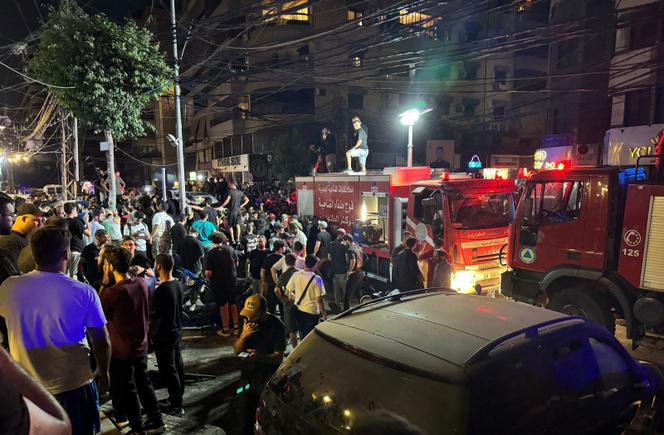
  • Israel struck an area in the suburbs of Beirut which is a stronghold for Iran-backed Hezbollah. The main target of the attack, according to a person familiar, was Fuad Shukr, a senior adviser to the militant group’s chief, Hassan Nasrallah
  • It’s unclear at the moment whether Shukr survived, with Reuters reporting he’s alive and other outlets, including Saudi state-owned Al Arabiya, saying he’s not
  • The strike was a response to a weekend attack by Hezbollah on the Israeli-controlled Golan Heights, which killed a dozen civilians at a football field. The two sides have already been exchanging fire for months, mostly targeting military sites
  • A senior Israeli official said no further military activity should be expected at this moment. Prime Minister Benjamin Netanyahu had promised a harsh response to the strike, but there’s been little appetite to start a second war front in the north. Instead, Israel has opted for strategic, calibrated responses
  • In markets, the Israeli shekel fell but was off earlier lows. Oil barely reacted and continues to trade lower
    LEBANON-ISRAEL-PALESTINIAN-CONFLICT
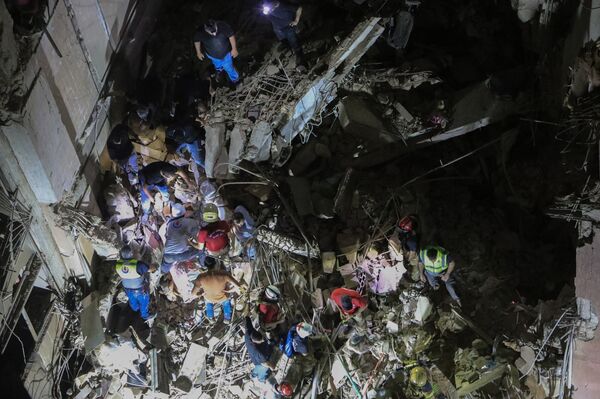
    Rescuers search through the debris of a building destroyed following an Israeli military strike in Beirut on July 30. Photographer: AFP/Getty Images

Israeli army confirms Beirut attack against Hezbollah commander

People gather near a site hit by what multiple sources have said was a strike on Beirut's southern suburbs, Lebanon, July 30, 2024.

The IDF confirms it carried out an airstrike in Lebanon’s capital Beirut a short while ago. According to the military, the strike targeted the Hezbollah commander behind the deadly rocket attack on Majdal Shams and other deadly attacks on Israel. There are no changes to instructions for Israeli civilians as of yet, the IDF says. The IDF says it will provide further details soon.

Austin says Israel-Hezbollah war ‘not inevitable’

United States Secretary of Defense Lloyd Austin said on Tuesday that he believes that an all-out war between Hezbollah and Israel is “not inevitable” after an alleged militant group’s attack on the Golan Heights, which killed 12 Israeli citizens. Speaking at a press conference in Manila, Austin stressed that Washington seeks to see the Israel-Hezbollah conflict resolved by diplomatic means. Previously, the Associated Press reported that Hezbollah started to move “smart precision-guided missiles” for potential use against Israel after Israel’s security cabinet authorized Prime Minister Benjamin Netanyahu and Defense Minister Yoav Gallant to decide when and how the country will respond to Hezbollah’s deadly attack..