China’s oil market is making a comeback after a torrid year, driven by rising consumption at home and abroad that could help lift global prices and deliver a big payoff for its embattled refining sector. The stars are aligning after the government’s abrupt end to growth-sapping Covid Zero restrictions was followed by a burst of travel during the Lunar New Year break. At the same time, the war in Ukraine is lifting overseas demand for oil products, with Chinese firms poised to benefit from Beijing’s generosity with export quotas. A rapid economic recovery as the world’s biggest crude importer finally puts the virus behind it will have a pronounced impact on prices. The most bullish Wall Street forecasts call for Brent futures to top $100 a barrel for the first time in nearly half a year as Beijing reopens for business. “China’s reopening certainly seems to be bolstering demand for crude,” said Michal Meidan, a director at the Oxford Institute for Energy Studies in the UK. “Both domestic and export margins are looking strong.” It’s a big shift from 2022, when demand at home cratered and imports fell because of travel curbs and citywide lockdowns. That hit the refining units of state titans like Sinopec and PetroChina Co., which turn crude into products like diesel and jet fuel, undercutting profits that had climbed to record levels after Russia’s invasion caused oil prices to spike. China’s oil majors are now set for a bumper year as profits swell from both drilling and processing. They could be good bets for equity investors, not least because the companies have typically traded at a big discount to their US and European peers, said Neil Beveridge, senior oil analyst at Sanford C. Bernstein. Aany boost to oil prices from China’s reopening risks stoking global inflation just as central banks are starting to get it under control, which could spark another round of volatility in financial markets. Over the whole year, oil processing will rise to a record 14.4 million barrels a day, the International Energy Agency predicted last month. That compares with 13.6 million barrels over 2022. Energy Aspects Ltd. forecasts daily refining volumes in the first half to climb as high as 14.5 million barrels. The rebound in activity is being driven by both domestic and overseas factors, the company executives said, declining to be named because they aren’t authorized to speak publicly. Easier travel around the country will mean more demand for fuels, while international sanctions on Russian products as punishment for its invasion are also creating an opening on world markets that Chinese refiners are keen to exploit. China’s appetite for oil imports, which declined last year for only the second time since 2005. China’s biggest oil trader Unipec, a unit of Sinopec, made a flurry of purchases of Abu Dhabi crude last month that could indicate brighter prospects for downstream demand. Saudi Arabia has also raised prices for cargoes to Asia, signaling that it, too, expects more buying interest from its biggest customer. Domestic flights, for one, soared 80% over the period after the decision to scrap almost three years of stringent lockdowns unleashed pent-up demand. Traffic congestion in major cities has tripled since the end of the holiday, according to Bloomberg. NN: To be clear here China is coming back alive. Pretty incredible and it will translate to a whole hell of a lot of oil to be consumed. Thats more oil then ever
JPMorgan CEO says too early to declare victory against inflation
MIAMI, Feb 8 (Reuters) – The chief executive of JPMorgan Chase & Co. (JPM.N), the biggest U.S. bank, cautioned against declaring victory against inflation too early, warning the Federal Reserve could raise interest rates above the 5% mark if higher prices ended up “sticky.” Jamie Dimon’s warning came after Federal Reserve officials said more rate rises are on the cards, although none were ready to suggest that January’s hot jobs report could push them back to a more aggressive monetary policy stance.
In reference to inflation, Dimon said “people should take a deep breath on this one before they declare victory because a month’s number looked good.”
“It’s perfectly reasonable for the Fed to go to 5% and wait a while,” Dimon said. But if inflation comes down to 3.5% or 4% and stays there, “you may have to go higher than 5% and that could affect short rates, longer rates,” he said. From a peak of nearly 7% in June, the Fed’s preferred measure of inflation stood at 5% in December – well above its 2% target but heading steadily downward. In a wide-ranging interview with Reuters, Jamie Dimon warned stricter regulation of credit card fees could prompt lenders to extend less credit. He also said he planned to visit China, saying it was important to maintain relations there. Wall Street giants, including Goldman Sachs Group Inc (GS.N) and Morgan Stanley (MS.N), have cut thousands of jobs as a worsening economic outlook depressed dealmaking, while mortgage lenders have also trimmed staff. NN: Its not time to break out the Champaign. In fact soon inflation will be rising again….. Won’t that be fun!!
Russian Fiscal Budget Shows 35% Decline For January
Official figures from the Russian Finance Ministry on Monday show a 35% decline in fiscal budget revenues in January, compared to the same period last year, reporting a ~$24-billion budget deficit for January. The budget deficit reflects oil and gas revenue that has declined 46% year-on-year, according to The Associated Press. Sanctions and an expensive war in Ukraine have both been responsible for the drain. The budget breakdown comes just days after the Finance Ministry reported a 46% drop in oil and gas revenues in January, year-over-year, due to sanctions on Russian oil exports and discounted prices for Urals crude. In January, Russian oil and gas revenues dropped to their lowest level since August 2020, during the COVID-19 pandemic. Data also showed that the price of Urals–Russia’s flagship crude–was 42% lower on average than for the same time period in 2022. That discount to Brent crude continued to widen following the EU ban on Russian seaborne crude that went into effect on December 5th. The Russian Finance Ministry showed Urals priced at $49.48 per barrel in January, compared to $85.64 per barrel a year ago. One stop-gap effort Moscow is considering is to tax oil companies based on Brent prices rather than urals, Kommersant reported on Friday.
BP has predicted a 25%-42% fall in Russian oil production by 2035, noting a potential 12-million bpd decrease in output due to the curtailment of major new projects and a high rate of reduction in existing operating assets.
This, despite data from Energy Intelligence showing that Russia crude and condensate production actually increased 2% in 2022, with oil production at 10.73 million b/d, above Russia’s ministry for economic development forecast of 10.33 million b/d. NN: Cutting of YOUR supplies in a energy crises to me is a stupid thing to do.
Economists continue to raise China’s economic growth forecast for this year
major investment banks say china will grow above 5.5% in 2023, led by consumption and factory activity
Analysts are upgrading their growth forecasts for China’s economy, after the easing of COVID restrictions that hit the country less than expected and as business activity quickens its pace. Experts and investment banks across the board have revised upward their predictions for the world’s second-largest economy this year, with most seeing expansion well into the 5% range. Fitch Ratings was the latest to raise its estimate, saying Wednesday it expected China’s GDP to grow 5.0% in 2023, significantly more than its previous estimate of 4.1%, citing faster-than-anticipated recovery in consumption and factory activity. Last week, Chinese authorities reported leaps well above analysts’ expectations for January’s consumption and production gauges, putting both into expansion territory after a painful December contraction. “We believe the economic recovery will be primarily consumption-led, as households re-engage in activities previously hampered by health controls,” Fitch economists wrote in a note Wednesday. Other financial firms were even more bullish on China’s 2023 prospects. Analysts at Goldman Sachs and Bank of America both recently raised their forecasts to 5.5%. Morgan Stanley’s latest estimate foresees 5.7% growth. JPMorgan economists said Friday that the first and second quarters should expand at or above 7%, slowing to 5.5% and 6.1% in the third and fourth quarters, respectively. Full-year growth would therefore be at least 5.6%, said Haibin Zhu, the investment bank’s chief China economist. “The transitional pain is much shorter than previously expected,” Zhu wrote in a note Friday. Societe Generale economist Michelle Lam was the most optimistic among major analysts, raising the Paris-based financial firm’s forecast for China to 5.8% from 5.3%. She said not only do Chinese households have existing savings they would be ready to spend, but that the labor market — particularly in the consumer-services sector — would see recovery that would in turn stimulate spending. Putting the forecasts into perspective, the International Monetary Fund said that if China expanded at an expected 5.2% this year, it would be more than three times faster than its 1.4% forecast for the United States.
Oil Extends Gain as Saudi Arabia Bets on Demand Rebound in Asia……. Novak: Russia to respond to EU oil sanctions in March
Oil rose for a second session after Saudi Arabia unexpectedly raised its crude prices to Asia, signaling confidence in the demand outlook. Saudi Aramco increased most of its prices for crude that will be shipped to its main market of Asia in March, amid growing optimism over a robust demand rebound in China following the end of Covid Zero. Supply outages also added to bullish tailwinds for oil. Turkey halted flows to the Ceyhan export terminal after a major earthquake, while output at Norway’s giant Johan Sverdrup field was lower due to a power disruption. Oil has endured a choppy start to the year, whipsawed by optimism around China’s reopening and fears over the prospect for a global economic slowdown. The market is also assessing the potential fallout from fresh European Union sanctions on Russian refined products and how that will impact trade flows. “The market has been a bit tentative about China’s return,” Vandana Hari, the founder of Vanda Insights in Singapore, said during a Bloomberg Television interview. “The main challenge for the market right now is at what pace the economy will come back and how smooth it will be.” The Brent futures curve is still signaling tight near-term supply, despite the outages in Turkey and Norway. The prompt spread — the difference between its two nearest contracts — was 33 cents a barrel in backwardation. Investors will be watching for commentary on the outlook for US monetary policy from Federal Reserve Chair Jerome Powell when he’s interviewed at the Economic Club of Washington later Tuesday. NN: Did I mention its a binary trade? Well it is. the worlds largest importer an consumer of oil is coming out of its COVID slumber…… with a vengeance!!! And Russia is the wild car:
Novak: Russia to respond to EU oil sanctions in March
Russia has already negotiated the supply of petroleum products for this month despite the embargo imposed by the European Union’s member states on February 5, TASS cites Deputy Prime Minister Alexander Novak as telling reporters. “Speaking about the embargo on petroleum products and the price ceiling that have been imposed, volumes [of supplies] for February have been contracted for. We will obviously monitor how the situation unfolds in this regard from March onwards,” he said. The situation in Russia’s oil sector is stable now, Novak added. On December 5, 2022, an embargo on maritime Russian oil shipments to the European Union came into force. G7 nations, the EU and Australia agreed on a price cap for Russian oil delivered by sea, setting the ceiling at $60 a barrel. Moreover, starting February 5, 2023, similar restrictions on deliveries of petroleum products from Russia were enforced as the EU Council officially greenlighted the decision, in conjunction with the G7, to introduce a price ceiling on Russian petroleum products supplied by sea at $100 for premium oil and at $45 for discount. Russian Deputy Prime Minister Alexander Novak stated on Wednesday that his country will present its response to the sanctions the European Union introduced on its oil products in March. Novak told reporters that Moscow needs time to first examine the full grasp of the bloc’s sanctions before coming up with an appropriate response. He added that before creating the countermeasures, Russia will also take into account exemptions to the sanctions the European Council mentioned in its decision earlier this month. Previously, the European Council set price caps of $45 per barrel on petroleum products traded at a discount to crude oil and $100 per barrel on petroleum products traded at a premium to crude. It added that sanctions exclude “maritime transport of petroleum products to third countries” and “technical assistance, brokering services or financing or financial assistance, related to the maritime transport of petroleum products to third countries.”
US says China balloons not detected due to ‘awareness gap’……..
China SPY 200 FOOT WIDE BALLOONS HAVE FLOW OVER THE US AT LEAST 3 TIMES PREVIOUSLY…… UNDETECTED
The United States Department of Defense said the reason why three suspected Chinese surveillance balloons passed through the continental United States undetected under the previous administration was Pentagon’s:
“domain awareness gap,”
“I will tell you that we did not detect those threats … And that’s a domain awareness gap that we have to figure out, but I don’t want to go into further detail,” General Glen VanHerck, commander of US Northern Command and North American Aerospace Defense Command, was quoted as saying. The military on Saturday shot down a surveillance balloon after it sailed over the Atlantic Ocean. Beijing later protested against the move and denied accusations that the object was a spy device, arguing that it was a civilian weather research “airship” that was blown off course. According to several reports that followed the incident, it was not the first time such a balloon was spotted over the US. NN: And these are the people who you trust for your security. The fucker was a balloon with a 200 foot diameter. With 400 foot solar arrays.. Why did China do it so close to negotiations… Because they got away with it dozens of times in the past…..
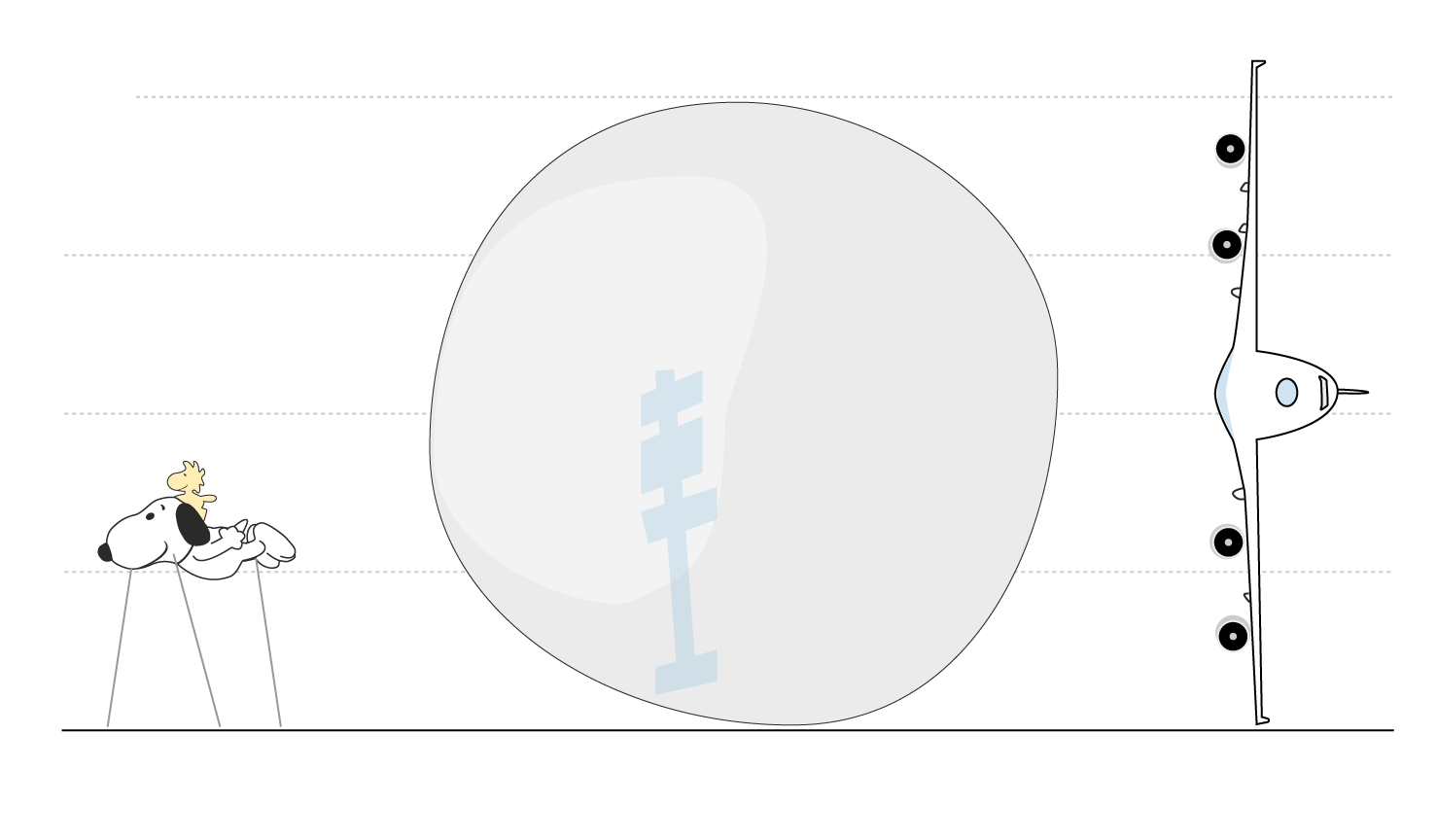
In the above picture you see the Macy’s Thanksgiving parade snoopy float and a 747 jet liner
Gen. Glen VanHerck, commander of North American Aerospace Defense Command (NORAD) and U.S. Northern Command, told reporters that the Chinese balloon shot down over the weekend was 200 feet tall and the payload attached to it was similar in size to a regional jetliner, weighing more than 2,000 pounds.
So how the fuck did you miss it… Trojan horse anyone……
Look for stocks to lose 30% from here, says strategist David Rosenberg
‘There’s nothing right now in my collection of metrics telling me that we’re anywhere close to a bottom.’
David Rosenberg, the former chief North American economist at Merrill Lynch, has been saying for almost a year that the Fed means business and investors should take the U.S. central bank’s effort to fight inflation both seriously and literally. Rosenberg, now president of Toronto-based Rosenberg Research & Associates Inc., expects investors will face more pain in financial markets in the months to come. “The recession’s just starting,” Rosenberg said the market bottoms typically in the sixth or seventh inning of the recession, deep into the Fed easing cycle.” Investors can expect to endure more uncertainty leading up to the time — and it will come — when the Fed first pauses its current run of interest rate hikes and then begins to cut. Investor sentiment is out of line; the household sector is still enormously overweight equities. There is a disconnect between how investors feel about the outlook and how they’re actually positioned. They feel bearish but they’re still positioned bullishly, and that is a classic case of cognitive dissonance. We also have a situation where there is a lot of talk about recession and about how this is the most widely expected recession of all time, and yet the analyst community is still expecting corporate earnings growth to be positive in 2023. In a plain-vanilla recession, earnings go down 20%. We’ve never had a recession where earnings were up at all. The consensus is that we are going to see corporate earnings expand in 2023. So there’s another glaring anomaly. We are being told this is a widely expected recession, and yet it’s not reflected in earnings estimates – at least not yet. There’s nothing right now in my collection of metrics telling me that we’re anywhere close to a bottom. 2022 was the year where the Fed tightened policy aggressively and that showed up in the marketplace in a compression in the price-earnings multiple from roughly 22 to around 17. The story in 2022 was about what the rate hikes did to the market multiple; 2023 will be about what those rate hikes do to corporate earnings.
You’re left with the S&P 500 bottoming out somewhere close to 2,900.
When you’re attempting to be reasonable and come up with a sensible multiple for this market, given where the risk-free interest rate is now, and we can generously assume a roughly 15 price-earnings multiple. Then you slap that on a recession earning environment, and you’re left with the S&P 500 bottoming out somewhere close to 2900. NN: When the day of reckoning comes… At some point walltreet accepts its a depression and the stock market is the biggest bubble i have ever seen. When that days comes they will be luck to stop the crash in the S&P500 at 2900…. Try 1000 for a bottom. You have been forewarned and prepared to cash in…… OUR GREATEST TRADE EVER
Oil rises on China outlook, supply worries after Turkey earthquake
Fed may need to push rates higher, Bostic tells Bloomberg
Feb 6 (Reuters) – The U.S. Federal Reserve may need to lift borrowing costs higher than previously anticipated given the unexpectedly strong reading on jobs gains in January, Atlanta Federal Reserve Bank President Raphael Bostic said on Monday. Unless the report proves to be anomalous, “It’ll probably mean we have to do a little more work,” Bostic told Bloomberg News. “And I would expect that that would translate into us raising interest rates more than I have projected right now.” The Fed could also consider raising the rate by half-a-percentage-point, he told Bloomberg News, though that is not his base case. Bostic had previously said he expects the Fed to need to push its benchmark rate, now in the 4.5%-to-4.75% range, to the 5%-to-5.25% range in order to get policy sufficiently restrictive to bring inflation back down to the Fed’s 2% target. As of December, most of his colleagues agreed. U.S. job growth accelerated sharply in January while the unemployment rate fell to 3.4%, its lowest reading since 1969, the Labor Department reported on Friday. The Fed has said it expects the labor market to need to soften in order to reduce demand enough to bring down inflation that in December was running at 5% by the Fed’s preferred measure.
Federal Reserve May Need More Restrictive Policy Stance, Lockhart Says
Dennis Lockhart, former president of the Federal Reserve Bank of Atlanta, said the central bank’s decision to lift the target for its benchmark rate by a quarter percentage point to a range of 4.5% to 4.75%. Fed Chair Jerome Powell said policymakers expect to deliver a “couple” more interest-rate increases before putting their aggressive tightening campaign on hold. NN: Their will be no hold. 6% Fed Funds here we come…..
Saudi Arabia Surprises Markets By Increasing Oil Prices To Asia
On Monday, Saudi Arabia raised the official selling price of its flagship crude going to Asia in March. The hike, which was the first in six months, was due to expectations of a rebound in Chinese demand. Saudi oil giant Aramco lifted the price of its flagship Arab Light grade to Asia for March loadings by $0.20 per barrel to a premium of $2.00 a barrel over the Dubai/Oman average, despite the fact that oil prices have fallen so far this year. That’s the first increase in the official selling prices (OSPs) for Asia since September, likely reflecting Saudi expectations that demand in Asia will be rising from the second quarter onwards. Last month, Saudi Arabia slashed the Arab Light price by $1.45 per barrel, setting the price for February loadings at $1.80 a barrel above the Dubai/Oman benchmark. The premium to the Dubai/Oman average for February is the lowest since November 2021, but it was generally in line with expectations. For March, however, the increase in Saudi prices came as a surprise to the market.
“The OSP is quite unexpected. I think it indicates that Saudi is bullish on oil demand,” a Singapore-based oil trader told Reuters.
The move was contrary to expectations in a Reuters survey of four refining sources from last week, in which participants said they expected the price of Arab Light to be cut by around $0.30 for March loadings. It’s also against the Bloomberg poll, in which traders and refiners expected a $0.20 cut from Aramco for next month. For other grades, Aramco cut the price for Arab Extra Light by $1.30 to $2.25 a barrel over the Oman/Dubai benchmark, but raised the OSPs for Arab Medium and Arab Heavy by $0.50. NN: oil prices are going higher, not lower. This looks to me like they are running the stops before the next big upleg