Coming Oil Supply SHOCK

When the chief executive of Aramco said earlier this week that years of underinvestment had damaged the balance between supply and demand in the oil market, it should have been a wake-up call to those in decision-making positions. Instead, the secretary-general of the UN bashed the oil industry once again for “feasting” on record-high profits and urged governments to make them pay for this. Meanwhile, OPEC’s production shortfall last month reached 3.58 million bpd—a figure equal to some 3.5 percent of global demand—and the United States continued to sell oil from its strategic petroleum reserve. These seemingly unrelated news reports do have something very important in common. Both clearly suggest a supply shortfall on a global level is imminent. Throw in the news that Russia’s oil exports could fall by some 2.4 million bpd after the EU embargo enters into effect in December, and an oil shortage becomes more or less unavoidable. Oil demand has remained resilient in the face of a multitude of challenges, and even prices of over $100 per barrel failed to curb it in any significant way earlier this year. Now, prices are somewhat tempered, but the embargo is still about two months away. Once this kicks in, prices are bound to jump because alternative supply is limited. And the U.S. will need to start refilling its SPR at some point because it is getting depleted. The Wall Street Journal sounded the alarm on that problem this week. Author Jinjoo Lee cited the Energy Information Administration as saying the inventory level at the SPR had declined by another 7 million barrels in the week to September 16, meaning the total was 427 million barrels. And this number was the lowest SPR inventory level since 1984. It is also the first time there is less oil in the SPR than in commercial storage, Lee noted.

Perhaps worse is the fact that the administration has no plans to start replenishing the SPR anytime soon. In a report from earlier this month, the Department of Energy denied a report by Bloomberg that it was waiting for oil prices to dip below $80 per barrel to start refilling the SPR.

This suggests the DoE has no immediate plans to start filling up the SPR, and this is a cause for worry because oil supply shocks tend not to be obvious until they become painfully so. And a supply shock is definitely coming to Europe if the U.S. is not there to help. Add to this the moderate growth in U.S. oil production and statements by industry executives that U.S. won’t be able to bail Europe out with oil or gas, and the situation becomes quite bleak. Meanwhile, as the EU begins discussions of a price cap on Russian oil, in addition to the embargo, U.S. senators are pushing for increased sanction pressure on the buyers of Russian crude to make sure the other price cap, the one agreed to by the G7, works. If either of these latest efforts ends with a decision to take action, there should be little doubt that Russia will respond just as it said it would respond: no oil sales for price cappers. And this means even less oil to go around. It seems many in positions of power are oblivious to this threat. In fact, in a congressional hearing this week,

Rep. Rashida Tlaib asked the heads of the biggest U.S. banks whether they had already devised a strategy for exiting oil and gas investments as a whole. The question suggests that the latest supply and demand—and price—developments have escaped Rep. Tlaib’s attention just like they have escaped Antonio Guterres’ attention.

The answer that JP Morgan’s Jamie Dimon gave to Rep. Tlaib’s question at the Wednesday hearing, however, is one for the books. “That would be the road to hell for America,” Dimon said in what is perhaps the bluntest assertion yet that economies run on oil and gas, and they will continue to run on oil and gas for many more decades, whatever direction the energy transition takes. The evidence is right there under all our noses: Europe. For all its efforts to convert to the lowest emitter in the world—which it did for a while—Europe thrived not on cheap solar and wind but on cheap gas and abundant oil. Now that these are gone, European economies are beginning to fall apart. Avoiding a supply shock in oil would be difficult in the current circumstances. The OPEC+ shortfall is not all a result of conscious action. In fact, most of it is not, and this means it would be almost impossible to make up for. And the U.S. can’t afford to continue drawing on its SPR for much longer without doing something in the replenishment department. It’s called strategic for a reason, after all. NN: I regard human induced climate change as the great illusions of our time. The belief that renewable sources of energy are ready to replace fossil fuels and nuclear is a fantasy. Everyone who tired it is suffering. All i can say is think Germany. Take a deep breath. the world needs fossil fuels and will for the next 30 years. And under investment in oil when the history of our times is written will be revealed as one of the factors that caused great shifts in global populations and prosperity. $200 dollar oil here we come,

Wall St Week Ahead Investors wonder when vicious sell-off in U.S. stocks will end

NEW YORK, Sept 23 (Reuters) – A week of heavy selling has rocked U.S. stocks and bonds, and many investors are bracing for more pain ahead. Wall Street banks are adjusting their forecasts to account for a Federal Reserve that shows no evidence of letting up, signaling more tightening ahead to fight inflation after another market-bruising rate hike this week. The S&P 500 is down more than 22% this year. On Friday, it briefly dipped below its mid-June closing low of 3,666, erasing a sharp summer rebound in U.S. stocks before paring losses and closing above that level. With the Fed intent on raising rates higher than expected, “the market right now is going through a crisis of confidence,” said Sam Stovall, chief investment strategist at CFRA Research. If the S&P 500 closes below the mid-June low in the days ahead, that may prompt another wave of aggressive selling, Stovall said. This could send the index as low as 3,200, a level in line with the average historical decline in bear markets that coincide with recessions. While recent data has shown a U.S. economy that is comparatively strong, investors worry the Fed’s tightening will bring on a downturn.

timeline of the market

A rout in bond markets added pressure on stocks. Yields on the benchmark 10-year Treasury, which move inversely to prices, recently stood at around 3.69%, their highest level since 2010. Higher yields on government bonds can dull the allure of equities. Tech stocks are particularly sensitive to rising yields because their value rests heavily on future earnings, which are discounted more deeply when bond yields rise. Michael Hartnett, chief investment strategist at BofA Global Research, believes high inflation will likely push U.S. Treasury yields as high as 5% over the next five months, exacerbating the selloff in both stocks and bonds. “We say new highs in yields equals new lows in stocks,” he said, estimating that the S&P 500 will fall as low as 3,020, at which point investors should “gorge’ on equities. Goldman Sachs, meanwhile, cut its year-end target for the S&P 500 by 16% to 3,600 points from 4,300 points. “Based on our client discussions, a majority of equity investors have adopted the view that a hard landing scenario is inevitable,” wrote Goldman analyst David Kostin.  Investors are looking for signs of a capitulation point that would indicate a bottom is near.

The Cboe Volatility Index, known as Wall Street’s fear gauge, on Friday shot above 30, its highest point since late June but below the 37 average level that has marked crescendos of selling in past market declines since 1990.

Bond funds recorded outflows of $6.9 billion during the week to Wednesday, while $7.8 billion was removed from equity funds and investors plowed $30.3 billion into cash, BofA said in a research note citing EPFR data. Investor sentiment is the worst it has been since the 2008 global financial crash, the bank said. Kevin Gordon, senior investment research manager at Charles Schwab, believes there is more downside ahead because central banks are tightening monetary policy into a global economy that already appears to be weakening. “It will take us longer to get out of this rut not only because of slowdown around the world but because the Fed and other central banks are hiking into the slowdown,” Gordon said. “It’s a toxic mix for risk assets.”

Still, some on Wall Street say the declines may be overdone.

“Selling is becoming indiscriminate,” wrote Keith Lerner, co-chief investment officer at Truist Advisory Services. “The increased probability of breaking the June S&P 500 price low may be what it takes to invoke even deeper fear.

Fear often leads to short-term bottoms.”

A key signal to watch over the coming weeks will be how steeply estimates of corporate earnings fall, said Jake Jolly, senior investment strategist at BNY Mellon. The S&P 500 is currently trading at around 17 times expected earnings, well above its historical average, which suggests that a recession is not yet been priced into the market, he said.

A recession would likely push the S&P 500 to trade between 3,000 and 3,500 in 2023, Jolly said. “The only way we see earnings not contracting is if the economy is able to avoid a recession and right now that does not seem to the odds-on favorite,” he said. “It’s very difficult to be optimistic on equities until the Fed engineers a soft landing.” NN: When i see a market this bearish I have ALWAYS see a short term powerful rally. This smells to like a BIG rally back is coming…..

Wharton’s Jeremy Siegel accuses Fed of making one of the biggest policy mistakes in its 110-year history

““I think we’re giving Powell too much praise. … The last two years are one of the biggest policy mistakes in the 110-year history of the Fed by staying so easy when everything was booming.””

— Jeremy Siegel

Wharton professor Jeremy Siegel has a bone to pick with Federal Reserve Chair Jerome Powell.The longtime market guru and frequent guest on CNBC unleashed a memorable rant on Friday as U.S. stocks plunged. He argued that the Fed made a massive policy mistake last year by not moving to tighten monetary policy before inflation got out of hand, and he mocked the Fed and Powell for insisting inflation would quickly fade on its own. And now, Siegel said, the Fed is making another mistake by raising interest rates and tightening monetary policy too aggressively. “When we had all commodities going up at rapid rates, Chairman Powell and the Fed said, ‘We don’t see any inflation. We see no need to raise interest rates in 2022.’ Now when all those very same commodities and asset prices are going down, he says, ‘Stubborn inflation that requires the Fed to stay tight all the way through 2023.’ It makes absolutely no sense to me whatsoever,” Siegel said on CNBC’s “Halftime Report.”

As a result of all this, he said, the central bank is making working- and middle-class Americans pay with what he expects will be a punishing recession.

Instead of continuing to hike rates until inflation eases back toward the central bank’s 2% target, Siegel said the Fed should let falling commodity prices shoulder more of the inflation-fighting burden. Crude-oil prices have fallen sharply from their highs reached earlier this year, with West Texas Intermediate crude  CLX22, -4.86% falling $4.75, or 5.7%, to settle at $78.74 a barrel on the New York Mercantile Exchange Friday, its lowest settlement since Jan. 10. “I think the Fed is just way too tight,” Siegel added. “They’re making exactly the same mistake on the other side that they made a year ago.” The Wharton professor also criticized the Fed for trying to drive the unemployment rate higher. He said workers aren’t the ones driving inflation with higher wages — they’re just trying to catch up. Siegel’s rant caught the attention of the CNBC audience, with many chiming in on Twitter to concur with his assessment that the Fed had erred in keeping policy too loose for too long. Siegel isn’t the only market guru arguing that the Fed has made a major policy mistake. Stocks finished sharply lower on Friday as all three benchmarks recorded losses for the week, with the S&P 500 SPX, -1.72% down 1.7% to close Friday’s session at 3,693.23, just above its lowest close for the year, which it reached in June. The Dow DJIA, -1.62% wasn’t so lucky, with the blue-chip gauge recording its lowest closing level of the year at 29,590.41. The Nasdaq Composite COMP, +2.62% fell 198.88 points, or 1.8%, to 10,867.93. NN: Friday looked like capitulation to me. Record buying of Put options by institutions is another sign that MAYBE we have a significant market bottom. That is why towards the close i Issued my Crazy Ass Trade.

Russia prepared to use strategic nuclear weapons – Medvedev

LONDON (Reuters) -Former Russian president Dmitry Medvedev said on Thursday that any weapons in Moscow’s arsenal, including strategic nuclear weapons, could be used to defend territories incorporated in Russia from Ukraine. Medvedev, deputy chairman of Russia’s Security Council, said that referendums being organised by Russian-installed and separatist authorities in large swathes of Russian-occupied Ukrainian territory will take place, and that “there is no going back”:

“The Donbas (Donetsk and Luhansk) republics and other territories will be accepted into Russia.” Medvedev said the protection of all the territories would be significantly strengthened by the Russian armed forces, adding:

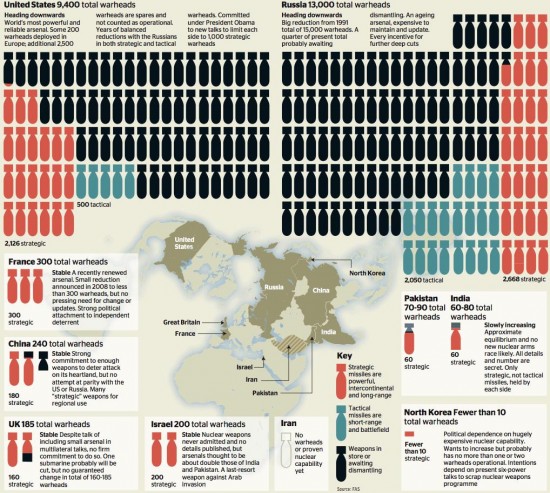
“Russia has announced that not only mobilisation capabilities, but also any Russian weapons, including strategic nuclear weapons and weapons based on new principles, could be used for such protection.” The referendums due to take place in the Russian-held parts of Ukraine’s Donetsk, Luhansk, Kherson and Zaporizhzhia provinces, as well as part of Mykolaiv province, from Friday are widely expected to produce results overwhelmingly endorsing joining Russia. The votes, being organised at a few days’ notice under military occupation, have been labelled shams by Kyiv and its Western allies. If formally admitted to the Russian Federation, the occupied territories, where Ukrainian counteroffensives have gathered pace in recent weeks, will under Moscow’s nuclear doctrine be entitled to protection from Russian nuclear weapons. Moscow does not fully control any of the four regions it is expected to try to annex, with only around 60% of Donetsk and 66% of Zaporizhzhia regions held by the Russian army. Medvedev has regularly issued aggressive statements on the West and Ukraine in recent months, underlining his transformation from apparently Western-minded liberaliser as president from 2008-2012 to strident geopolitical hawk. NN: My analysis is that Putin will use tactic nuclear weapons. He has and I believe correctly analyzed present American leadership as cowards. The US turned tail and running out of Afghanistan was Putin’s first clue. He rightly assessed that America was weak and would not engage him with boots on the ground no matter what he did. Putin’s assessment of Europe was the same. He attacked Ukraine and as the Kremlin annalists calculated Europe and US would not commit troops not even NATO forces for training. Putin’s new assessment is that can even use nukes without little more then toothless sanctions that India and China are only to happy to ignore. It is a very dangerous time… Its a big problem if a situation is created where the Ukrainians take the fight to the Russia mainland. So now you understand why Russia will use tactical nuclear weapons.

UK consumer confidence at record low despite rise in retail sales EU consumer confidence at record low in September

https://youtu.be/e1lLZ2wGvHc

Consumer confidence in the eurozone declined in September amid concerns about increased costs of living and slowdown of the economy, falling to its lowest level on record. The European Commission said Thursday that its measure of consumer confidence in the region fell to minus 28.8 from a revised reading of minus 25.0 in August. Economists polled by The Wall Street Journal had expected consumer confidence at minus 25.6. Consumer confidence is well below its long-term average of minus 11.0 and below its low at the onset of the Covid-19 pandemic in spring 2020.

Leading Indicates are the most Bearish EVER….

Worldwide, stocks have been weak.[i] In US dollars, global stocks are in a bear market—a typically long decline exceeding -20% from a high.[ii] Historical research shows bull markets are born on pessimism. Recent surveys suggest bearishness is at an extreme.

Bank of America’s (BofA) global fund manager survey,  showed broad bearishness in September.[iii] The latest reading indicated a record share of respondents have cut equity holdings.[iv] This survey started in  2002, and includes the 2007 – 2009’s bear market and early-2020’s brief downturn for comparison. 62% of managers have raised cash holdings—a reading that has never been above 60% in two decades.[v] Also notable: 72% expect the global economy to weaken in the next year, with 68% seeing recession—broadly weak economic conditions—likely.[vi] Both rates are near all-time highs, exceeded by only March 2009 and April 2020.[vii] The earnings outlook is even glummer with 92% expecting declining profits.[viii] BofA’s survey reflects professional investors’ attitudes—what large money managers are thinking and doing.

The American Association of Individual Investors’ (AAII) polling shows individual investor sentiment is similar .[ix] AAII surveys its members weekly about their outlook: positive (bullish), negative (bearish) or neutral. Combining them, AAII subtracts the bearish from the bullish, resulting in its net bull-bear percentage. This can be very noisy week to week, so  we look the rolling four-week average.  It remains below nearly all points in its 35-year history.[x]

American Individual Investors


AAII Bull-Bear Market Spread, 31/7/1987 – 16/9/2022. Bear market dating based on the S&P 500 price index in US dollars. Currency fluctuations between the dollar and pound will result in lower investment returns.

University of Michigan’s (UMich) Consumer Sentiment Index  Has hit an all-time low in June.[xi] The American consumer sentiment under 60 is extremely low historically. From stocks to the economy, long-running survey suggest folks feel about the worst they have ever been, according to these data.

 US Consumer Sentiment About as Pessimistic as It Gets


Source: FactSet, as of 19/9/2022. UMich Consumer Sentiment Index, January 1952 – August 2022. Bear market dating based on the S&P 500 price index in US dollars.

Germany’s ZEW Economic Expectations Index[xii] Over the past 30 years, the outlook for the German economy has never been this bad.

The UK consumer confidence index. YouGov’s UK consumer confidence index fell into negative territory for the first time since the COVID lockdowns in June 2020.[xiii]

When  everyone expects the worst, its priced into the market. Their are no sellers left.  In my time trading i have seen these indexies turn bearish 6 times and every time we had a big rally. Maybe this time will be the same. NO PROMISES!


[i] Source: FactSet, as of 20/9/2022. Statement based on MSCI World Index returns with net dividends, 31/12/2021 – 19/9/2022.

[ii] Ibid. Statement based on MSCI World Index returns with net dividends, 4/1/2022 – 19/9/2022. Presented in US dollars. Currency fluctuations between the dollar and pound may result in higher or lower investment returns.

[iii] “BofA Survey Shows Investors Fleeing Equities En Masse on Fear of Recession,” Sagarika Jaisinghani, Bloomberg, 13/9/2022. Accessed via Yahoo!

[iv] Ibid.

[v] Ibid.

[vi] “Portfolio Managers Are ‘Super Bearish’ With Cash Holdings Highest Since 9/11, Bank of America Says,” Barbara Kollmeyer, MarketWatch, 13/9/2022. Accessed via MSN.

[vii] Ibid.

[viii] Ibid.

[ix] “AAII Sentiment Survey: Pessimism Pulls Back While Optimism Rebounds,” Staff, AAII, 15/9/2022.

[x] Source: FactSet, as of 19/9/2022. Statement based on S&P 500 total returns in US dollars. Currency fluctuations between the dollar and pound may result in higher or lower investment returns.

[xi] Source: American Automobile Association, as of 19/9/2022.

[xii] ZEW stands for Zentrum für Europäische Wirtschaftsforschung, which if you are wondering means Centre for European Economic Research.

[xiii] “Overall Consumer Confidence Is Negative for the First Time Since May 2020,” Christien Pheby, YouGov, 16/9/2022.

Putin escalates Ukraine war, issues nuclear threat to West

  • Putin announces partial mobilisation
  • Warns West over ‘nuclear blackmail’
  • Says Russia will use all means to defend itself
  • This is not a bluff, says Putin
  • Russia moves to annex swathes of Ukrainian territory

LONDON, Sept 21 (Reuters) – President Vladimir Putin on Wednesday ordered Russia’s first mobilisation since World War Two and backed a plan to annex swathes of Ukraine, warning the West he was not bluffing when he said he’d be ready to use nuclear weapons to defend Russia.In the biggest escalation of the Ukraine war since Moscow’s Feb. 24 invasion,

Putin explicitly raised the spectre of a nuclear conflict, approved a plan to annex a chunk of Ukraine the size of Hungary, and called up 300,000 reservists.

“If the territorial integrity of our country is threatened, we will without doubt use all available means to protect Russia and our people – this is not a bluff,” Putin said in a televised address to the nation. Citing NATO expansion towards Russia’s borders, Putin said the West was plotting to destroy his country, engaging in “nuclear blackmail” by allegedly discussing the potential use of nuclear weapons against Moscow, and accused the United States, the European Union and Britain of encouraging Ukraine to push military operations into Russia itself.

“In its aggressive anti-Russian policy, the West has crossed every line,” Putin said. “This is not a bluff. And those who try to blackmail us with nuclear weapons should know that the weathervane can turn and point towards them.”

The address, which followed a critical Russian battlefield defeat in northeastern Ukraine, fuelled speculation about the course of the war, the 69-year-old Kremlin chief’s own future, and showed Putin was doubling down on what he calls his “special military operation” in Ukraine.

In essence, Putin is betting that by increasing the risk of a direct confrontation between the U.S.-led NATO military alliance and Russia — a step towards World War Three — the West will blink over its support for Ukraine, something it has shown no sign of doing so far.

Putin’s war in Ukraine has killed tens of thousands, unleashed an inflationary wave through the global economy and triggered the worst confrontation with the West since the 1962 Cuban Missile Crisis, when many feared nuclear war imminent.

Putin signed a decree on partially mobilising Russia’s reserves, arguing that Russian soldiers were effectively facing the full force of the “collective West” which has been supplying Kyiv’s forces with advanced weapons, training and intelligence.

Speaking shortly after Putin, Defence Minister Sergei Shoigu said that Russia would draft some 300,000 additional personnel out of some 25 million potential fighters at Moscow’s disposal.

The mobilisation, the first since the Soviet Union battled Nazi Germany in World War Two, begins immediately.

Ever since Putin was handed the nuclear briefcase by Boris Yeltsin on the last day of 1999, his overriding priority has been to restore at least some of the great power status which Moscow lost when the Soviet Union collapsed in 1991. Putin has repeatedly railed against the United States for driving NATO’s eastward expansion, especially its courting of ex-Soviet republics such as Ukraine and Georgia which Russia regards as part of its own sphere of influence, an idea both nations reject. Putin said that top government officials in several unnamed “leading” NATO countries had spoken of potentially using nuclear weapons against Russia. He also accused the West of risking “nuclear catastrophe,” by allowing Ukraine to shell the Zaporizhzhia nuclear power plant which is under Russian control, something Kyiv has denied.

Putin gave his explicit support to referendums that will be held in coming days in swathes of Ukraine controlled by Russian troops — the first step to formal annexation of a chunk of Ukraine the size of Hungary.

The self-styled Donetsk (DPR) and the Luhansk People’s Republics (LPR), which Putin recognised as independent just before the invasion, and Russian-installed officials in the Kherson and Zaporizhzhia regions have asked for votes. “We will support the decision on their future, which will be made by the majority of residents in the Donetsk and Luhansk People’s Republics, Zaporizhzhia and Kherson,” Putin said. “We cannot, have no moral right to hand over people close to us to the executioners, we cannot but respond to their sincere desire to determine their own fate.” That paves the way for the formal annexation of about 15% of Ukrainian territory. The West and Ukraine have condemned the referendum plan as an illegal sham and vowed never to accept its results. French President Emmanuel Macron said the plans were “a parody.” Kyiv has denied persecuting ethnic Russians or Russian-speakers. But by formally annexing Ukrainian territories, Putin is giving himself the potential pretext to use nuclear weapons from Russia’s arsenal, the largest in the world. Russia’s nuclear doctrine allows the use of such weapons if weapons of mass destruction are used against it or if the Russian state faces an existential threat from conventional weapons. “It is in our historical tradition, in the fate of our people, to stop those striving for world domination, who threaten the dismemberment and enslavement of our Motherland, our Fatherland,” Putin said. “We will do it now, and it will be so,” said Putin. “I believe in your support.” NN: Defeating Putin in the Ukraine is more dangerous and costly to the west then this current crop of Democratic leaders comprehend.

Fed to slam on the brakes this week

The Federal Reserve is widely expected this week to raise its benchmark interest rate by 0.75 percentage points in an effort to slow the economy as a way to cool inflation. “What the Fed was doing earlier this year was taking its foot off the gas pedal,” said Carl Riccadonna, chief U.S. economist at BNP Paribas. “This 75 [bp] move is a firm foot on that brake pedal.” The ultra-large hike would bring the Fed’s policy rate to a range of 3% to 3.25% — a level that Fed officials believe will start to restrict economic growth. Markets are pricing in the small chance of a 100-basis-point move, but economists are skeptical. “We doubt there is consensus on the FOMC to go that much and accelerate the pace of tightening further,” said Sam Bullard, senior economist at Wells Fargo. The Fed will announce its decision on interest rates at 2 p.m. Eastern on Wednesday. The central bank will also release updated economic forecasts, and Fed Chairman Jerome Powell will hold a press conference starting at 2:30 p.m. Economists think Powell will talk tough on inflation as a result of last week’s surprisingly hot consumer inflation report for August. Core inflation surged 0.6% in August, dashing optimistic hopes that inflation was ebbing. “I believe that Powell has no choice but to repeat the firm tone conveyed at Jackson Hole, which may be interpreted as quite hawkish,” said Stephen Stanley, chief economist an Amherst Pierpont. In his speech in Jackson Hole, Wyo., in late August, Powell acknowledged the likelihood of economic distress, stating that “while higher interest rates, slower growth and softer labor market conditions will bring down inflation, they will also bring some pain to households and businesses. These are the unfortunate costs of reducing inflation. But a failure to restore price stability would mean far greater pain.”  Stocks suffered last week, with the Dow Jones Industrial Average DJIA, -1.48% down 4.1%. Treasury yields rose sharply, with the yield on the 2-year Treasury note TMUBMUSD02Y, 3.957% soaring to a nearly 15-year high. Strategists think the Fed won’t be cowed by a deepening selloff. Economists are also busy revising their forecasts for inflation and the Fed’s policy date. Michael Feroli, chief U.S. economist at JP Morgan, has raised his fed-funds rate forecast to 4% to 4.25% by early 2023. Lou Crandall, chief economist at Wrightson ICAP, thinks the latest CPI report does alter the base case for the Fed’s next meeting on November 1-2. Had the August CPI been soft as expected, Powell might have suggested that the Fed could dial back the size of its rate hikes in November. Instead Powell will have to keep his options open. “We can’t rule out the possibility that conditions will soften enough to allow the FOMC to downshift in November, but our starting assumption is that it will deliver a 75 basis point hike for the fourth consecutive meeting,” Crandall said, in a note to clients. NN: . This FED committee meeting and announcement is larger then life. I like to stay away from these kind of events. As i was discussing with an associate last night its a 50/50 bet. Odds like that are NOT tradable and little more then gambling… I DO NOT NOT NOT GAMBLE…. Speculate yes!!

OPEC+ Is Now 3.6 Million Bpd Below Its Oil Production Target

The OPEC+ group continues to vastly underperform its collective oil production target, with the gap between the quota and actual output widening to a massive 3.58 million barrels per day (bpd) in August, according to delegates and OPEC data Argus has seen.

The 10 OPEC members bound by the pact saw their collective crude oil production hit 1.399 million bpd below the quota, while the non-OPEC producers in the deal were more than 2 million bpd behind quota, at 2.185 million bpd, per OPEC data Argus has seen.

In July, OPEC+ was already 2.9 million bpd below its target. In August, the two biggest laggards in production quotas were Russia of the non-OPEC group and Nigeria of OPEC, the data showed. Russia’s oil production was 1.25 million bpd below its target, while Nigeria was 700,000 bpd behind its quota. Russia’s output is constrained by the Western sanctions following the Russian invasion of Ukraine, while Nigeria has had troubles for years with a lack of investment and oil theft. Crude oil exports out of Nigeria plunged to below 1 million bpd in August, their lowest level on record, oil export analytics firm Petro-Logistics said earlier this month. Persistent underinvestment in the Nigerian oil industry and the perennial problem of oil theft from pipelines have plagued the sector in recent years. Oil majors are not investing in Nigerian supply, and many foreign firms have either sold assets or signaled they would pursue divestments in Nigeria’s oil industry. OPEC+ was widely expected to continue to underperform by a lot compared to its production targets for July and August after the group decided to accelerate the rollback of the cuts and have them completely unwound by the end of August. The underperformance in September will be even higher because the group lifted its collective target by 100,000 bpd for the month of September. This increase will be reversed in October, OPEC+ decided at a meeting earlier this month. NN: I am so tired of the bullshit. Their is not enough oil to meet demand. And sooner or later the price of oil will ZOOOOM.

Biden: The pandemic is over…. I am not so sure its time to take a victory lab

President Joe Biden declared the end of the pandemic, after nearly three years since the CDC confirmed the first coronavirus case in the United States. “The pandemic is over,” Biden said in an interview with CBS News’ Scott Pelley that aired on 60 Minutes Sunday. “We still have a problem with COVID,” the president continued. “We’re still doing a lot of work on it. But the pandemic is over.” Biden, 79, was speaking with Pelley following a visit together to the first Detroit Auto Show in three years, which the president attended to celebrate his help towards funding of charging stations for electric vehicles. “If you notice, no one’s wearing masks. Everybody seems to be in pretty good shape. And so I think it’s changing,” said Biden. “And I think this is a perfect example of it.” Coronavirus has lead to the death of more than 1 million people in the U.S., not to mention the social and economic impacts it has had across the population. The global pandemic was declared in March 2020, though the first COVID case in the US was reported in January 2020. Just last week, the World Health Organization reported a historic low in worldwide deaths, NBC News reported. The U.S. averages 478 COVID-related deaths a day — an increase from early July, when COVID deaths were at its lowest rate ever (168 daily deaths the week). “We have never been in a better position to end the pandemic,” WHO Director-General Tedros Adhanom Ghebreyesus said at a briefing Wednesday, NBC News reported. “We are not there yet, but the end is in sight.” Biden’s interview with 60 Minutes was conducted on Sept. 15, days before the president and First Lady Dr. Jill Biden traveled to the U.K. to visit the coffin of Queen Elizabeth II. The interview was Biden’s first on the broadcast as president. It was staged primarily in the Roosevelt Room of the White House (with a quick detour through the Oval Office), and served as a way to get candid responses from Biden about the state of affairs both abroad and at home, especially as he takes heat for rising prices that’ve strapped Americans thin. During a visit to 60 Minutes headquarters, PEOPLE got an exclusive first look at the stories in the works this season as they go into their historic 55th season. While explaining the topics he went in prepared to discuss with Biden, Pelley noted that his children — ages 27 and 30 — had not previously witnessed inflation like this in their lifetime, calling it “gravely disappointing” to see how severe it’s gotten. The two went on to discuss topics including Russia’s war on Ukraine, the midterm election in November, and running for office again. Asked if it’s normal to turn around such a high-profile interview in only three days, Pelley told PEOPLE it’s the standard for a story entwined with current events: “It needs to be right on the news.” NN: I would be not so  ready to declare victory just yet.  But Biden is on job won. Get his democratic associates elected in the November elections. And he has to score “victories” on inflation, energy prices and the epedimic…. real or imagines