Iran Could Have A Nuclear Bomb Within Months


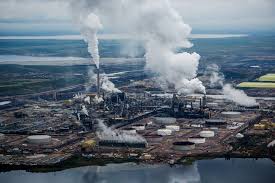
The Iranian government is shortening its nuclear breakout time — the amount of time required to produce enough weapons-grade uranium for a single nuclear weapon. Tehran has accomplished this through several steps in the last few months. Iran’s government first increased its enriched uranium stockpile beyond the 300 kilogram limit; it enriched uranium to levels beyond the cap of 3.67 percent, and then activated 20 IR-4 and 20 IR-6 advanced centrifuges. The Iranian leaders even boasted that their government is now exploring new uranium enrichment programs and producing centrifuges. Most recently, the head of the Atomic Energy Organization of Iran, Ali Akbar Salehi, declared that Iran has an adequate supply of 20% enriched uranium., “Right now we have enough 20% uranium,” he told the Iranian Students News Agency, ISNA, “but we can produce more as needed”. He added that the country is resuming uranium enrichment at a far higher level at the Fordow nuclear facility — an underground uranium enrichment facility which is reportedly located on one of bases of the Islamic Revolutionary Guard Corps (IRGC­­) — injecting uranium gas into centrifuges, and operating 60 IR-6 advanced centrifuges.

Continue reading “Iran Could Have A Nuclear Bomb Within Months”

U.S. oil drillers cut rigs for record 12th month in a row -Baker Hughes

U.S. energy firms reduced the number of oil rigs operating for a record 12th month in a row after this week cutting rigs for a sixth consecutive week as producers slash spending on new drilling. Drillers cut three oil rigs in the week to Nov. 27, bringing the total count down to 668, the lowest since April 2017, energy services firm Baker Hughes Co said on Wednesday in a report released two days early due to the U.S. Thanksgiving holiday.  In the same week a year ago, there were 887 active rigs. In November, drillers cut 28 oil rigs. That puts the oil rig count on track to fall for the first time in three years. The 2019 decline, however, so far only totals 217, which is much smaller than 2015’s record 963 rig decline, according to Baker Hughes data going back to 1987. The oil rig count, an early indicator of future output, declined for a record 12 months in a row as independent exploration and production companies cut spending on new drilling as shareholders seek better returns in a low energy price environment. U.S. financial services firm Cowen & Co has said that 22 of the exploration and production (E&P) companies it watches reported spending estimates for 2020. Cowen said there were 16 decreases, one flat and five increases, implying a 13% year-over-year decline in 2020, which puts spending on track to decline for a second year in a row. Cowen has said the producers it watches expected to spend about $80.5 billion in 2019 versus $84.6 billion in 2018. Year-to-date, the total number of oil and gas rigs active in the United States has averaged 955. Most rigs produce both oil and gas. Analysts at Simmons & Co, energy specialists at U.S. investment bank Piper Jaffray, said it lowered its rig count forecast due to the significant contraction in land rigs over the past several weeks. Simmons now projects the annual average combined oil and gas rig count will slide from a four-year high of 1,032 in 2018 to 943 in 2019 and 816 in 2020 before rising to 849 in 2021. That compares with Simmons previous forecast of 950 in 2019, 905 in 2020 and 958 in 2021.

Saudi Aramco IPO’s retail tranche oversubscribed -lead manager –

The state oil giant plans to sell a 1.5% stake, or about 3 billion shares, and has said at least one-third of the sale is expected to be covered by retail investors, who have until Thursday to sign up. With an indicative price of 30-32 riyals, the IPO is valued at as much as 96 billion riyals ($25.6 billion) and gives the firm a market value of $1.6-$1.7 trillion.

It will be the world’s biggest IPO if it tops the $25 billion set by China’s Alibaba in 2014.

Around 4.17 million retail investors had subscribed to 1.19 billion shares by 12 p.m. on Thursday, injecting 6.13 billion riyals above the amount needed for full coverage, Samba said. Subscription will continue until midnight on Thursday and final results will be announced on Friday, it said in a statement. The IPO is the centrepiece of Crown Prince Mohammed bin Salman’s plans to diversify the Saudi economy away from its reliance on oil. Aramco is the crown jewel of the economy and the world’s most profitable company. It is relying on local and regional demand to pull off the deal, after cancelling marketing roadshows outside the Gulf region due to a lack of interest from foreign institutional investors. Sources told Reuters this week that the sovereign wealth funds of Abu Dhabi and Kuwait plan to invest. Saudis have been eager to buy shares, with many seeking to invest on behalf of their dependents to increase the number of shares they can buy. The government has encouraged rich Saudis to invest, with many viewing it as an opportunity to show their patriotism after a September attack on Aramco facilities that struck at the heart of the kingdom’s energy industry. Washington and Riyadh blamed regional rival Iran for the attacks, which temporarily cut more than 5% of global oil supply. Tehran denied any involvement.

($1 = 3.7500 riyals)

Oil falls as U.S. rights bill fuels tensions with China

  • Prices down for second straight day
  • U.S. inventories rise by 1.6 mln barrels
  • China warns U.S. of consequences over Hong Kong law

Oil prices fell for a second day on Thursday after official data showed U.S. crude and gasoline stocks rose and President Donald Trump signed into law a bill backing protesters in Hong Kong, fuelling tensions with China. Brent crude LCOc1 was down 26 cents, or 0.4%, at $63.80 a barrel by 1038 GMT, having dropped 0.3% on Wednesday. West Texas Intermediate crude CLc1 fell 27 cents, or 0.5%, to $57.84, after losing 0.5% in the previous session.

China warned the United States that it would take “firm countermeasures” in response to U.S. legislation backing anti-government protesters in Hong Kong.

Investors are concerned that the move might delay further a preliminary agreement between the United States and China to put an end to their trade war that has slowed global economic growth, and consequently consumption of oil. “The approval of the Hong Kong legislation backing protesters is likely to put the trade agreement into question as China has reiterated its threat of retaliation,” said Hussein Sayed, chief market strategist at FXTM. “If investors suspect that the trade agreement is under real danger, expect to see a sharp sell-off in December. For now, investors are taking a wait-and-see approach.” Crude stockpiles in the United States swelled by 1.6 million barrels last week as production rose to a record 12.9 million barrels per day (bpd) and refinery runs slowed, the Energy Information Administration said..

Russia signals no change to its oil quotas at next week’s OPEC+ meeting

FILE PHOTO: Russian Energy Minister Alexander Novak speaks with the media outside the European Commission headquarters in Brussels, Belgium October 28, 2019. REUTERS/Yves Herman/File Photo
  • Russian oil producers meet energy minister
  • Oil firms propose keeping quotas unchanged until end of March
  • Companies support excluding gas condensate from output data

Russian oil companies proposed on Thursday not to change their output quotas as part of a global deal until the end of March, when the current agreement expires, putting pressure on OPEC+ to avoid any major shift in policy when the group meets next week. They also offered to exclude production of gas condensate, a light oil, from the output quotas as Russia has been struggling to meet its supply-reduction targets in recent months. The proposals to preserve the deal between the Organization of the Petroleum Exporting Countries and non-OPEC nations until the end of March were made at a gathering with Energy Minister Alexander Novak, who will attend next week’s meetings in Vienna. OPEC and its allies have so far been expecting to extend output cuts until mid-2020, with non-OPEC producer Russia supporting Saudi Arabia’s push for stable oil prices amid the listing of state oil giant Saudi Aramco.  On Thursday, Russian oil firms suggested to Novak that they meet again at the end of March to discuss the oil deal, Ravil Maganov, a first vice president of Russian oil major Lukoil  told reporters after the meeting. “We remain in the deal with the same quotas. We will meet at the end of the first quarter to discuss. Those are (our) proposals,” Maganov said. “We will stay in the deal until the end of March,” Yevgeny Tolochyok, head of Russneft said. Russia, other non-OPEC oil producers and OPEC nations are due to discuss their global output deal on Dec. 5-6. OPEC and non-OPEC oil producers have curbed output to balance the market and support prices for the last three years. Russia’s position on the deal is “currently a secret”, Novak said.

Trump distances himself from Giuliani in O’Reilly interview

President Trump tried to distance himself from his personal lawyer Rudy Giuliani’s efforts related to Ukraine on Tuesday in an interview with radio host Bill O’Reilly. In the interview for BillOReilly.com, O’Reilly asked the president what Giuliani was, “doing in Ukraine on your behalf.”  “Well, you have to ask that to Rudy, but Rudy, I don’t, I don’t even know,” said Mr. Trump. “I know he was going to go to Ukraine, and I think he canceled a trip,” the president continued. “But, you know, Rudy has other clients, other than me. I’m one person.”  Mr. Trump then denied that he had ever directed Giuliani to go to Ukraine on his behalf. However, in May the New York Times reported that Giuliani had planned to go to Ukraine that month, to urge the government there to open several investigations that could aid the president. Nick Note: hear that thumbing sound? That’s Trump throwing Americas Mayor under the buss!

N.Korea test fires rockets in Thanksgiving reminder of year-end deadline for U.S.

Breaking a month-long lull in missile tests, North Korea fired two short range projectiles into the sea off its east coast on Thursday in what appeared to be the latest try out its new multiple rocket launchers, South Korea’s military said. The test-firing came as the clock ticks down on the year-end deadline that Pyongyang had given the United Stated to show flexibility in their stalled denuclearisation talks. It also coincided with the U.S. Thanksgiving holiday, and took place one day before the second anniversary of the North’s test of an intercontinental ballistic missile (ICBM) capable of hitting the U.S. mainland.  South Korea’s Joint Chiefs of Staff (JCS) said the North fired the two projectiles into the sea from launchers in the eastern coastal town of Yonpo at around 5 p.m. (0800 GMT). The rockets travelled up to 380 km (236 miles) and reached an altitude of 97 km (60 miles), the JCS said. Japanese Prime Minister Shinzo Abe said the launch was a threat to not only Japan but the region and beyond, though his defence ministry said the projectile did not enter Japanese airspace or its Exclusive Economic Zone. “We will remain in close contact with the United States, South Korea and the international community to monitor the situation,” Abe told reporters. The launch is the first since Oct. 31, when the North tested what it called super-large multiple rocket launchers, which had also been used in tests conducted in August and September that were overseen by North Korean leader Kim Jong Un. Kim has set an end-of-the-year deadline for denuclearisation talks with Washington, but negotiations have been at an impasse after a day-long working level meeting on Oct. 5 ended without progress. Analysts believe Pyongyang is trying to send a Thanksgiving reminder to the United States by demonstrating progress in weapons development on the anniversary of the 2017 ICBM test. Nick Note: Time for Kim Yon Num Chucks to send Trump some more love letters telling the greatest leader who has ever lived how great he is. That Way Kim can finish building his nuclear rocket based arsenal… Just in time to send the sleeping us back to stone age

New York Fed Adds $108.95 Billion to Markets

Fed Chairman Jerome Powell said in remarks Monday in Rhode Island that ’it is essential that we at the Fed use our tools to make sure that we do not permit an unhealthy downward drift in inflation expectations and inflation.’ Photo: brendan mcdermid/Reuters

The Federal Reserve Bank of New York added $108.95 billion in temporary liquidity to the financial system on Wednesday. The intervention came in two parts. There were $87.95 billion in overnight repurchase agreements, or repos, and $21 billion in 15-day repos. The central bank took all the securities it was offered. Fed repo interventions take in Treasury and mortgage securities from eligible banks in what is effectively a short-term loan of central-bank cash, collateralized by the securities. The Fed has been intervening in markets in the current fashion since mid-September, when short-term rates unexpectedly shot up on a confluence of factors, although it has used similar operations for decades to manage short-term rates. The Fed’s interventions are aimed at ensuring that the financial system has enough liquidity and that short-term borrowing rates remain well-behaved, with the central bank’s federal-funds rate staying within the 1.5%-to-1.75% target range. The effective fed-funds rate stood at 1.55% on Tuesday. The broad general collateral rate for repo trading stood at 1.51%, also for Tuesday. Since the large interventions started, money-market rates have been well-behaved. The Fed is using temporary operations to tamp down on any possible volatility, while purchasing Treasury bills to build up reserves in the banking system. It hopes that by buying Treasury bills it will be able to cut back on repo interventions at the start of next year. The Fed currently expects to buy Treasury bills through the middle of next year.

EIA Petroleum Report week ending November 22, 2019

U.S. commercial crude oil inventories (excluding those in the Strategic Petroleum Reserve) increased by 1.6 million barrels from the previous week. At 452.0 million barrels, U.S. crude oil inventories are about 3% above the five year average for this time of year.   U.S. crude oil refinery inputs averaged 16.3 million barrels per day during the week ending November 22, 2019, which was 101,000 barrels per day less than the previous week’s average. Refineries operated at 89.3% of their operable capacity last week. Gasoline production increased last week, averaging 10.1 million barrels per day.
Distillate fuel production decreased last week, averaging 5.1 million barrels per day.
U.S. crude oil imports averaged 6.2 million barrels per day last week, up by 217,000 barrels per day from the previous week. Over the past four weeks, crude oil imports averaged about 6.0 million barrels per day, 21.9% less than the same four-week period
last year. Total motor gasoline imports (including both finished gasoline and gasoline blending components) last week averaged 773,000 barrels per day, and distillate fuel imports averaged 238,000 barrels per day. Total motor gasoline inventories increased by 5.1 million barrels last week and are about 4% above the five year average for this time of year. Finished gasoline and
blending components inventories both increased last week. Distillate fuel inventories increased by 0.7 million barrels last week and are about 12% below the five year average for this time of year. Propane/propylene inventories decreased by 0.7 million barrels last week and are about 6% above the five year average for this time of year. Total
commercial petroleum inventories increased last
week by 0.1 million barrels last week. Total products supplied over the last four-week period averaged 21.2 million barrels pe rday, up by 0.5% from the same period last year. Over the past four weeks, motor gasoline product supplied averaged 9.2 million barrels per day, up by 0.5% from the same period last year. Distillate fuel product supplied averaged 4.4 million barrels per day over the
past four weeks, up by 4.5% from the same period last year. Jet fuel product supplied was
up 0.6% compared with the same four
-week period last year.

Trump impeachment: White House aides can be made to testify

“Presidents are not kings.” Those words from a 120-page decision by US District Court Judge Ketanji Brown Jackson

A federal judge has ruled that White House staff can be made to testify before Congress, rejecting the Trump administration’s claims of immunity. The ruling specifically compels former White House counsel Don McGahn to testify to an inquiry into Russian interference in the 2016 US election. But it also has major implications for the Democrat-led impeachment inquiry against President Donald Trump. The justice department says it will appeal against the ruling. The impeachment inquiry is trying to establish whether Mr Trump pressured Ukraine’s president to investigate his political rival Joe Biden. The Trump administration has refused to co-operate with the impeachment inquiry and other Democrat-led investigations, directing current and former White House officials to defy subpoenas for testimony and documents. Mr McGahn, who left his post in October 2018, was called to appear before the House Judiciary Committee in May to answer questions about the president’s alleged attempts to impede the now-concluded Mueller investigation into Russian involvement in the 2016 presidential election. But in her ruling, US District Judge Ketanji Brown Jackson said that “no one is above the law”.

“Executive branch officials are not absolutely immune from compulsory congressional process – no matter how many times the executive branch has asserted as much over the years – even if the president expressly directs such officials’ noncompliance,” she wrote.

Judge Jackson also explicitly said the president “does not have the power” to stop his aides from responding to subpoenas from Congress – adding that “presidents are not kings”. “No one, not even the head of the Executive branch, is above the law,” Judge Jackson said. But she did say that Mr McGahn could invoke executive privilege “where appropriate”, to protect potentially sensitive information. Judiciary Committee chairman Jerrold Nadler said that he expects Mr McGahn to “follow his legal obligations and promptly appear before the Committee”.