API Reports Crude Oil Build

The American Petroleum Institute (API) has estimated a crude oil inventory build of 3.639 million barrels for the week ending November 21, compared to analyst expectations of a 418,000-barrel draw in inventory. Last week saw a build in crude oil inventories of 5.954 million barrels, according to API data.  After today’s inventory move, the net draw has swung into build territory for the year, standing at 830,000 barrels for the 48-week reporting period so far, using API data. Oil prices were trading up on Tuesday prior to the data release on trade talk hopes for China and the United States surfaced again on Tuesday, with negotiators for both sides conversing today by phone. Still, no tangible progress has been made. At 2:48pm EST, WTI was trading up $0.24 (+0.41%) at $58.28—roughly $2.50 per barrel above last week’s prices. Brent was trading up $0.36 (+0.57%) at $62.98, up almost $2 a barrel from last week.  The API this week reported a build of 4.378 million barrels of gasoline for week ending November 21.

Distillate inventories saw a draw of 665,000 barrels for the week, while Cushing inventories fell by 516,000 barrels.

US crude oil production as estimated by the Energy Information Administration showed that production for the week ending November 15 stayed at the most recent high of 12.8 million bpd for a second week in a row.

Oil higher as IEA head tells OPEC to think of global economy

Top oil producers that are cooperating with the Organization of the Petroleum Exporting Countries (OPEC) on output cuts are pressuring OPEC, but OPEC needs to come up with the “right” call to safeguard the global economy which is “very fragile,” International Energy Agency (IEA) Executive Director Fatih Birol said on Tuesday. The Turkish energy expert also stressed that because of expected lower production growth in the United States as a result of financial troubles facing shale producers in North America, “there will be lots of oil in the market.” January futures of West Texas Intermediate (WTI) crude oi rose 0.40% to $58.05 per barrel at 5:36 am ET while Brent due in the first month of 2020 gained 0.22% to go for $63.61 per barrel at 5:37 am ET.

Optimism over U.S.-China trade deal could easily turn into pessimism

Rising U.S. stocks could quickly reverse themselves on the slightest shift in momentum

There are two pieces of news on the U.S.-China trade deal for investors to know today. First, China is promising more protection for intellectual property. Second, despite contradictory media reports about a trade deal, there is some credibility to Gao Lingyun, an expert who is apparently close to the trade talks, saying that the “two sides have reached a broad consensus” for the first part of an agreement. Wall Street is optimistic. Stocks are up — at a new record, in fact. How should investors think about these positive reports on trade?  The momo crowd is buying simply because the market is going up. The market is going up on performance chasing by money managers going into the year-end. However, this can quickly end on the slightest shift in momentum, as money managers may decide to lock in profits.  There is a mistaken belief that popular large-cap stocks such as Apple, Amazon, Facebook and Microsoft are safe. These stocks carry a heavy weighting in indexes. If the market sells off, the selling will first start in futures and ETFs. The large-cap stocks will be sold irrespective of their individual merits. Semiconductor stocks are leading indicators. Consider carefully watching stocks of Intel, AMD, Micron Technology and Nvidia NVDA. Also keep an eye on gold and silver. Which are seeing selling on the news from China. If there is a reversal in precious metals to the upside, that may be an early sign for more caution on the stock market.

Hong Kongers the depths of their discontent and their power

Hong Kong (CNN)Hong Kong’s protest movement grabbed the world’s attention with million-strong rallies and city-stopping unrest. But it won big on the weekend by staying silent. The landslide victory for pro-democracy candidates in Sunday’s district council elections is a stinging rebuke to the city’s government — and an example of what protesters can achieve given the opportunity. By avoiding unrest and trusting voters to support them, protesters scored a bigger victory than if they had disrupted the polls. They also demonstrated that far from devolving into anarchy, as some on the government side have claimed, the protest movement can — unlike the police, Beijing or the city’s leaders — control when and where the unrest takes place. Sunday saw beautiful blue skies, long queues and one of the calmest days in Hong Kong since the protests began in June. Far from the visions of destruction and anger that have dominated coverage recently, this was a city that worked. And judging by the results, it worked in spite of, not because of, its government. According to public broadcaster RTHK, opposition candidates took nearly 90% of the seats up for grabs. Going into Sunday’s elections, all 18 district councils were controlled by pro-Beijing parties. As counting wrapped up Monday, all but one had flipped to overall pro-democratic control. The only outlier, the Islands council, includes a number of appointed members — even then, pro-democracy candidates took a majority of the elected seats. In this, the elections were a demonstration of people power in more ways than one. Protesters showed they had the discipline to let people speak, and they were rewarded with a resounding vote of confidence. The question now is whether the government will listen. District council elections should be boring. Only in a system like Hong Kong’s, where other avenues for democracy have been increasingly stifled, could they gain such outsized importance.Sunday’s vote was framed as a de facto referendum on the protests by all sides. With turnout high from the moment polls opened — and overtaking the 2015 total by midday — many were predicting a win for pro-democracy candidates, but few expected the utter drubbing they delivered.

Goldman Sachs sees a ‘baby bear market’ in bonds

Betting against bonds has not, to say the least, worked well for the last 40 years or so. The yield on the 10-year Treasury TMUBMUSD10Y, +0.92%  was close to 16% in 1981. This year it’s fallen below 1.5%. Yields move in the opposite direction to prices. So the new Goldman Sachs call for a “baby bear market” in bonds is a noteworthy call of the day. The argument, laid out in the bank’s 10 market themes for 2020, is that the Federal Reserve is done cutting interest rates after three reductions this year. The bank does admit that it will take a while for yields to rise. “We think the message from history is that bond yields will start rising when the market prices meaningful odds of rate increases, and that point still seems far off. Fed officials have signaled that they would like to be done with cutting but that the hurdle for hiking again is high. So, although we are cautiously optimistic on the global economy, we forecast only moderately higher 10-year Treasury yields next year, targeting a rebound to 2.25%, mostly skewed toward the second half of 2020,” the company says. It expects emerging market equities generally, and cyclical stocks in both the U.S. and emerging markets, to rise a bit. “We expect moderately better economic and earnings growth, and therefore decent risky asset returns,” the research note says. “But we also see plenty of risks, and more challenging valuations, so the upside is limited. Tony Dwyer, strategist at Canadian broker Canaccord Genuity, says the stock market’s internals aren’t healthy. The percentage of S&P 500 SPX, +0.22%  components above their 10-day average is just 50%, and, through Thursday, decliners have outnumbered advancers on the New York Stock Exchange for 8 of the past 11 days. “Many have been so focused on the record highs and strategist targets that they have ignored the overbought condition and internal deterioration,” he said.

Defense Chief Esper Ousts Navy Secretary in SEAL Fallout

(Bloomberg) — Defense Secretary Mark Esper asked and received the resignation of Navy Secretary Richard Spencer on Sunday over his handling of the case of a Navy SEAL accused of war crimes in Iraq that angered President Donald Trump.   “I was not pleased with the way that Navy Seal Eddie Gallagher’s trial was handled by the Navy,” Trump said in a series of tweets after Spencer’s ouster was announced by the Pentagon. Trump confirmed that Kenneth Braithwaite, the U.S. Ambassador to Norway since 2018, will be nominated as his replacement. Esper acted after learning Spencer had approached White House officials privately about the case of Chief Petty Officer Edward Gallagher. The request was first reported by the Washington Post. The secretary lost “trust and confidence in him regarding his lack of candor over conversations with the White House involving the handling of” Gallagher, Defense Department spokesman Jonathan Hoffman said in an emailed statement. Hoffman said Esper learned Spencer had privately proposed to the White House to restore Gallagher’s rank and allow him to retire with his Trident pin while the Navy pursued disciplinary actions, at odds with his public position on the issue. Stripping an individual of the pin allows them to remain in the Navy after leaving the elite SEAL unit. “I am deeply troubled by this conduct shown by a senior DOD official,” Esper said in the statement. “I have determined that Secretary Spencer no longer has my confidence to continue in his position. I wish Richard well.”

In his resignation letter, which was posted on Twitter, Spencer said he no longer shares “the same understanding with the Commander in Chief who appointed me, in regards to the key principle of good order and discipline.”

“I cannot in good conscience obey an order that I believe violates the sacred oath I took,” Spencer said. , adding that the president deserves a Secretary “aligned with his vision.”

That comment echoed the resignation letter of James Mattis, Trump’s first defense chief, who wrote to Trump in December that “you have the right to have a Secretary of Defense whose views are better aligned with yours.” Esper was sworn in as secretary in July.

Trump called Trump Braithwaite, a retired Navy Rear Admiral proposed for the post by Esper, “a man of great achievement and success” and said he would “do an outstanding job.” Navy Under Secretary Thomas Modley will fill the role for now, according to the Pentagon. In the lead-up to to Spencer’s ouster Trump criticized the Navy’s handling of the case in a tweet on Thursday, and even promoted an appearance by Gallagher Sunday on Fox News. He granted clemency to Gallagher on Nov. 15. The SEAL had been acquitted of killing a prisoner in Afghanistan but was found guilty on another charge because he posed next to the prisoner’s corpse. Trump on Sunday said Gallagher “will retire peacefully with all of the honors that he has earned, including his Trident Pin.” Spencer, 65, has served as Navy Secretary since August 2017. The former U.S. Marine worked on Wall Street for about 15 years, including time at investment bank Goldman Sachs. Trump’s tweets on Sunday also referenced Navy contracting procedures and “large cost over-runs” that hadn’t been addressed to his satisfaction. Bloomberg News reported Nov. 2 that Spencer told Trump months ago to fire him if he wasn’t able to correct persistent problems with the USS Gerald R. Ford, the Navy’s costliest ship. “He just said keep going,” Spencer said at the time. Nick Note: Another hero a good honest man sacrificed on the Trump alter of lies ad deceit!

Oil gains on U.S.-China trade talks optimism

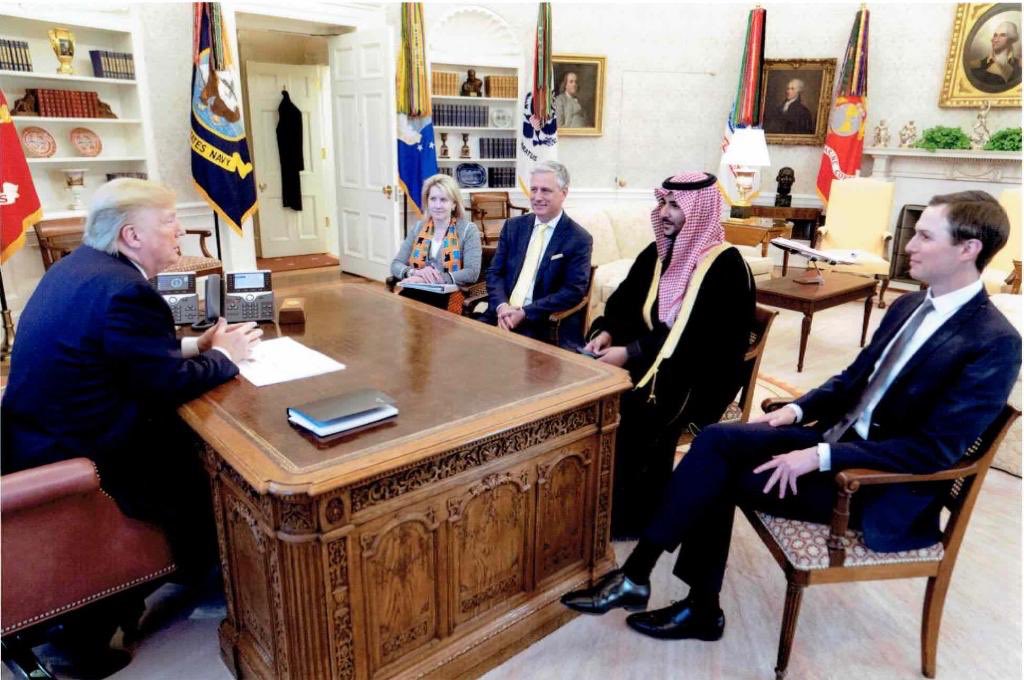
SINGAPORE (Reuters) – Oil prices rose on Monday as positive comments from the United States and China rekindled hopes in global markets that the world’s two largest economies could soon sign an interim deal to end their bitter trade war. West Texas Intermediate (WTI) crude CLc1 rose 26 cents, or 0.45% to $58.03 a barrel by 0759 GMT, having ended last week little changed after tracking the trade talks through their ups and downs. Brent crude futures LCOc1 were at $63.73, up 34 cents or 0.54%, the benchmark having also finished little changed last week. “It is still all about trade talks,” said Michael McCarthy, chief market strategist at CMC Markets in Sydney. “It seems to be dominating markets action at the moment.” Monday’s higher opening prices came after U.S. national security adviser Robert O’Brien said on Saturday that an initial trade agreement with China is still possible by the end of the year. This came a day after U.S. President Donald Trump and Chinese President Xi Jinping expressed a desire to sign an initial trade deal and defuse a 16-month tariff war that has lowered global growth – though Trump said he had yet to decide whether he wanted to finalize a deal, while Xi said he would not be afraid to retaliate when necessary. China’s foreign ministry said on Monday it hopes the United States will work with Beijing on a basis of equality and mutual respect on the ongoing bilateral trade negotiations. A move by China to protect intellectual property was also providing a supportive atmosphere for the trade talks, McCarthy added. “This is a big step forward for potential trade negotiation if they are adopted as official policy,” he said. Still, concern remains that events in Hong Kong, riven by months of anti-government unrest, could overshadow trade talk progress. U.S. national security adviser O’Brien warned on Saturday that Washington would not turn a blind eye to what happens in Hong Kong, where demonstrators were angry at what they see as an erosion of freedoms promised to the ex-British colony when it returned to Chinese rule more than 20 years ago. Over the weekend, pro-democracy candidates scored a resounding win in district council elections. The Organization of the Petroleum Exporting Countries meets on Dec. 5 at its headquarters in Vienna, followed by talks with a group of other oil producers, led by Russia, known as OPEC+. Prices could be pushed higher if OPEC+ agrees to extend its supply cut by three more months to mid-2020.

China and U.S. ‘very close’ to phase one trade deal: Global Times

BEIJING (Reuters) – China and the United States are ‘very close’ to a phase one trade deal, the Global Times, a tabloid run by the ruling Communist Party’s official People’s Daily, said on Monday, discounting “negative” media reports. China also remains committed to continuing talks for a phase two or even a phase three deal with the United States, the state-backed Global Times said on its Twitter feed, citing experts close to the Chinese government. Trade experts and people close to the White House said last week that completion of a “phase one” deal, which had been expected in November, could slide into the new year, as Beijing presses for more extensive tariff rollbacks and Washington counters with demands of its own. According to U.S. and Beijing officials as well as lawmakers and trade experts, the ambitious “phase two” trade deal is looking less likely as the two countries struggle to strike a preliminary agreement. The outlook for a phase one deal was further complicated last week when the U.S. Congress approved legislation to back protesters in Hong Kong, although the completion of district council elections in the Chinese controlled territory on Sunday, without major disruptions, could help. On Saturday, U.S. National Security Adviser Robert O’Brien said an initial trade deal with China was still possible by the end of the year. He warned that Washington would not turn a blind eye to what happens in Hong Kong, but also said it would be “a good sign” if the elections took place without violence.

Russia to Create New Tactics for Using Robots in Urban Warfare by 2020

The news comes amid recent reports about the Russian military boosting its high-tech research, and plans to create multifunctional robotic machines for elaborate combat tasks by 2025. Russia’s defence industry is developing new strategies for robots in possible urban combat, as well as in coastal warfare, a source in the sector stated on Sunday. According to the source, various facilities will offer their solutions to the Combined Arms Academy of the Armed Forces at the beginning of 2020. Uran 9 fighting multi-purpose robotics complex at the exhibition during the Robotization of the Russian Armed Forces 2nd Military & Scientific Conference at Patriot Congress and Exhibition Center The source also noted that at the moment there is no common conception of using robots in combat, so the Russian military plans to establish a compehensive strategy that can be used by the country’s armed forces in the future. The robots will be created with the help of the platform, Marker, which was revealed for the first time in mid-October 2019.

US Lawmakers Push for Nord Stream 2 Sanctions as Project Nears Completion

‘Window is Closing’

MOSCOW (Sputnik) – The US Congress plans to block the further construction of the Russia-sponsored Nord Stream 2 natural gas pipeline by passing a defence bill that would extend sanctions on the project’s European partners, the US Defenсe News media outlet reported, citing US Senator Jim Risch.

Risch, who is the chairman of the US Senate Foreign Relations Committee, told the media outlet that the committee added sanctions on companies involved in the Nord Stream 2 project to the draft 2020 National Defense Authorisation Act.

“The reason for the push is that this window is closing. A lot of Nord Stream is done already. … It will cost them dearly. I think if those sanctions pass [the companies] will shut down, and I think the Russians will have to look for another way to do this if they can do this”, Risch said.

The senator added that the addition to the bill reflects an agreement between the US administration, the US House and Senate and the banking committees.

In late October, US Senator Ted Cruz called on the Senate to pass the bill, saying that it had just a few short months to halt the construction of the pipeline which threatened US energy security.

Nord Stream 2
Nord Stream 2
Nord Stream 2

The Nord Stream 2 project is a joint venture between Russia’s Gazprom and five European companies — France’s ENGIE, Austria’s OMV, the UK-Dutch Royal Dutch Shell, and Germany’s Uniper and Wintershall. The 745-mile-long twin pipeline will carry up to 1.942 trillion cubic feet of gas per year from Russia to Europe.

Russian Energy Minister Alexander Novak said on Wednesday that gas deliveries via the Nord Stream 2 may be launched before the New Year already.

The US and its allies, including Poland and the Baltic nations, repeatedly raised concerns about the project, urging the European countries to break the deal with Moscow citing security issues. Washington insists its threats are only aimed at “protecting” Europe from becoming overly dependent on Russian energy supplies.