Trump to Meet Putin in Alaska as Kyiv Rejects Land Giveaway

Donald Trump plans to meet Russian President Vladimir Putin in Alaska as the US president looks to broker an agreement that will bring an end to the war in Ukraine. “The highly anticipated meeting between myself, as President of the United States of America, and President Vladimir Putin, of Russia, will take place next Friday, August 15, 2025, in the Great State of Alaska,” Trump wrote Friday in a social media post. “Further details to follow.” The face-to-face summit with Putin represents a gamble for the US president, who on the campaign trail pledged to bring a quick end to the war only to see his efforts repeatedly stymied. Inviting Putin onto US soil for the first time in nearly a decade will only heighten the stakes for Trump, who’s seeking to reach an agreement that he said would see the countries engage in “some swapping of territories.”

The apparent exclusion of Ukrainian President Volodymyr Zelenskiy from the talks was likely to fan fears that the White House and Kremlin would negotiate terms predicated on concessions Ukraine was unwilling to make. Trump said Friday he believed “we’re getting very close” to a peace deal.

Zelenskiy on Saturday said Ukraine won’t cede territory to Putin to bring an end to Russia’s 3 1/2-year invasion, and said any deal reached without Kyiv’s involvement was a “dead solution.” Foreign Minister Andrii Sybiha echoed those comments, saying on X that Russia “must not be rewarded for starting this war” and that “we need a lasting peace that won’t be destroyed by Moscow’s next move.”

Read more: Zelenskiy Rejects Giving Up Territory to Russia for Peace

Trump didn’t reveal additional sanctions on Russia or tariffs on its energy purchasers as he announced the summit, despite having declared a Friday deadline for the Kremlin to agree to a ceasefire.

The summit announcement came after a week of frenetic diplomacy between the US, its European partners and Russia. People familiar with the discussions between Washington and Moscow say negotiators have circled around a deal that would lock in Russia’s occupation of territory seized during its military invasion.

That includes a demand by Putin that Ukraine cede its entire eastern Donbas area to Russia as well as Crimea, which his forces illegally annexed in 2014. That would require Zelenskiy to order a withdrawal of troops from parts of the Luhansk and Donetsk regions still held by Kyiv, handing Russia a victory that its army couldn’t achieve militarily since the start of the full-scale invasion in February 2022. Trump on Friday acknowledged that he saw a land swap as a likely part of any agreement. “It’s very complicated,” Trump said. “But we’re going to get some back. We’re going to get some switched. There’ll be some swapping of territories to the betterment of both and but we’ll be talking about that either later or tomorrow or whatever.”

Such an outcome would represent a major win for Putin, who has long sought direct negotiations with the US on terms for ending the war that he started, sidelining Ukraine and its European allies.

Zelenskiy risks being presented with a take-it-or-leave-it deal to accept the loss of Ukrainian territory, while Europe fears it would be left to monitor a ceasefire as Putin rebuilds his forces. Kyiv’s allies also have a multitude of doubts about how any agreement might be enforced and what security guarantees Ukraine will receive. The Ukrainian leader has previously demanded Russia withdraw its troops and pay reparations for the devastation inflicted on the country since the February 2022 invasion. But Trump on Friday cast Zelenskiy as willing to work toward concluding a deal. Brokering a lasting peace deal would amount to a major political victory for Trump, who has increasingly sought to leverage economic pressure to solve foreign policy crises. In recent days, the US president has announced an additional 25% tariff on India over its purchase of crude oil from Russia.

NN: Letting Putin keep any Ukrainian land means more invasions’ will come. Ukraine would be crazy to take this deal. If they do they will be sliced and diced into oblivion.

Momentum toward a meeting between Trump and Putin quickened this week after the Russian president met with US special envoy Steve Witkoff for nearly three hours of talks in the Kremlin earlier this week. US, European and Ukrainian officials have spent recent days discussing their response to those talks, and discussions are expected to continue this weekend in the UK, Axios reported.

Ukrainian has little hope for peace as Trump’s deadline for Russia arrives

Ukrainians expressed little hope for a diplomatic solution to the war with Russia, as U.S. President Donald Trump’s Friday deadline for the Kremlin to stop the killing arrived and he eyed a possible summit meeting with Russian President Vladimir Putin to discuss the conflict Trump’s efforts to pressure Putin have so far delivered no progress. Russia’s bigger army is slowly advancing deeper into Ukraine at great cost in troops and armor while it relentlessly bombards Ukrainian cities. Russia and Ukraine are far apart on their terms for peace. Ukrainian forces are locked in intense battles along the 1,000-kilometer (620-mile) front line that snakes from northeast to southeast Ukraine. The Pokrovsk city area of the eastern Donetsk region is taking the brunt of punishment as Russia looks to break out from there into the neighboring Dnipropetrovsk region. Ukraine has significant manpower shortages. Intense fighting is also taking place in Ukraine’s northern Sumy border region, where Ukrainian forces are engaging Russian soldiers to prevent reinforcements being sent from there to Donetsk. “It is impossible to negotiate with them. The only option is to defeat them,” Buda, the Spartan Brigade commander, told The Associated Press. He used only his call sign, in keeping with the rules of the Ukrainian military. “I would like them to agree and for all this to stop, but Russia will not agree to that; it does not want to negotiate. So the only option is to defeat them,” he said. In the southern Zaporizhzhia region, a howitzer commander using the call sign Warsaw, said troops are determined to thwart Russia’s invasion.

“We are on our land, we have no way out,” he said. “So we stand our ground, we have no choice.”

Trump said Thursday that he would meet with Putin even if the Russian leader will not meet with his Ukrainian counterpart Volodymyr Zelenskyy. That has stoked fears in Europe that Ukraine could be sidelined in efforts to stop the continent’s biggest conflict since World War II.

The Institute for the Study of War, a Washington think tank, said in an assessment Thursday that “Putin remains uninterested in ending his war and is attempting to extract bilateral concessions from the United States without meaningfully engaging in a peace process.” “Putin continues to believe that time is on Russia’s side and that Russia can outlast Ukraine and the West,” it said. Hungarian Prime Minister Viktor Orbán said Friday that Europe should take the lead in efforts to end the conflict. Orbán said the leaders of Germany and France should go to Moscow “to negotiate on behalf of Europe.” Otherwise, “we will be sidelined in managing the security issues of our own continent,” Orbán told Hungary’s state broadcaster. Orbán, who is a harsh critic of the European Union to which his country belongs, said Europe’s concerns that a Trump-Putin summit might not address the continent’s interests meant it should seize the diplomatic initiative. “This war cannot be ended on the front line, no solution can be concluded on the battlefield,” he said. “This war must be ended by diplomats, politicians, leaders at the negotiating table.”

NN: All Putin is doing is buying time as he conquers more and more of Ukraine 


Israel’s security cabinet approves plan to take control of Gaza City

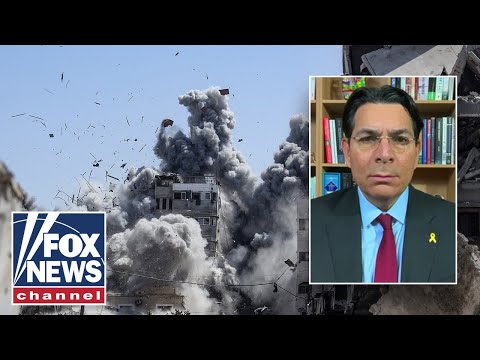
JERUSALEM/CAIRO, Aug 8 (Reuters) – Israel’s security cabinet approved a plan on Friday to take control of Gaza City, a move expanding military operations in the shattered Palestinian territory despite growing criticism at home and abroad over the almost two-year-old war. Far-right allies in Prime Minister Benjamin Netanyahu’s coalition have been pushing for a total takeover of Gaza as part of his vow to eradicate Hamas militants, though the military has warned this could endanger the lives of remaining hostages held by the group. Israel, at war in Gaza since Hamas’ deadly attack on southern Israel in October 2023, is planning the expanded campaign after failed attempts to mediate a ceasefire and as it faces a rising international outcry over a deepening humanitarian disaster. Netanyahu’s office said in a statement the military “will prepare to take control of Gaza City while providing humanitarian aid to the civilian population outside the combat zones”. While Netanyahu said on Thursday Israel intended to take military control of the entire Gaza Strip, the plan approved on Friday focused specifically on sprawling Gaza City, the territory’s largest urban centre, located in its north. In a statement, Hamas called Netanyahu’s moves “a blatant coup” against the negotiation process. Israel’s cabinet is expected to endorse the Gaza City plan. Israeli media have said 900,000 people now live in Gaza City, which has been the focus of major ground and air attacks. They include many of those who were forced to leave towns in the northern edge of the enclave under army evacuation orders and ground operations. Before the war, Hamas’ most powerful fighting units were believed to operate in northern Gaza, including Gaza City. It is not clear if that is still the case because Israel has killed the group’s top leaders and many of its commanders and militants. Asked if Israel, whose forces say they already hold about 75% of the coastal strip, would occupy all of it, Netanyahu told Fox News Channel’s Bill Hemmer in an interview on Thursday: “We intend to.”
He said Israel did not want to keep the territory, but to establish a “security perimeter” and to hand over the territory to Arab forces to govern it. He did not elaborate on the governance arrangements or which Arab countries could be involved. Netanyahu, who has said there will be no end to the war until Hamas is completely destroyed, has come under pressure from Israelis to do whatever it takes to bring home hostages held by the militant group, though many want the war to stop. Amjad Iraqi, senior analyst at International Crisis Group, said that Israel’s government believes the solution is to “be more aggressive in carving Gaza’s geography and demographics” because it has faced no real consequences despite an international outcry.
“It’s no wonder Israel is ready to do the same to the strip’s de facto capital, even amid a spiral into famine,” said Iraqi.
A global hunger monitor has said a famine scenario is unfolding in densely populated Gaza, where nearly all the territory’s more than 2 million people have been displaced, often repeatedly. Among the scenarios considered ahead of the security meeting was a phased takeover of areas in Gaza not yet under military control, a government source said, speaking on condition of anonymity. Evacuation warnings could be issued to Palestinians in specific areas of Gaza, potentially giving them several weeks before the military moves in, the person added. In its statement on Friday, Netanyahu’s office said the vast majority of the security cabinet believed that “the alternative plan presented in the cabinet would not achieve the defeat of Hamas nor the return of the hostages”.  Netanyahu’s government has ruled out a return to Gaza of the Western-backed Palestinian Authority, which exercises limited autonomy in parts of the Israeli-occupied West Bank under 1990s interim peace accords.
NN: Its obvious their is no  peace in the valley. Any Israeli hostages returned or rescued are a miracle. Hamas will never let the go. Its their ace in the hole.

Oil Has Had A Bad Week

Brent crude oil has performed poorly this week, with the front-month contract falling by nearly eight percent to reach around $67 per barrel. The initial sell off was triggered by the OPEC+ announcement that it would raise supply by an additional 547,000 barrels per day in September, “marking the full unwinding of the 2.2 million barrels per day of cuts that the group planned to reintroduce to market over 2025 and 2026”. “Meanwhile, tariff-related uncertainties and broad-based economic concerns loom large, exacerbated by the recent raft of tariff announcements and weak economic data releases in the U.S. raising concerns for oil demand at a time when supply is continuing to grow,” they added. The BMI analysts also noted in the report that bearish sentiment helps to explain the decline seen in Brent in response to U.S. President Donald Trump’s new executive order (EO) issued August 6, which they highlighted “introduces an additional 25 percent tariff on India, effective August 27, in response to its continued purchase of Russian oil, and establishes a process for extending similar penalties to other countries”. “All else equal, the EO should be bullish for prices, to the extent that it curbs flows from Russia, the world’s second largest net exporter of oil,” they said. “However, market participants seem to share our view that there is ample scope for Trump to reverse course in response to potential concessions from Russian President Vladimir Putin,” they added. The analysts went on to state in the report that some combination of the loosening of the global oil supply and demand balance, potential pushback from India, economic fallout from higher effective tariff rates, and the rerouting of Russian oil to other markets could also help to cushion prices, depending on how the next 20 days play out. “We hold to our current forecast for Brent crude to average $68 per barrel in 2025 and $67 per barrel in 2026, down from $80 per barrel in 2024,” the BMI analysts said in the report. In a market analysis sent to Rigzone on Thursday, Hani Abuagla, Senior Market Analyst at XTB MENA, said crude oil prices stabilized to a certain extent that day “after multiple sessions in the red”. “The market could remain exposed to more volatility as traders continue to monitor the developments around demand and supply,” Abuagla warned in the analysis. “The market could remain under pressure from production increases by OPEC+ countries. At the same time, increasing pressure from the U.S. on Russian crude importers could limit the availability of oil on the market, driving prices higher,” Abuagla added. The Senior Market Analyst at XTB MENA went on to state in the analysis that, on the demand side, “markets could find support in the higher than expected U.S. inventory draws”.

“Both API [American Petroleum Institute] and EIA [U.S. Energy Information Administration] figures showed that crude stocks declined faster than anticipated, which could support a more bullish view on demand in the United States,” Abuagla said.

“At the same time, traders could continue to monitor the state of the economy in the U.S. and other major oil consumers in a bid to assess demand levels, in particular as U.S. tariffs could affect growth on a global level,” Abuagla warned. “Meanwhile, potential developments in U.S.-Russia diplomatic talks could reduce risks on the market, weighing on prices,” Abuagla continued. Rigzone has contacted OPEC, the White House, and the Department of Information and Press of the Russian Ministry of Foreign Affairs for comment on BMI’s report and Abuagla’s market analysis. Rigzone has also contacted India’s Ministry of External Affairs for comment on BMI’s report. At the time of writing, none of the above have responded to Rigzone. U.S. commercial crude oil inventories, excluding those in the Strategic Petroleum Reserve (SPR), decreased by three million barrels from the week ending July 25 to the week ending August 1, the EIA highlighted in its latest weekly petroleum status report. That report was released on August 6 and included data for the week ending August 1.

NN: I do not do knee jerk EMOTINAL Snap analysis.  Checking the data, politics and market action these past nine trading days  i have some conclusions to share. My opinion is its the usual hysteria to scare the longs out of the market. I believe a important test of recent lows has been put in,  We are well above the April $58.00 BOTTOM.  $65.50 Brent could be a important buy point. Trade Reo coming once we get into the NY trading session

WH seemingly denies Trump-Putin meeting is done deal……. Trump meeting Putin only if he also meets Zelensky

A meeting between US President Donald Trump and his Russian counterpart Vladimir Putin has not yet been agreed, a White House official told ABC News on Thursday, denying the Kremlin’s previous claim that even a location had been agreed upon. According to the report, Putin would have to meet with Ukrainian President Volodymyr Zelensky before meeting with Trump, and the Kremlin has not agreed to that condition so far. The White House official also stated that no place had yet been set for the meeting between the US and Russian leaders. Russian presidential aide, Yuri Ushakov, claimed earlier in the day that the meeting between the two presidents will occur “in the coming days,” adding that “the venue was also, in principle, agreed upon.”

Trump meeting Putin only if he also meets Zelensky

US President Donald Trump will only meet with Russian President Vladimir Putin if the latter also agrees to meet with Ukrainian President Volodymyr Zelensky to negotiate an end to the war in Ukraine, the New York Post reported on Thursday, citing a White House official. Earlier, the Kremlin announced that Moscow and Washington agreed “in principle” on a meeting between Putin and Trump, “at the initiative of the American side.” Later, the White House reportedly debunked the declaration.

NN: Deal No Deal!

Trump’s Tariffs Take Effect in Fresh Test for Global Economy

Prllesident Donald Trump’s sweeping new tariffs officially took hold Thursday, as he barrels forward with his turbulent push to reshape global trade. After months of chaotic threats and reversals, higher rates for almost all US trading partners began just after midnight in New York. Trump signed the directive a week ago, but had to allow time for US Customs and Border Protection to make necessary changes to collect the levies.

Taken together, Trump’s actions will push the average US tariff rate to 15.2%, according to Bloomberg Economics estimates, well above 2.3% last year and the highest level since the World War II era.

Following a series of turbulent negotiations, the European Union, Japan and South Korea accepted 15% duties on their products, including key exports such as automobiles which otherwise face a 25% levy. Other countries were simply assigned rates, ranging from 10% to much higher. Negotiations on higher levies on goods from three of the US’s biggest trading partners, Mexico, Canada and China, are proceeding on a separate track. Trump has also vowed to unveil soon tariffs on critical industries, including pharmaceuticals and semiconductors. Trump has pledged higher levies will slash trade deficits and push companies to move manufacturing back to the US. His critics say they could cause inflation to spiral out of control and cause shortages on store shelves. None of those have yet come to pass, but recent economic data has indicated potential troubles lie ahead as the tariffs set in. “There are signs that tougher times are around the corner. A lot of companies have been building up inventories before the tariffs went into place,” said Wendy Cutler, vice president of the Asia Society Policy Institute and a former US trade negotiator. She argued that it is “almost inevitable that prices increase” because businesses are unlikely to sustain lower margins over the long term. Trump’s tariffs have injected tumult into the world economy since he first announced and then paused them in April — setting off months of breakneck negotiations with trading partners. The uncertainty created anxiety among businesses about supply chain disruptions and higher costs. Analysts at top Wall Street firms have warned clients to prepare for a pullback. On Monday, Morgan Stanley, Deutsche Bank AG and Evercore  all cautioned that the S&P 500 Index is due for a near-term drop in the weeks and months ahead. That caution comes amid mounting concerns about the US economy after data last week showed an uptick in inflation as well as weakening job growth and consumer spending.

NN: The last great depression as trigged b sky high tariffs. So will be the net one

A Defiant Israel Eyes a Full Gaza Takeover Despite Global Isolation

Emboldened by military successes and Trump’s backing, Netanyahu shows no signs of letting up in the face of increased international pressure

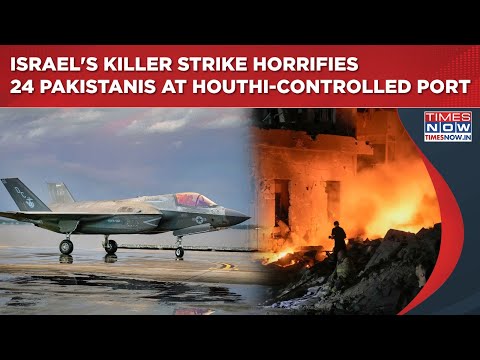
Israel is not merely defying the pressure, it is redefining itself. Once a besieged secular outpost with an agrarian economy, it has evolved into a Middle East superpower: an aggressive military and intelligence juggernaut with a GDP per capita higher than the UK, an increasingly populist ethno-religious government with an unflinching security ethos. Israel’s actions of the past year profoundly altered the region’s strategic balance. Facing Iran-backed hostilities from numerous sources, Israel took out the leadership of Lebanon’s Hezbollah while eliminating most of its long-range missiles, sent its air force over Yemen to attack the Houthis and badly damaged Iran’s nuclear and ballistic missile programs. It destroyed military sites across Syria and stationed its troops there and in Lebanon. In the West Bank, where 3 million Palestinians live, it has authorized a massive expansion in Jewish settlement building, and in Gaza blocked aid for months, widely considered violations of international law. In the coming days, Netanyahu’s government is expected to decide whether it will fully occupy Gaza. Israeli media report that a gradual takeover is likely, starting in and around Gaza City, moving hundreds of thousands of inhabitants and lasting months. It’s a move that would further alienate the many countries — and many Israelis — telling it to end the war instead as the UN warns the enclave is on the brink of famine. But the supporter that matters most to Netanyahu — US President Donald Trump — doesn’t seem to be objecting. As his ambassador to Jerusalem, Mike Huckabee, told Bloomberg on Wednesday, Trump “respects Israel’s right to do what it has to do to protect itself, to get the hostages back, to end this.” While much of the world is horrified by Israel’s conduct in Gaza, most Israelis say they’re not. A survey from last month shows 79% of Israeli Jews say they’re not so troubled or not at all troubled by events in Gaza. Weekly protests in Israel focus on returning the hostages rather than concern for Palestinian civilians.  Hamas, which is considered a terrorist group by many Western countries and spurns the existence of Israel, today consistently out-polls the more moderate Fatah movement among Palestinians. Hamas’s refusal to disarm as part of any ceasefire deal has also helped entrench opinion in Israel. Today, Israelis look back ruefully, with a strong majority telling pollsters it was a mistake to leave Gaza. The far right wants to rebuild Jewish settlements there and two of Netanyahu’s far-right allies — Finance Minister Bezalel Smotrich and National Security Minister Itamar Ben Gvir — are themselves settlers on the West Bank who’ve led expansion efforts and called for the resettlement of Gaza. As much of the world turns critical of Israel and its government is increasingly beholden to its right-wing base, Netanyahu has leaned even further into his relationship with Trump, and his country’s links with the American right. “Netanyahu has been gambling purely on Republican support and has abandoned bipartisanship, which is terribly dangerous,” said Eytan Gilboa, an expert on US-Israeli relations at Bar-Ilan University outside Tel Aviv.  Netanyahu, and many of his top ministers and a portion of the public see the Hamas attack as part of a broader Iran-led assault on Israel’s existence. They believe that Israel can’t stop until it has destroyed Hamas both for its own sake and to send an uncompromising message to its enemies. “They cannot have control of Gaza,” Strategic Affairs Minister Ron Dermer, Netanyahu’s closest adviser, said of Hamas in a recent podcast. “That is the minimum. You did October 7, you’ve lost Gaza. When we tell our grandchildren about the horrors of that day, they will know that Hamas lost Gaza. That’s what has to happen.” Dermer advocates using what the US-led Allies did in Germany and Japan after World War II as a model for the future of Gaza and the Palestinian movement — long-term deradicalization with the help of Gulf powers. A wild card in predicting the war’s future is Trump, whose close alliance with Netanyahu grants him special influence. If he decides he wants an end to the war, that could convince Israel to declare victory and move on. So far that hasn’t happened.

That makes some kind of renewed Israeli assault on Gaza and an occupation likely, although it’s a highly controversial move.

For Israelis, the triumphs of the past year have reduced the acute sense of vulnerability that the Hamas attack caused. But it hasn’t gone away — that’s why much of the public sees the future as one of greater vigilance and continued combat.

A key lesson Israel has drawn from October 7 is to guard its borders not only from within but from without to prevent militias from storming in. It now has troops stationed inside Lebanon, Syria and Gaza as well as the West Bank. It’s the kind of posture that infuriates the region. “Israel’s new ‘forward-defense’ policy is a dangerous gamble, causing even its few regional friends to view it as a bigger threat to stability than Iran,” said Dina Esfandiary, Middle East Geoeconomics Lead for Bloomberg Economics. Israeli officials disagree, saying the stronger Israel is, the more respect it earns. They point out that the likes of the United Arab Emirates haven’t broken relations and business ties continue to grow. Moreover, they note that the US and others told it not to enter the southern Gaza city of Rafah, then not to assassinate Hezbollah chief Hassan Nasrallah or to attack Iran. It defied those warnings and came out ahead — the same will be true of Gaza, they argue. “In the Middle East, if you are weak, you are roadkill,” said Dermer on a July podcast. “The only path to peace is through strength.”

NN: Reality is  you have to kill the savages. Take their weapons and destroy their leadership. then peace and prosperity will come for decades. As the Germans and Japanese. 

Russia Says Putin-Trump Summit to Take Place Within Days

Presidents Vladimir Putin and Donald Trump will meet for summit talks within the next few days, the Kremlin said Thursday. Russia and the US have agreed on a venue for the meeting and “together with our American colleagues, we are starting to work on specific issues,” with the aim of holding the talks next week, Kremlin foreign policy aide Yuri Ushakov told reporters. He said the location of the summit would be disclosed later. The announcement came a day after Putin met with Trump’s envoy Steve Witkoff in the Kremlin for nearly three hours of talks as the US pushed for an end to Russia’s war in Ukraine. Trump has threatened to hit purchasers of Russian oil with secondary tariffs unless Putin agreed to a truce by Friday in the war that’s now in its fourth year. While the details around the Trump-Putin meeting are unclear, the apparent progress from yesterday could be seen as an encouraging sign that the hostilities in Ukraine could finally end and a period of recovery could start.” Witkoff raised the idea of a trilateral meeting involving Putin, Trump and Ukrainian President Volodymyr Zelenskiy, though Russia didn’t comment on that proposal, Ushakov said. Russia wants to focus first on the Putin-Trump summit, he said. Trump said Wednesday there was a “very good chance” he would meet with Putin and Zelenskiy soon in another bid to broker peace between the two countries. The US president informed allies that he was considering a summit during a phone call earlier Wednesday that also included Zelenskiy. Trump was positive about the possibility of a ceasefire, according to several people with knowledge of the call. He also suggested that Putin would be open to entering into peace talks in exchange for discussing land swaps, the people said. Ukraine hasn’t reacted so far to the Russian announcement of a summit. Zelenskiy said after the call with Trump that “we all need a lasting and reliable peace” while adding that “Russia must end the war that it itself started,” in a statement posted on social media. Putin has laid claim to Ukraine’s Black Sea peninsula of Crimea, which Russia illegally annexed in 2014, as well as the eastern and southern Ukrainian regions of Donetsk, Luhansk, Zaporizhzhia and Kherson that his troops don’t fully occupy. The US had previously offered to recognize Crimea as Russian as part of any deal, and to effectively cede control of parts of other Ukrainian regions that Russia occupies. As part of those earlier proposals, control over areas of Zaporizhzhia and Kherson would be returned to Ukraine. Putin and Witkoff also discussed Russia-US relations at their meeting and had noted that they could be developed in “a completely different, mutually beneficial scenario,” Ushakov said.

NN: Give up land to Russia for a so called cease fire. This is called surrender and going no where fast. And the oil marketis not buying into this peace deal

Putin, Witkoff end meeting after three hours

Russian President Vladimir Putin finished his meeting with United States Special Envoy Steve Witkoff after around three hours, Putin’s press service said on Wednesday. Russian presidential aide Yuri Ushakov stated it was “useful and constructive,” adding that the topics included the war in Ukraine and prospects for the development of bilateral strategic cooperation. US President Donald Trump suggested that Witkoff’s discussion with Putin will inform his decision on potential tariffs on countries buying Russian energy exports. Trump also set a deadline for agreeing on a ceasefire between Russia and Ukraine, which expires on Friday.

NN: No breakthrough. Russia is having a laugh. He is calling Trumps bluff.

Oil up 1% as Trump seeks to limit Russian exports

Crude gained over 1% on Wednesday after United States President Donald Trump threatened to impose tariffs on countries buying Russian energy. The decision could depend on the meeting between Russian President Vladimir Putin and US Special Envoy Steve Witkoff, currently taking place in Moscow. Meanwhile, the latest American Petroleum Institute report on US crude oil inventories saw a 4.2 million barrel drop in the week ending August 1. West Texas Intermediate (WTI) for deliveries in September increased by 1.50% at 5:13 am ET, selling for $66.15, while Brent for settlements in October added 1.46% and went for $68.62.