The 2026 midterms elections, the rise of the Commies Lie
Nick Guarino November 4, 2026
1. A reckoning at the ballot box
The American electorate delivered its verdict on November 3, 2026. Democrats captured both chambers of Congress. For President Donald Trump and his Republican allies, it was a political defeat of historic proportions. But beneath the headlines and partisan celebration lay a simpler message that strategists on both sides would do well to understand: people vote with their wallets, and millions of Americans erroneously believe the social media propaganda lie that their wallets are getting thinner.
Preliminary national exit polling put the economy first among voters’ single most important issues at 39%. The state of democracy followed at 32%, immigration at 14%, healthcare at 8%, foreign policy at 4%, and crime at 3%. These figures do not mean that foreign affairs were unimportant to only 4% of voters; they mean that only 4% chose foreign policy above everything else. The election also took place against public frustration over living costs, the war with Iran, and the administration’s overall direction. There is no single-cause explanation for the losses. But the pocketbook signal was unmistakable. [1–3]
The big mistake that the Republicans made was they never sustained the laser-like concentration this moment required on the economy. Trump addressed immigration, tariffs, international conflict, political enemies, and a dozen competing headlines, while the ordinary voter asked a much narrower question: How much money has he left after the mortgage or rent, food, fuel, insurance, medical bills, and taxes? A national leader can proclaim economic strength and still lose the argument at the kitchen table and the voting booth. Most People only consider their narrow self serving interests in elections.
That is the great paradox of this election. America the most prosperous nation and people the world has ever seen remains an extraordinary engine of wealth creation. A small number of citizens nonetheless experience real economic strain, and many more fear they are falling behind. Because they are being brainwashed. Economic statistics and living experience are not interchangeable. The failure to connect them was politically costly. Reality is Americans do not realize how good they have it. You can sell them the negative.
2. The triumph of the promise
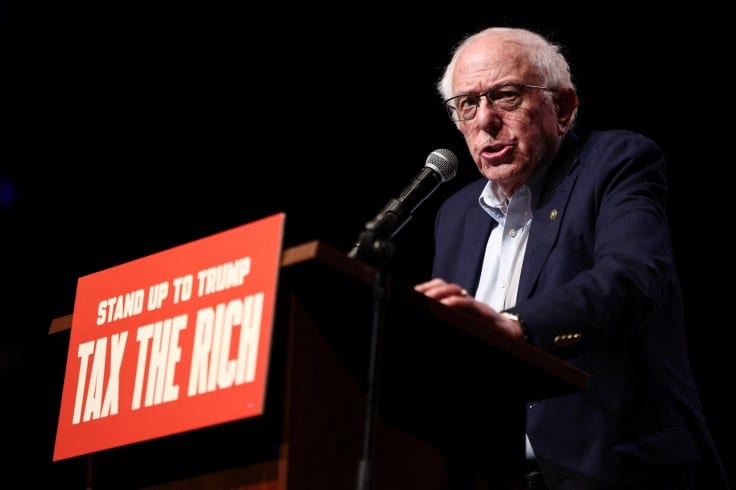
Now comes the larger question. What have the winners promised, and what happens when voters demand delivery? Across the Democratic Bernie Sanders coalition, candidates and advocates have promoted proposals ranging from Medicare for All and tuition-free college to student-debt relief, expanded housing subsidies, universal childcare, paid family leave, higher minimum wages, new taxes on the wealthy and corporations, immigration reforms, and ambitious climate programs. The underlying research list contains 34 distinct proposals or positions right out of the commie lefty playbook. The great lies..
These are the promises and proposals explicitly identified in democratic documents:
-
Medicare for All and expanded healthcare coverage.
-
Tuition-free college.
-
Student-loan forgiveness and debt relief.
-
Expanded housing subsidies.
-
Affordable housing and public housing programs.
-
Universal childcare.
-
Paid family leave.
-
Higher minimum wages.
-
Higher taxes on wealthy individuals.
-
Higher corporate taxes.
-
Immigration reform.
-
Expanded climate and clean-energy programs.
-
Lower consumer prices and cost-of-living relief.
-
Cheaper energy.
-
Higher wages and improved household purchasing power.
The main list contains 43 Democratic Policy Promises and Proposals broken down by sections:
HEALTHCARE
-
Universal healthcare coverage.
-
Medicare for All.
-
Expanded Medicaid eligibility and coverage.
-
Expanded Medicare benefits.
-
Prescription drug price controls through Medicare.
EDUCATION
-
Student loan forgiveness.
-
Free public community college.
-
Tuition-free public universities for qualifying students.
-
Universal pre-kindergarten.
HOUSING
-
Affordable housing programs.
-
First-time home buyer financial assistance.
-
Expanded rental assistance.
-
Stronger tenant protections.
-
Increased public and subsidized housing construction.
COST OF LIVING AND EMPLOYMENT
-
Lower grocery prices.
-
Lower electricity prices.
-
Lower gasoline and other energy costs.
-
A $15 federal minimum wage.
-
Higher wages and improved household purchasing power.
FAMILY AND SOCIAL BENEFITS
-
Universal childcare.
-
Expanded childcare subsidies.
-
Paid family and medical leave.
-
Expanded Social Security benefits.
-
Expanded Child Tax Credit payments.
TAXATION
-
Higher taxes on billionaires.
-
Higher corporate income taxes.
-
Increased taxes on wealthy individuals.
IMMIGRATION AND BORDER POLICIES
-
Expanded legal immigration.
-
A pathway to citizenship for undocumented immigrants.
-
Protection from deportation for Dreamers.
-
Expanded asylum protections.
-
Greater access to work permits for migrants.
-
Abolishing Immigration and Customs Enforcement (ICE).
-
Ending immigration detention.
-
Ending immigration enforcement raids and deportation operations.
-
Decriminalizing unauthorized border crossings.
-
Reducing construction of border walls.
-
Relaxing certain border enforcement restrictions.
-
Expanding access to immigration relief and legal status.
CLIMATE AND ENERGY
-
Expanded clean-energy programs.
-
Increased federal investment in renewable energy.
-
Climate-change initiatives and emissions-reduction programs.
TOTAL: 42 POLICY PROPOSALS AND POSITIONS
These proposals have been advanced by different Democratic politicians, candidates, and progressive organizations. Not all are official Democratic Party platform commitments, and some are associated primarily with the party’s progressive Bernie Sanders commie left wing. But as a result of the Democrats great success in the midterm elections no one dare touch them. It’s now the Democrats Gospel.
The Democratic wish list potentially carries a price tag measured not in billions but in tens of trillions of dollars and hundreds of trillions over the coming decade.
Estimated Cost of Some Democratic Policy Proposals
Ten-Year Federal Budget Impact — Working Research Table
The following estimates are preliminary ranges for selected proposals. They are not all independently additive, and the full 42-item list includes overlapping programs, tax proposals, and policies without direct federal spending costs calculated.
|
# |
Democratic Policy Proposal |
Estimated 10-Year Federal Cost |
|---|---|---|
|
1 |
Medicare for All |
$30–40 trillion |
|
2 |
Expanded Medicaid coverage |
$0.5–2 trillion |
|
3 |
Expanded Medicare benefits |
$0.5–2 trillion |
|
4 |
Student loan forgiveness |
$0.4–1.6 trillion |
|
5 |
Free community college |
$100–300 billion |
|
6 |
Tuition-free public universities |
$500 billion–$1 trillion |
|
7 |
Universal pre-kindergarten |
$200–500 billion |
|
8 |
Affordable housing programs |
$500 billion–$2 trillion |
|
9 |
First-time home buyer assistance |
$100–500 billion |
|
10 |
Expanded rental assistance |
$300 billion–$1 trillion |
|
11 |
Universal childcare |
$700 billion–$2 trillion |
|
12 |
Expanded childcare subsidies |
$200–600 billion |
|
13 |
Paid family and medical leave |
$300–800 billion |
|
14 |
Expanded Social Security benefits |
$1–3 trillion |
|
15 |
Expanded Child Tax Credit |
$1–2 trillion |
|
16 |
Clean-energy subsidies and investments |
$500 billion–$2 trillion |
|
17 |
Additional climate programs |
$300 billion–$1 trillion |
Important: These are broad illustrative planning ranges, not a verified Congressional Budget Office score of a single legislative package. In particular, the Medicare for All figure represents additional federal outlays, not an equivalent increase in total national healthcare costs.
Adding the 17 illustrative ranges in the first table produces approximately $36.6 trillion to $60.3 trillion over ten years.
However, that is an arithmetic total, not a defensible estimate of the cost of enacting the proposals together. It double-counts overlapping healthcare, childcare, housing, and climate initiatives. It also excludes potential savings, additional tax revenue, and the remaining proposals that require separate analysis.
“The complete price tag for the Democratic policy wish list runs into hundreds of trillions of dollars over a decade. Medicare for All alone has been estimated at $25 trillion to more than $47 trillion in additional federal costs, depending on the proposal and economic assumptions. The larger question is not what politicians can promise, but what taxpayers can sustainably finance.”
Consider the attractive simplicity of the slogans: free healthcare, free education, affordable housing, debt forgiveness, cheaper energy, higher pay. Each addresses an understandable anxiety. But the word “free” is a political description, not an economic mechanism. Someone must supply the doctors, nurses, operating rooms, pharmaceuticals, faculty, laboratories, land, construction labor, utilities, and maintenance. Someone must pay the bill. The cost does not disappear when it moves off a household invoice and onto a government ledger.
This is not an argument that every publicly financed service must fail. Other developed nations operate broad public-health and education systems. It is an argument about trade-offs, financing, and delivery standards. An insurance card is not a specialist appointment; a tuition subsidy is not a staffed lecture hall; a housing voucher is not an available apartment. A serious reformer should publish the bill, the funding mechanism, the construction or staffing timetable, and the service standards before proclaiming a benefit universal. The Democrats fail to disclose how they are going to pay for all this!
3. Healthcare: coverage is not capacity
The United States has an enormous medical system, extensive diagnostic technology, leading research hospitals, and a legal requirement that most emergency departments evaluate and stabilize patients with emergency medical care regardless of ability to pay. That framework is a genuine national asset and a huge unfunded liability for hospitals. [5]
National health spending reached roughly $5.3 trillion in 2024, about 18% of GDP. Any pledge to transform how such a vast system is financed must account not only for the federal budget but also for spending presently borne by employers, private insurers, and households. Enlarging federal expenditures does not necessarily enlarge national spending by the same amount; some costs would move between payers. The important questions are what total costs become, who funds them, and whether capacity improves. [6]
Canada and Britain demonstrate that universal coverage can only coexist with significant queues for particular procedures. Health care rationing. Many people die while waiting for appointments that can be years in the future.
The American experience demonstrates that modern medical equipment procedures can coexist with high costs and no gaps in access if the burden is shared.
To promise unlimited medical services at no visible point-of-service price while ignoring how it’s paid for is to risk making demand outrun capacity.
4. Education, housing, and the costs no one puts on the campaign poster
The arithmetic of college is equally unforgiving. Broad student-loan forgiveness changes who bears the burden of the debt; it does not automatically increase the number of professors, laboratories, seats, or degrees. Tuition-free college needs a reliable replacement for tuition income if quality and capacity are to remain intact. If a politician promises both unlimited access and no added public cost, ask to see the budget.
Housing is a more physical constraint still. A government can subsidize demand far faster than an industry can add supply where land is scarce, zoning restrictive, permits slow, and labor expensive. Subsidies without enough construction may bid up prices. Public housing can serve residents well when properly designed, financed, maintained, and protected; neglected maintenance and weak management can also create deterioration. The operating budget matters long after the ribbon-cutting. And as we see in every major city public housing is hell holes instant slums and drug gang havens.
Americans already enjoy unusually spacious homes by international standards, and roughly two-thirds of U.S. households own their homes. But young buyers, renters, and families in expensive metropolitan areas confront genuine affordability barriers. What should be rejected is the notion that a federal promise alone can erase construction costs, interest rates, supply bottlenecks, and local regulation relief.
5. What America has already built
Before concluding that Americans inhabit an economy of failure, consider what this nation has actually built. Its public-road network stretches for millions of miles, including roughly 49,000 miles of interstate highways. Most interstate roads are not tolled, unlike a large portion of the European motorway system. America maintains one of the world’s largest airport systems, a vast freight-rail network, major ports, national postal delivery, advanced emergency services, comprehensive electric and water networks, and enormous food production and distribution capacity. The world’s largest oil and natural gas producer.
It built and operates GPS, making civilian positioning signals available worldwide without a direct user fee. NOAA satellites, radar, and warning networks provide sophisticated monitoring of hurricanes, floods, and storms. The U.S. has the world’s largest military and nuclear capacity. American universities and laboratories are engines of technological and scientific research; America invented the internet and artificial intelligence. Hospitals and medical-device companies help drive advanced diagnostics and treatments. These assets are not free to operate, nor are they perfectly distributed. They represent generations of public and private investment that form part of the daily American standard of living. Hey Bernie it’s called free enterprise and capitalism. What the Democrats are hell bent on destroying.
For much of the country, electricity, indoor plumbing, heating, communications, roads, groceries, and emergency services are commonplace enough to become invisible. The fact that a system is taken for granted does not mean it is trivial. The ordinary conveniences of American life would have astonished previous generations. They also have real annual maintenance, replacement, and staffing costs, a reality that should sober politicians selling permanent benefits as though they had no operating expenses.
America is first on almost every international scorecard. Americas have faster broadband, cheaper gasoline, higher home ownership, better health outcomes, more MRI scanners per resident. It is still a country with an exceptional combination of scale, capital, innovation, infrastructure, and consumer choice. The defensible case for American accomplishment is powerful enough without inventing universal first-place rankings.
6. The capital-building machine
The nation’s financial system deserves special attention. In 2025 the United States accounted for 43.7% of global equity-market capitalization and 38.1% of outstanding fixed-income securities—approximately $68.9 trillion in stocks and $61.2 trillion in debt securities. The depth of those markets connects entrepreneurs with investors, companies with lenders, and households with ways to save for retirement. [7]
The Federal Reserve reported $195.9 trillion in household and nonprofit net worth in the second quarter of 2026. That is a staggering national reservoir of privately owned assets. It is not a checking account held by the Treasury, and it is not evenly shared. But any diagnosis of America as an impoverished society must explain those figures, alongside the productive institutions that generated them. [8]
America also offers favorable treatment for many long-term capital gains, including a zero federal rate for qualifying taxpayers below specified income thresholds and substantial exclusions on eligible gains from a primary residence. Its system permits immediate deduction of qualifying business equipment under current federal rules, which can encourage investment in new machinery and facilities. Those advantages are real and calculated with the above deductions the United States has the world’s lowest capital-gains tax rate.
The more critical question is how this wealth-building machinery can be kept accessible to businesses, workers, savers, and future homeowners rather than be destroyed by the Democrats anti business policies.
7. Taxes, wages, and the purchasing-power test
International comparisons should begin with disposable income, not the dollar price on a shelf. Food, fuel, housing, medical expenses, education, and taxes must be examined as shares of what households actually have available. A cheaper liter of gasoline in another country does not necessarily mean that gasoline is more affordable to the median worker there. Likewise, a high American salary means less if housing and healthcare consume the difference.
The OECD reported a 30.0% labor-tax wedge for a single American earning the average wage in 2025, compared with an OECD average of 35.1%. The United States has no national VAT, although state and local sales taxes apply; their average combined rate in mid-2026 was about 7.5%, against an OECD average standard VAT tax of roughly 19% in the latest comparable OECD survey. [9]
The USDA estimated that food absorbed 9.7% of aggregate disposable personal income in 2025, with 4.8% devoted to food at home. These national numbers suggest striking food affordability relative to national income. The U.S. has the cheapest food costs in the world when considered by this matrix [10].
Americans live in a major high-income economy benefiting from high output, relatively favorable taxes, extensive consumer markets, and comparatively inexpensive gasoline and energy against much of Western Europe.
8. The debt bill—and the wealth behind it
The national debt cannot be ignored. The Congressional Budget Office projected a fiscal 2026 federal deficit of approximately $1.9 trillion. The United States is rich and productive, but a government already running large deficits must be especially precise about new recurring entitlements. [11]
Yet the opposite error is to compare debt per citizen while refusing to consider income, assets, institutions, and the tax base. Net worth, debt-to-GDP, interest expense, annual revenue, and capacity to borrow are different metrics. Household net worth cannot simply be used to cancel government debt: those assets belong largely to private citizens, pension plans, and institutions.
China provides a useful caution. Standard public-debt figures omit important borrowing through local-government financing vehicles. The International Monetary Fund’s augmented measure, designed to capture wider public obligations, reached an estimated 126.6% of GDP in 2025 and was projected at 135.3% for 2026. Comparing countries without asking which obligations appear on the balance sheet can produce comforting but misleading conclusions. [12]
The lesson is not that America has the lowest debt burden in the world. It is that the size and sustainability of debt must be judged against the productive economy, the government’s revenue, its assets and obligations, and its cost of financing. No honest appraisal can omit either side of that ledger.
9. China and the limits of the Utopian comparison
China is a vast industrial and engineering power. It trains large numbers of technical graduates and produces an immense share of manufactured goods. That achievement is not evidence that government can offer unlimited services free of resource constraints. China’s medical system, local budgets, real-estate sector, and off-balance-sheet financing all face difficult trade-offs.
Nor should the example of a small, energy-rich nation be pasted mechanically onto a continental economy. Norway benefits from extraordinary petroleum wealth; Sweden’s social services rely on very high taxation and low productive enterprises. Scale raises the total cost of services, but also increases the taxable economic base. What ultimately matters is productivity, competent administration, financing, investment, and the matching of demand to supply.
The world’s major economies offer no magic exemption from arithmetic. A policy does not succeed because it is called socialist, capitalist, universal, or free. It succeeds if a society can deliver the promised service reliably and affordably over time. Which America can and socialist economies cannot!
10. What the Republicans missed—and what the Democrats may discover
Trump and the Republicans could point to policies enacted and promises kept, including tax measures such as the deduction for qualifying tips and higher estate-tax exemptions. But a benefit narrowly concentrated among tipped workers, particular investors, or wealthy estates does not necessarily answer the financial anxieties of the broad electorate. Delivering a promise is not identical to delivering a politically persuasive improvement in the ordinary household budget.
That, in my judgment, was the Republicans’ strategic mistake. They emphasized too many subjects and too little explanation of how America’s productive capacity could improve the lives of the people paying the bills. Americans cannot spend the national GDP figure. They cannot use the stock-market capitalization total to buy dinner. If politicians wish to defend the existing economic system, they must show families what it produces for them—and address what plainly is not working.
The Democrats now face a different test: Unrealistic Expectations. A campaign can offer promises of lower prices, easier housing, broader healthcare, free tuition, and debt relief. But having legislative majorities are not a blank check, and Congress still shares power with a Republican president. And the Democrats do not have enough votes to override a presidential veto. Program costs overlap; approvals take time; federal, state, and local authorities disagree; and some promises are impossible to deliver without trade-offs that voters were never told about. The money does not exist to fund the Democrats’ promises.
My political belief is that this will become the seed of a backlash in 2028. A party can win by promising relief and lose credibility when citizens discover the limits of implementation. That is an argument about political risk and the price the Democrats will pay in 2028 elections which are not that far away.
11. The bill always arrives
America’s great accomplishment is not that it has eliminated scarcity. It has not. Its accomplishment is that productivity, investment, infrastructure, scientific innovation, and capital formation have created living standards once unimaginable. The standard of living is the highest in the world. The system has flaws—sometimes serious ones—but it produces tangible abundance, not just glossy promises.
Political leaders who defend that system must stop assuming voters will recognize its advantages automatically. It must be explained to them. They must confront the real household pressures hiding beneath national averages. Political leaders who promise to replace or vastly expand its services must explain the funding, personnel, construction, and maintenance required to deliver those promises without weakening the capacity citizens already depend upon.
Promises are easy to make. Governing is a balance sheet, an operating plan, and an obligation to deliver. The voter deserves to see all three. Until then, the refrain of American politics will remain painfully familiar: promises, promises, damn promises.
Bottom line my prediction is a 2028 Republican landslide with Rubio who well understands the lies of the commies becoming the next president! This election was more a future calculation and strategic planning than most people realize.
12. Research notes and sources
The bracketed references identify key data sources. Figures are drawn from different reporting periods and should not be combined into synthetic rankings without harmonization. Policy descriptions represent proposals circulating among candidates and advocates, that are close to a Democratic party platform.
[1] Reuters, “Democrats seize Congress in sweeping midterm repudiation of Trump,” Nov. 4, 2026. https://www.investing.com/news/politics-news/democrats-seize-congress-in-sweeping-midterm-repudiation-of-trump-4997528
[2] MarketWatch, preliminary national exit poll issue priorities, Nov. 4, 2026. https://www.marketwatch.com/livecoverage/midterm-elections-2026-results-economy-stocks/card/what-s-the-most-important-issue-exit-polls-show-the-economy-tops-the-state-of-democracy-2FMzvTVdqMtKpY1R1GL5
[3] CBS News, 2026 midterm exit polls, Nov. 3, 2026. https://www.cbsnews.com/news/cbs-news-exit-polls-midterm-elections-2026/
[4] Author’s consolidated policy-research list; individual policy sponsors and fiscal estimates.
[5] U.S. Centers for Medicare & Medicaid Services, Emergency Medical Treatment and Labor Act (EMTALA). https://www.cms.gov/medicare/regulations-guidance/legislation/emergency-medical-treatment-labor-act
[6] CMS, National Health Expenditure Accounts. https://www.cms.gov/data-research/statistics-trends-and-reports/national-health-expenditure-data
[7] SIFMA, 2026 Capital Markets Fact Book, Aug. 19, 2026. https://www.sifma.org/news/blog/2026-capital-markets-fact-book-key-findings
[8] Federal Reserve, Financial Accounts of the United States, Q2 2026. https://www.federalreserve.gov/releases/z1/current/recent_developments.htm
[9] OECD, Taxing Wages 2026. https://www.oecd.org/en/publications/taxing-wages-2026_3a5169ef-en/full-report/overview_d93131c3.html
[10] USDA Economic Research Service, Food Prices and Spending. https://www.ers.usda.gov/data-products/ag-and-food-statistics-charting-the-essentials/food-prices-and-spending
[11] Congressional Budget Office, Budget FAQ and 2026 projections. https://www.cbo.gov/faqs
[12] IMF, 2025 Article IV Consultation with China, Feb. 18, 2026. https://www.imf.org/en/news/articles/2026/02/18/pr-26053-china-imf-executive-board-concludes-2025-article-iv-consultation.