- Nonfarm payrolls by 517,000 in January,
- The unemployment rate stood at 3.4%
- labor force participation rate rose by to 62.4%
- leisure and hospitality sector gained 128,000 jobs
- Professional and business increased by 82,000,
- government sector which added 74,000 jobs.
- Average hourly earnings YoY increase of 4.4%.
The US labor market burned red-hot in January as hiring unexpectedly surged and unemployment fell to a 53-year low, defying recession forecasts and adding pressure on the Federal Reserve to keep raising interest rates. The unemployment rate dropped to 3.4%, the lowest since May 1969 and average hourly earnings grew at steady clip. Hiring was broad-based across sectors, led by leisure and hospitality, professional and business services and health care. Government employment increased by the most since July, which reflected the return of University of California workers after the end of a strike. The job market is proving resilient despite rising borrowing costs, a pullback in consumer demand, mounting layoffs and an overall uncertain economic outlook. threatening to keep wage growth strong and fan inflation further.
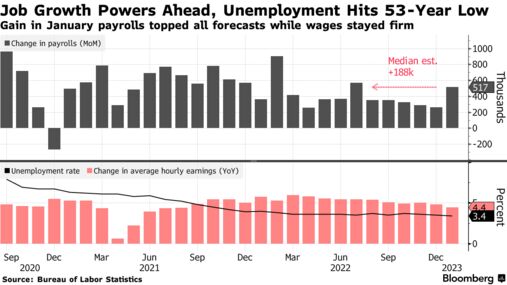
That’s been a key frustration for the Fed, outlined by Chair Jerome Powell on Wednesday after the central bank slowed its pace of rate hikes to a quart er point. Even so, Powell expressed optimism that officials can still pull off a so-called soft landing, in which they quell inflation without putting millions of people out of work.In order to do so, the Fed has said it’s key to ease wage gains. The jobs report showed average hourly earnings rose 0.3% from December and were up 4.4% from a year earlier. The average workweek increased to 34.7 hours, the highest since March.
“A stunningly strong jobs report raises serious doubts about the economy slipping into recession and the Fed ending its tightening cycle this spring,” Sal Guatieri, senior economist at BMO Capital Markets, said in a note.
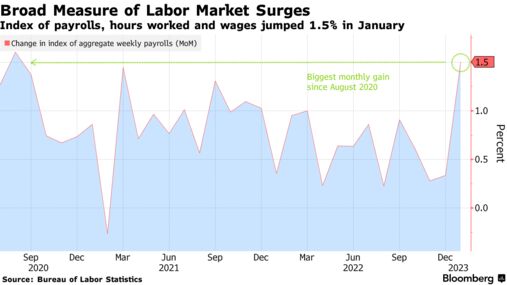
The surprising strength of the jobs report was reflected in a 1.5% increase in a gauge that includes payrolls, hours worked and hourly earnings. That marked the largest monthly advance since 2020 and suggests sufficient spending power for American workers going forward.
How long rates stay elevated depends in large part on the trajectory of hiring and wage growth. Job openings unexpectedly surged in December and applications for unemployment benefits remain historically low — a testament to the labor market’s enduring strength, but Powell hinted that could come undone as the Fed keeps working to cool price pressures. The labor force participation rate — the share of the population that is working or looking for work — climbed to 62.4%, and the rate for workers ages 25-54 also increased. NN: Its obvious Wall Street gets no cookie. The economy is not Not NOT cooling… In fact its running out of control. The FED fucked up again. They OBVIOUSLY should have increased rate by 50 bases points instead of 25 this week. And they should have in the most forceful of terms put WallStreet on notice that the war on inflation has not be won. In fact with record low unemployment and record new job creations they are losing. 6% Fed Funds rate here we come.