THIS IS AN URGENT WARNING TO ALL BITCOIN OWNERS:
Q-DAY IS COMING…THE DAY WHEN QUANTUM COMPUTERS WILL STEAL ALL YOUR BITCOIN…UNLESS YOU ACT FAST!
Microsoft 2025: The year to become Quantum-Ready
“We find ourselves in an exciting and pivotal time. We are at the advent of the reliable quantum computing era. And we are right on the cusp of seeing quantum computers solve meaningful problems and capture new business value. As we look toward the next 12 months, the pace of quantum research and development is only going to accelerate, making this a critical and catalyzing time for business leaders to act.”
“Brace For Q-Day…The Day Your Bitcoin Will Be Stolen”
– Center for International Governance Innovation
A Special FREE Report is now available that can save you from financial ruin –- and even help you get filthy rich too
More about that after I tell you why your Bitcoin is in serious jeopardy of being ripped off – and soon!
So what exactly is Q-Day?
It’s when powerful new quantum computers finally break Bitcoin’s encryption code and rip off every last cent. It’s been all over the financial news, and analysts around the world are scared to death. Your Bitcoins will be stolen before you even know it. Worst of all, there may be nothing anybody can do to stop it.
Quantum Computing Breakthrough: Good News For Science, Medicine& Technology …But An Absolute Disaster For Bitcoin
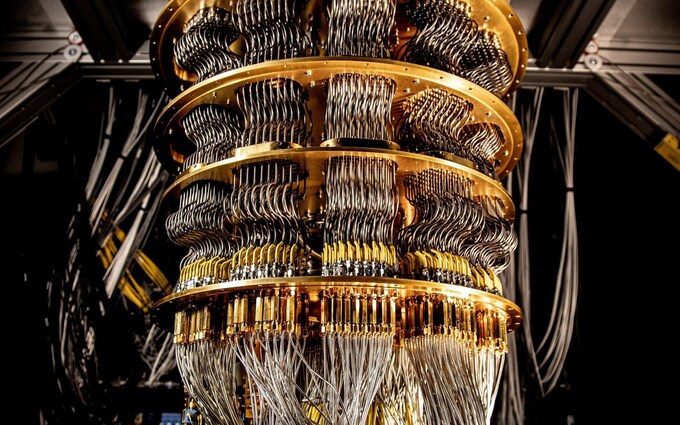
A few weeks ago, Google introduced a new quantum supercomputer called Willow, I call it the BEAST, that changes everything. Unlike ordinary classical computers, Willow runs on the principles of quantum mechanics. Instead of bit, it uses qubits which allows it to make trillions of calculations in nanoseconds.
In a mind-blowing feat, Willow’s 105-qubit chip completed a calculation that would’ve taken our fastest supercomputer a mind-boggling 10 septillion years (that’s 10 followed by 24 zeros) a mere 5 minutes.
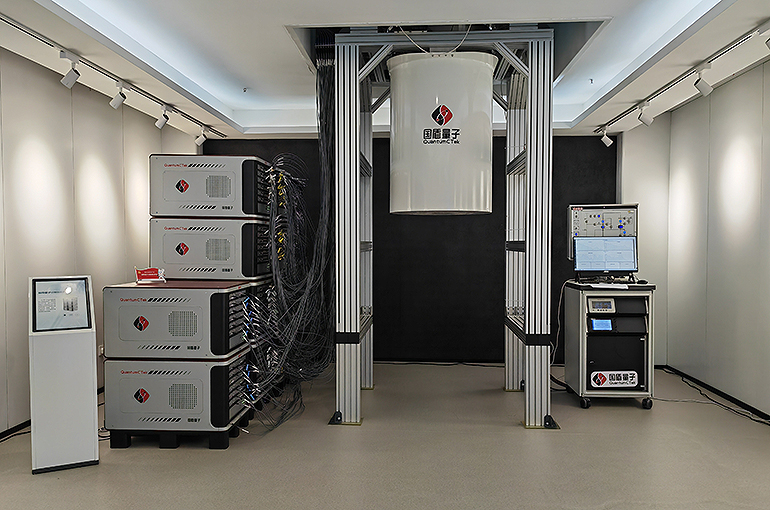
Major tech companies and governments are all in the race to build AI Quantum computers, such as Musk’s xAI, IBM’s HERON, and Microsoft’s AZURE are leading the investments in quantum computing. Hostile state actors like China and Russia have quantum AI computers. Pictured below is the China (They are spending 15 times the money as the US) quantum computer the ZuchongzhiZ
Most of the world is cheering because it will revolutionize the development of new medicine, optimize energy grids, automotive design and materials, aerospace, and almost everything else you can think of.
Quantum Computers Have Bitcoin Analysts Freaking Out
Because they can break previous encryption codes that classical computers couldn’t. Even scarier, it has already started
A bank of quantum computers in China and Russia as we speak are working to break the cryptocurrency encryption, allowing thieves to steal at least $3.8 trillion in Bitcoin.
Just so you don’t think I’m an alarmist, exaggerating or lost my mind completely…expert financial analysts and respected publications are all terrified about Q-Day.
“Bitcoin is a timebomb ready to explode.”
– Wall Street Journal
“Quantum computers come for Bitcoin.”
– Forbes
“Reported on Kent Carlos Perez-Delgado, a researcher at the University of Kent:”
“If I had a large quantum computer right now, I would essentially take over All the Bitcoin.”
– Fortune
“Bitcoin contributors should start preparing for the quantum future.”
– AllianceBernstein
the co-founder of the prominent cryptocurrency Ethereum, admitted that advancing quantum computing tech has “consequences across the entire Ethereum roadmap.”
– Vitalik Buterin
I hope I’ve now convinced you that the threat to Bitcoin is real and it’ll be here any day. Maybe even today or tomorrow.
5 minutes to steal all your bitcoin
“Q-Day might come in 2025, Tilo Kunz Executive Vice President of the Canadian cybersecurity firm Quantum Defense.”
– Tilo Kunz
The bottom line: It’s not a matter of if Bitcoin is hacked, but when.
Still Skeptical? Well, Did You Know That Bitcoin Was Hacked Before?
- Since 2011, Bitcoin has been ripped-off to the tune of a staggering $138,202,386,000
- Etherium losses to hackers: $1,175,082
- TOTAL: $142,315,183,000 at current Bitcoin prices
Still, that’s chump-change compared to what will be $3 Trillion stolen by quantum computers this year.
And the ripple effect would send the world into an economic crisis that would make the Great Depression pale in comparison.
Important Points to Consider
Still, that’s chump-change compared to what will be stolen by quantum computers. And the ripple effect would send the world into an economic crisis that would make the Great Depression pale in comparison.
So why hack Bitcoin? To quote bank robber, Willie Sutton, “because that’s where the money is.” All $3.8 trillion worth of Bitcoin –- including yours.
Stealing Bitcoin Is A Piece of Cake
So why is stealing Bitcoin so easy? As experts say, the new quantum computers make it a snap because they can run so many calculations so fast. While classical computers use binary 0s and 1s, quantum computers use Qubits that can be in two states — 0 and 1 — at the same time.
Weird, isn’t it? But it accounts for quantum computers’ amazing power.
As such, analysts now realize that SHA-256 encryption, which serves as a security measure protecting Bitcoin for miners, is no match for quantum computers.
On top of that, consider that there’s:
- No reserve.
- No government guarantee.
- No central computer or authority.
- Most people have no insurance.
- And nobody has seen the source code and nobody knows who even invented Bitcoin.
Now you know why everyone is panicing.
Bitcoin’s Quantum Weakness
Bitcoin is considered ultra-secure against classical computers, but particularly vulnerable to quantum computers. That’s because every time a transaction is made, a public key is available to everyone and a private key, visible only to the spenders, are generated.
This key combination is then digitally ‘written’ onto a ledger of monetary transactions (copy below) within the system – aka a blockchain.
But there’s a catch, a large gaping hole for hackers. The Bitcoin transaction is not fully secure until it has been integrated into the blockchain. There’s a vulnerability window that can be manipulated, not by regular computers but by quantum computers that once they had access, they would simply divert the funds to a different address.
And poof, just like that, your money’s gone. Easy peasy.
So Why Doesn’t Bitcoin Just Push Out A New Encryption Update?
As Fortune points out, Bitcoin’s decentralized nature could make pushing an encryption update an immense task. By the time they push out an update your money will be long gone.
This One Simple Move Can Protect You From the Bitcoin Disaster
THE COMING BITCOIN Q-DAY CRASH
In this timely and comprehensive report, you’ll get news and analysis you won’t find anywhere else. You’ll get all of Bitcoins “forbidden secrets” and believe me, it will blow you away.
Most of all, you’ll find out how to:
- Protect your Bitcoin so it won’t get stolen
- Hedge your Bitcoin so you don’t lose your money when it crashes
- Take your money out of the quantum computer hackers’ reach once and for all
- Make millions from the coming collapse even as others get wiped out
THIS MAY BE YOUR LAST CHANCE TO SAVE YOUR BITCOIN INVESTMENT AND GET FILTHY RICH IN THE PROCESS.
YOU CAN’T AFFORD TO WAIT A MINUTE LONGER. ACT NOW!
Nick Guarino
Financial Analyst & Startigic Advisor
Publisher of Publisher of The Wall Street Underground Celebrating our 30 year anniversaryCCC