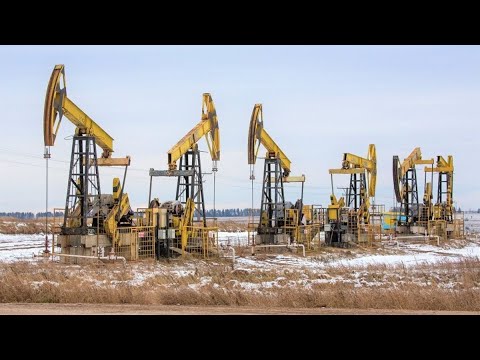
The lights are dimming over the Russian oil industry – literally.The Kremlin is doing its best to conceal the full impact of formal and informal energy sanctions after its invasion of Ukraine. But Moscow can’t hide from the satellites above Siberia that measure the amount of light its oilfields emit as unwanted gas is burned, or flared: The higher the production, the more flaring and the more light – and vice versa.The flaring data, combined with anecdotal information from traders and leaks of official Russian statistics, suggest that eight weeks into the war, Moscow is finally succumbing to the impact of government-imposed penalties and companies’ self-sanctions. On average,
Russian oil output is down 10% from its pre-war level.
More production losses are likely as Western refiners and traders walk away from Russia upon the expiry of supply contracts in coming weeks. The European Union is also considering baby steps to reduce its purchases of Russian oil, trying to find ways to sidestep German opposition to the measures. “We are currently developing smart mechanisms so that oil can also be included in the next sanctions package,” EU Commission President Ursula von der Leyen told the Bild am Sonntag.For consumers – and central banks in inflation-fighting mode – declining Russian production signals the beginning of a second, and likely longer lasting, wave of oil price increases. For Vladimir Putin, the stakes are even higher: revenue from oil and gas sales has so far helped cushion the blow of international sanctions, stabilizing the ruble and financing his military machine. A lasting decline in production that outweighs any price increase would be a longer-term headwind for Russia’s economy on top of the direct costs of the war.The first phase of the oil-price shock from Putin’s invasion was as intense as it was brief. Russian output proved more resilient than expected; China’s Covid lockdowns reduced demand, and the U.S. and its allies released millions of barrels from their strategic petroleum reserves. The only potential relief is bad economic news: a recession in the U.S. and Europe is the clearest obstacle to $100-plus oil. Russian oil production is likely to drop further in coming months, judging by statistics from OilX, a consultancy that uses imaging data from NASA satellites to measure flaring. It estimates that output fell earlier this month to a low of 9.76 million barrels a day. On average, Russia pumped about 10.2 million barrels a day in the first two weeks of April. While the losses appear to have stabilized in recent days, April represents a big drop from the 11.1 million of February, before the impact of the invasion of Ukraine, and the 11 million of March. Western traders face a deadline of May 15 from the EU that restricts their dealings with Rosneft and several other Russian companies to “essential” activity needed to supply the EU. What essential means is open to interpretation, and for now many traders are simply reducing their dealings. If the production losses so far in April continue and deepen in May, as many in the industry expect, the laws of supply and demand will take over. Oil markets are like the proverbial tanker: they take time to turn. But turning they are. And that means prices are heading higher, again. NN: Its confirmed the Russia sanctions as we reported to you are slowing purchases, traders are afraid and are not bidding for the Russian oil. Storage tanks are topped up brimming with product. Russia is cutting production because their is no where to go with the oil. These are barrels that cannot be replaced. After they get over the spin job on the ha ha ha strategic oil piss ant release, the lull before the biggest demand season of the year and a drop before the next run up i expect on strategic oil releases it will be off to the races. As i look at available oil supplies and refinery runs its apparent to me we could be headed for Rationing this drive by fly by vacation season